
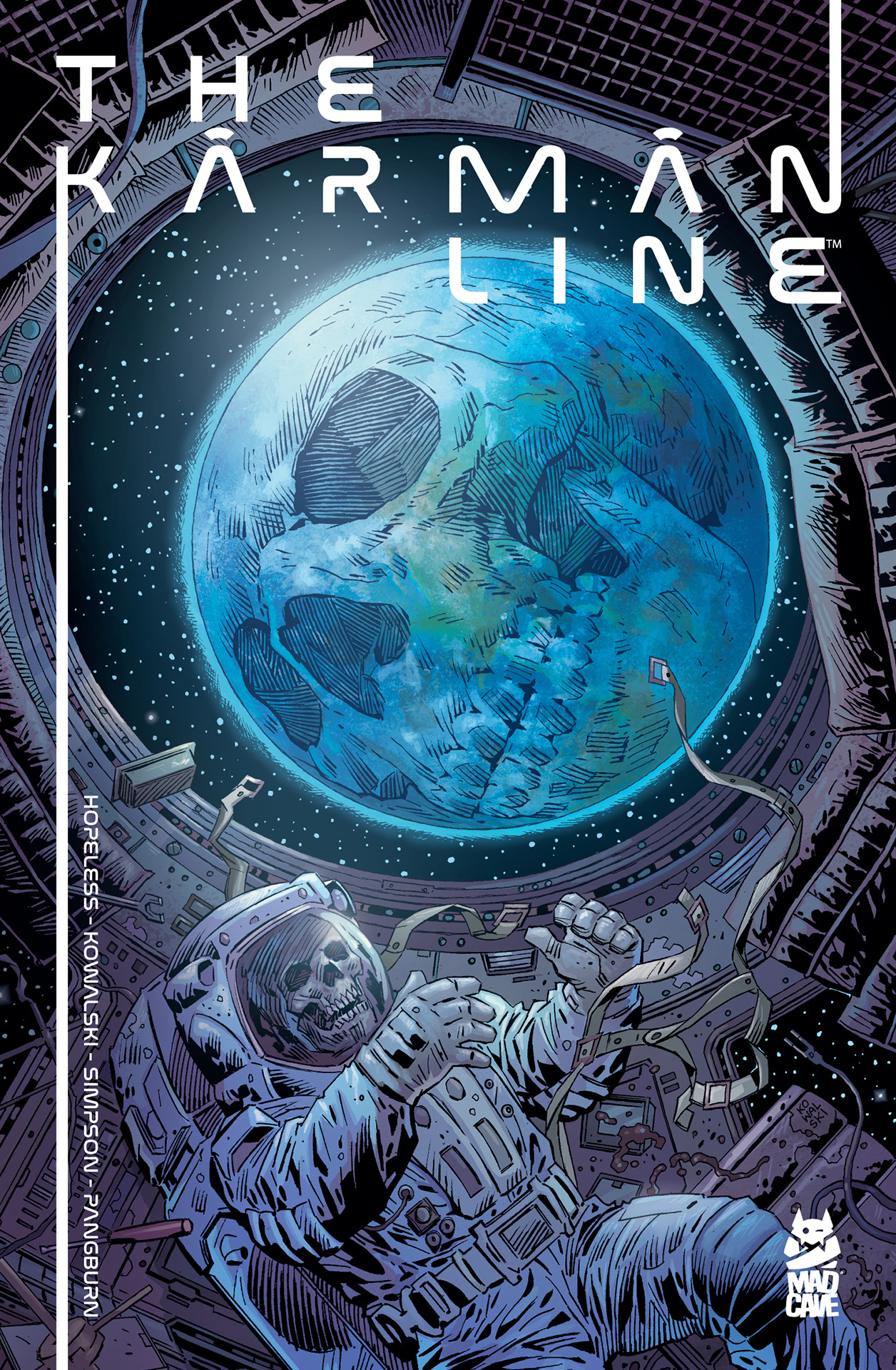
Crossing The Line: Reviewing Mad Cave Studios’ ‘The Kármán Line’
by Anton Kromoff
Summary
The Kármán Line is a timely and relevant read. It has sex, lies, secrets, and space presented in a raw, unfiltered reality show-like way that turns the cameras on human behavior and the way we use media, social or otherwise, to manipulate both the people who make it and the people who consume it. It’s an out-of-this-world story that feels grounded in our current social dilemmas and shines bright in the comic landscape for being brave enough to tackle such uncomfortable but socially relevant issues.
Overall
9/10Welcome to the table,
Space is vast. I feel like that is an understatement. Once you cross the Kármán line, the vast sky becomes infinitely larger. The space you occupy goes from being “the whole planet” to “a tiny speck in the ever-expanding landscape of forever.”

There is no definitive answer when it comes to the question of where the boundary between the Earth’s atmosphere and the space beyond begins. However, the international record-keeping body Fédération Aéronautique Internationale (FAI) has proposed a conventional boundary known as the Kármán line, set at an altitude of 100 kilometers above mean sea level. This definition is not universally adopted but holds significant legal and regulatory importance for aircraft and spacecraft operations.
What makes the Kármán line unique is that it lacks a clear physical boundary in terms of atmospheric characteristics. There’s no discernible change in the properties of the atmosphere at this altitude. No color shift or dotted line that says “Now Leaving Earth Welcome to Eternity.”
However, the line serves as a crucial reference point for determining jurisdiction and legality for air and space operations. While it’s worth mentioning that even though the Kármán line was established by the FAI in the 1960s, various countries and entities have different definitions of the boundary of space for different purposes. This established boundary and yet still questioned imaginary line underscores the complexity and nuances associated with defining the edge of space.
All of this was set up to talk to you a little bit about Mad Cave Studios‘ first adult original graphic novel, The Kármán Line. Now I have to let you know that Dennis Hopeless is a friend of mine. I didn’t realize he wrote this when I started reading it. Typically when I get assigned a book, unless my editors make a note of pointing out who is writing it, I go in unaware of the creative team, ignoring the pages with the creative credits on them to try and have the best chance at an objective review. When I got to the last page, flipped back to the beginning to check through my notes and saw he was credited as the writer, it was a pleasant surprise.

You are here to know if the book is worth buying though, so let’s get into that. The Kármán Line is written by Dennis Hopeless with art by Piotr Kowalski, colors by Brad Simpson, and is lettered by Chas! Pangburn.
It follows the crew of Keyhole Station, a space station crew with a group of international astronauts and cosmonauts alongside their bright-eyed media manager. The crew up in space has cameras on them 24/7 and in a very Big Brother the TV show way, these cameras capture the sex, lies, and secrets that those floating in a tin can far above the world get into.

The concept presented in The Kármán Line, exploring the intersection of space exploration and reality TV-style media, is unique and thought-provoking. It raises important questions about the impact of social media, and the commodification of human experiences, and really blurs the lines between reality and fiction.
The story delves into the messy and complicated relationships among the crew members and their struggles with self-worth, as the story unfolds showing us what they are capable of in a world where social value and how we are perceived by the rest of society reign supreme. As someone who has worked in media, social and otherwise, for over a decade I feel that this book should be required reading for those who chose to go the university route.
The themes and ethical quandaries presented in this book are so grounded in behaviors that are present in our real world that those who want to make a career out of working in social and media spaces would for sure benefit from the commentary that is present in The Kármán Line.

Until next time, smash that like button.
The Kármán Line is currently available for purchase at your local shop.
