
Opinion: Bootlegs And Doujinshi Are Healthy For Comics
by Tito W. James
You’ve heard of the Absolute Universe and the Ultimate Universe. But are you familiar with the Bootleg Outlaw-verse? There’s been a recent surge of comic creators who use a take-no-prisoner’s approach to popular culture resulting in unique comic books that are difficult to categorize. These comic books are several steps further (or sideways) than the dark, gritty superhero deconstructions seen in Invincible or The Boys. Should this new flavor be called Bootlegs, Doujinshi, or Fanzines, one can hardly say. What they all have in common is a blend of experimentation from underground comix with the genre appeal of pop superhero comics.

To kick things off let’s start with the most ambitious and successful of the bunch. Written and drawn by Michel Fiffe, COPRA is a remixed spiritual successor to Suicide Squad. While the book is a pastiche, it’s anything but derivative. Fiffe considers its use of pastiche to be similar to the way Watchmen used analogues of the Charlton Comics characters. Many great indie video games started as video game mods, and COPRA takes its inspirations to new heights.

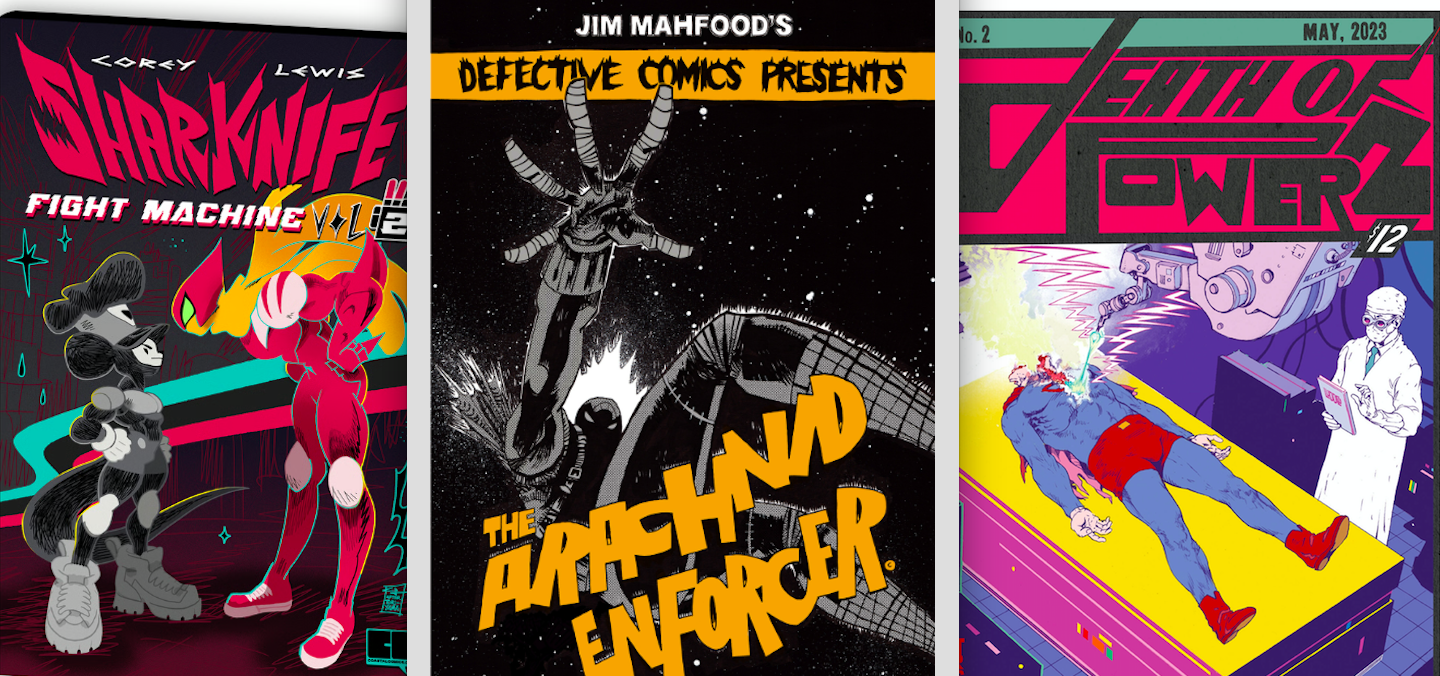
Jim Mahfood’s Savage Street Vigilante and The Arachnid Enforcer are possibly the most high profile examples of bootleg comics on this list. Each one-shot comic is an outlaw parody of popular superheroes, but drawn in Mahfood’s signature bugged-out art style. The professional quality and mad creativity in each one-shot make the case for bootleg comics as a valid reading experience in their own right. Mahfood describes childhood experiences of collecting the original Teenage Mutant Ninja Turtles comics and how he had to keep them hidden like contraband. By creating Savage Street Vigilante and The Arachnid Enforcer, Mahfood is creating a similar illicit experience for a new generation.
Ryan Heshka has always had a fascination with Batman — specifically weird, foreign knockoffs of Batman where they colored his costume wrong. Within the fanzine Mystic Foam Funnies, Heshka collages several vintage comics together and re-colors and re-letters the final product. The result: a stream-of-consciousness comic full of monsters and madness. Ultimately, superhero comics are about having fun, so as long as readers are having a blast, that’s all that matters.

Jesse Lonergan may have an official Batman issue coming out from DC Comics, but that didn’t stop him from creating his own fanzine titled We Ride At Night. Within the zine we see Batman and all his rogues gallery as street racers with 1950s vintage fashion and hotrods. It’s this kind of self-indulgent formalism that would never fly at DC proper. So that’s why it’s great that creators can just follow their muse in the fanzine space.

Daniel Warren Johnson has lent his signature creative talent to Absolute Batman, Wonder Woman, and Transformers. However, Johnson also produces short fanzines that are only available when you meet him at comic conventions. This allows him to play with toys without asking permission. One standout zine is Old Man Skywalker, where Johnson reinterprets the greatest hero from the galaxy far, far away.

Out of any bootleg comic on this list, James Harvey‘s Luigi Mode is arguably the most brilliantly bizarre. The three-issue miniseries follows the life of Marcus Miskin, a geek with high ambitions and low self-esteem, who makes a Faustian bargain with a certain video game icon. The comic is a rare oddity serialized during 2020 and it managed to capture the madness of the moment. Harvey blends the eternally edgy anti-fashion of Jamie Hewlett and the bizarro storytelling of Kago Shintaro to deliver an anomalous odyssey. Luigi Mode is the perfect subversive story for those who grew up on Nintendo games and live under the threat of populist totalitarianism. The complete saga is best described as a white-gloved middle finger up pop-culture’s rectum.

Created by Corey Lewis, Sharknife Fight Machine is about a ninja superhero who defends the city of Coastalvania from Steamboat Chilly, a soulless AI determined to suck the creativity out of everything. Part colorful action-adventure and part corporate satire, Sharknife: Fight Machine is a blast to read. When real world creativity is under threat, Sharknife reminds artists to roll-up their sleeves, bleed on the page, and make something awesome.

Created by Kirt Burdick, Death of Power is an outlaw comix parody of The Death of Superman. The term “outlaw comix” refers to a specific sub-genre of underground comics known for extreme graphic content. While there is extreme graphic material in these comics, it is balanced out by acute graphic design. The limited color palette adds an unearthly appeal to every page. Burdick‘s superb lettering expresses the story through onomatopoeia and uses word balloons sparingly. There are moments that are so explicitly lecherous they can only be compared to Urotsukidoji: Legend of the Overfiend. That being said, the series knows how to lean into over-the-top gonzo fun in the same vein as Mortal Kombat. Fans of Joe Shuster‘s fetish art won’t be disappointed.

Another upcoming superhero bootleg comic is Tony McMillen‘s Weird Figure of the Dark. The comic is inspired by rock music and The Dark Knight Returns. McMillen cites Fiffe’s work on COPRA as a source of inspiration, so we’ve come full circle. Weird Figure of the Dark is a great example of how bootleg comix aren’t just an oddity, they’re an artistic movement that promotes creative freedom within pop culture.
The comics on this list are proof that bootlegs and doujinshi are healthy for the growth and creativity of comics. They allow for more experimentation than would be permitted with official characters and offer more accessible entertainment than your typical underground comic. Hopefully, these titles are only a few in a new wave of comics that can help redefine what the medium is a capable of.

