
“True” Crime: Discussing ‘Who Killed Sarah Shaw?’ With Writer Frankee White
by Tom Smithyman
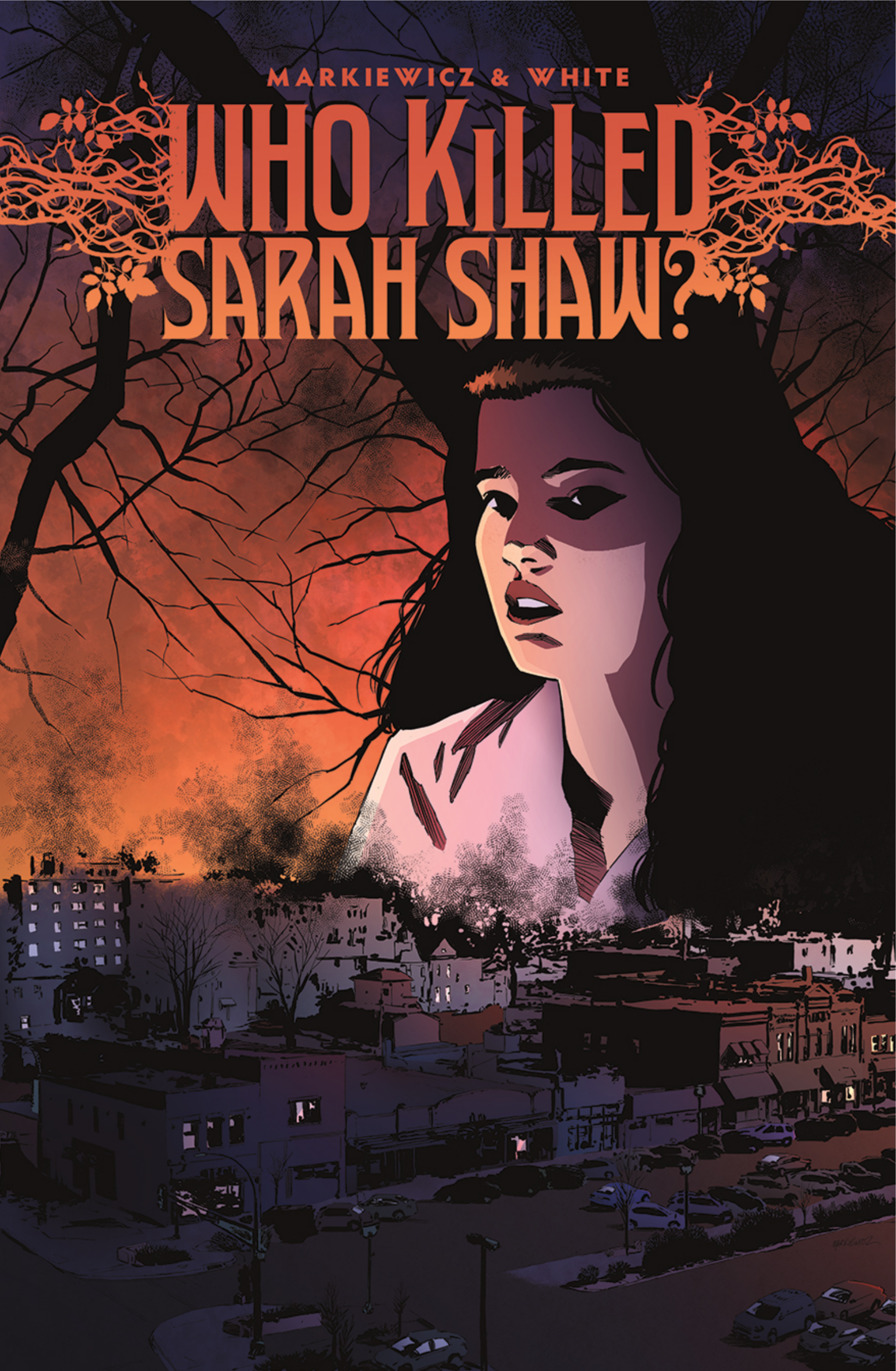
The first chapter of the webcomic Who Killed Sarah Shaw? is now available on Patreon. The series deals with two reporters for a streaming show who are looking into the 40-year-old murder of a high school student in a small Michigan town. In an exclusive interview with Comicon.com, writer Frankee White discusses how true his true crime story is and why the web was the right medium for this project.
Tom Smithyman: The genre of Who Killed Sarah Shaw? is called true crime, but in this case, it’s a made-up story, right?
Frankee White: Correct! It’s influenced by the true crime genre and how we as a society have always been invested in it, but the story is not based on any actual real-life events. I make sure to always put true in quotes when using that term.
Smithyman: What was your inspiration for telling this particular story?
White: My biggest inspiration when working on a project is to always try something different. All of my previous projects are genre works like horror, fantasy, sci-fi, etc., and usually when I tackle those genres I try to twist them a little bit. So when the idea for doing a murder mystery popped into my head, my immediate thought was: “How can we shake it up?” Enter the “true” crime twist.
Presenting a 40-year-old murder mystery allows us to play with objective/subjective narrative. I was drawn to telling this story where all of the narrators are recalling events from so long ago that they can’t possibly be 100% accurate, so it requires the reader to consider what they think is fact or fiction – what is intentional disguising of the past versus a misrembered memory. We want the readers to be involved and actively reading instead of just accepting the narrative as it’s presented. 
Smithyman: Why did you choose to publish Sarah Shaw as a webcomic?
White: Adam Markiewicz, the co-creator, artist and letterer and I have worked on two other graphic novels before, Eat My Flesh, Drink My Blood and Broken Bear. He’s a great collaborator, and I love working with him. He has a Patreon, where the comic is housed, and it seemed like a good idea to once again try something different and run it through there. Since it’s a mystery and we want the readership involved and engaged in the story, the weekly page update format felt like a natural fit. 
Smithyman: You’ve published the first chapter already on Patreon. How many more installments do you expect to tell?
White: There’s going to be five chapter installments, each featuring a new interview subject. We’re currently well into Chapter 2 on the Patreon.
Smithyman: Are you a big fan of true crime? What is it about these stories that keeps audiences so enthralled?
White: I am. There’s something about the real-life horror of these stories that is unfortunately compelling. It’s something our society has been obsessed with for centuries. There’s a lot to learn about humanity, societal structure and politics through these stories. 
Smithyman: Adam Markiewicz draws the series. What does he bring to the story? And why did you choose to keep the visuals in black and white?
White: I mentioned it before, but I love working with Adam. We tend to list ourselves as co-storytellers in our credits because his fingerprints are all over our works. He has a keen eye for composition and framing and has an excellent storytelling sensibility that meshes very well with mine.
We kept the visuals black and white for a simple reasons: 1) I love black and white comics. It’s a section of the medium that I would love to see promoted more in Western comics. 2) We’re running it through Adam’s Patreon and wanted to showcase Adam’s skills as an artist. 3) It fits the tone of the story, and I think by removing color, it forces the reader to fill in those artistic blanks just like we’re asking them to do with the narrative. 
Smithyman: There are a ton of true crime podcasts and streaming series out there. Do you have a favorite, and did it inspire any aspects of Sarah Shaw?
White: My favorite true crime podcast is The Last Podcast on the Left, but that has a comedy angle to true crime, and they cover other topics as well, so it didn’t have much of an impact on Who Killed Sarah Shaw?
However, I have been watching whatever I can get my hands on via Netflix, HBOMax, Hulu, etc. to see how they structure their stories and how the creators engage with their subject matter. Not for story inspiration but structural inspiration. Every documentarian has a different approach to how they tell the story due to creative or budgetary reasons. Being able to take those apart and see how they get do or don’t get involved in the story they’re telling is interesting to me.
Smithyman: Thanks for taking the time to talk about this project. Best of luck!
