
Babydaddy The Storyteller: Discussing ‘Wag’ With Writer Scott Hoffman
by Tom Smithyman
Scott Hoffman did not take the typical route to becoming a comic book writer. He started out as Babydaddy, a cofounder of the disco glam band Scissor Sisters. He used that experience to write the comic series Nostalgia, a story inspired by his life in music.
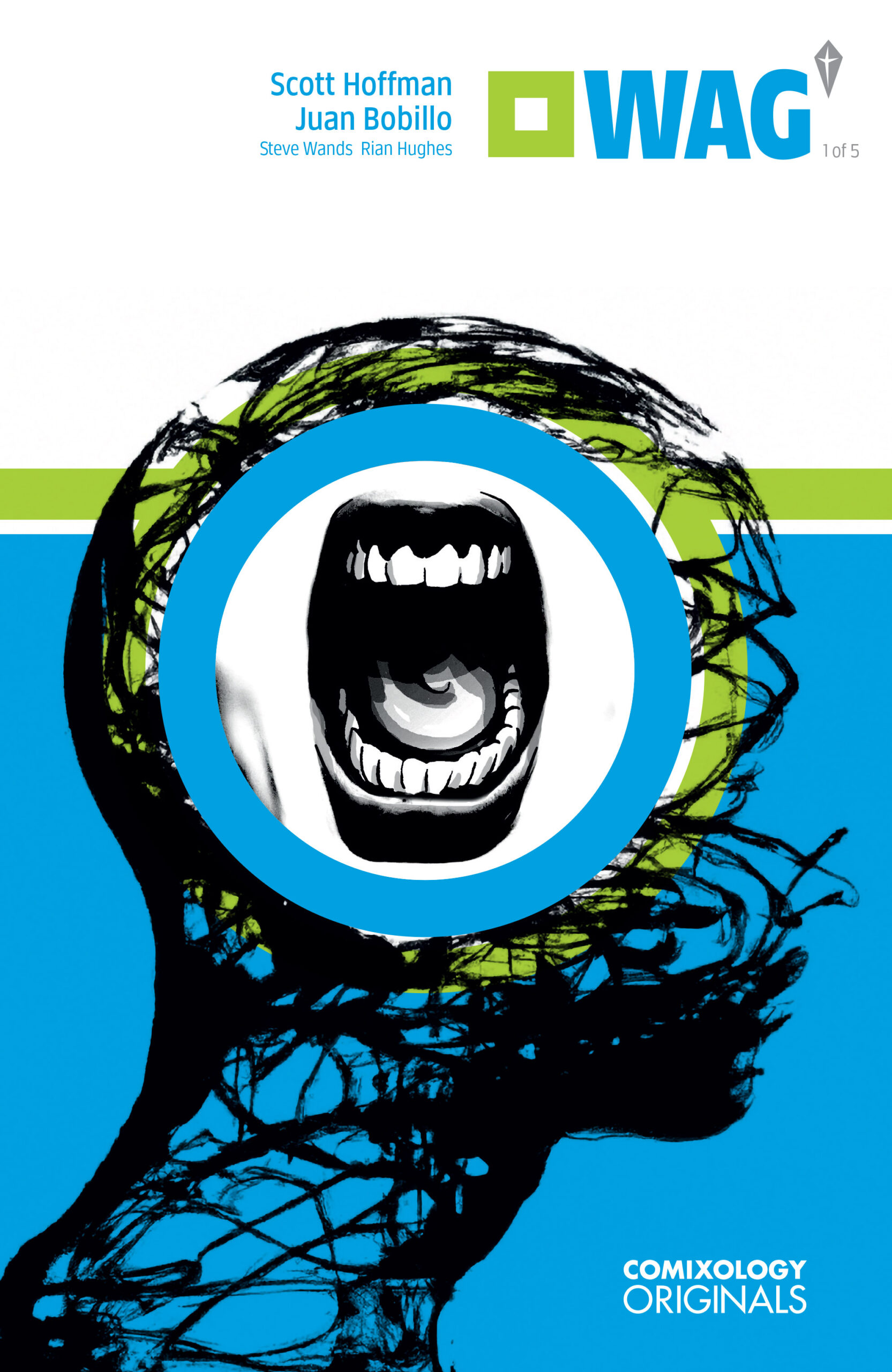
Today, his latest series, Wag, debuts on ComiXology Original. In a Comicon exclusive, Hoffman discusses how his early career and education set him down the path to creating comics as well as the influence that comics legend Phil Jimenez had on his work.
Tom Smithyman: Your first series, Nostalgia, deals with a reclusive rock star whose world is turned upside down. Wag is a much different tale of a loner set in a post-apocalyptic future. While the two seem different, is there a theme or some connection between the series?
Scott Hoffman: I wrote both around the same time, starting around the beginning of the pandemic. And they are two takes on my fears and observations about the world of that moment.
With Nostalgia, it was the question of how I could grapple with relevance and contextualize my past in a world that seemed to be changing so rapidly, and with Wag I was thinking about how I would physically navigate a world that seemed to be devolving before my eyes. They are both takes on loneliness and isolation as well: Nostalgia explores fame/success as a distancing force, and Wag does the same with mental illness and paranoia. They were the first two comic scripts I wrote (with many more since), and they almost feel like mirror images of each other, two sides of me written with a splash of self-deprecation.
Smithyman: In the beginning of Wag, you describe the breakdown of communication, which led to all of society falling apart. But it seems to be done in a lyrical way. Were you influenced by music while you were writing the story? Asked a slightly different way: Can you ever not be influenced by music when you write?
Hoffman: I think I’ve always been attracted to lyricism, and while that may be a “musical” way of thinking, I think maybe it’s easier for me, in answering that, to look back further and talk about why I fell in love with the fiction, music, comics, genre/art film, etc, that I did in my impressionable days. I love art that mirrors the way I see the world, or, as I’ve been exploring recently, the way art can mimic consciousness or even transmit our own experience of the world to others.
I think that’s most genuinely accomplished through poetic language: language that evokes feeling and helps us achieve an empathic response, and perhaps that’s why music affects people so deeply. What I actually find more musical about writing stories is the structure, demands of the form and, with comics specifically (and part of why I love the medium so much), the almost mathematical organization of ideas over pages and grids.
Smithyman: Which do you think had a bigger influence on how you’re writing today – your time in Scissor Sisters or your degree from Columbia University?
Hoffman: My time at Columbia was crucial to my worldview. It really opened my eyes to how to look at the world critically and thematically, and the writing program there really fueled my desire to learn how to write, even if I was still a bit lost about who I was as a writer. My time in the band was a direct result of my time at Columbia, and so much of the experience I feel I have at my disposal in writing came from those years on the road, meeting incredible people and seeing the world. I think I have to credit everything that led up to these last few years for giving me the confidence and worldview to write comics.
Smithyman: Both of your series so far have been released digitally as ComiXology Originals. Are you a fan of digital-only comics? Would you like to see your comics in print at some point?
Hoffman: I’ve been reading digital comics through ComiXology for years now, and before that my switch to Kindle for prose reading was life changing. As someone who consumes a lot of books and travels a lot, it works for me, and I really love having access to a multitude of books in one place.
I do still love physical books, and for my own publishing the dream is still to produce both. There are plans for physical releases of both of these series, which I’m thrilled about. I have to say the digital-first model was a perfect introduction for me into comics, offering a bit of a staggered rollout that has helped me get comfortable with the process.
Smithyman: What is the creative process like for you and the rest of the creative team? Do you write a script first and then pass it over to the artist, or is there more collaboration up front?
Hoffman: I’m a script-first writer, but that’s simply because I wanted to learn the craft before I had the opportunity to collaborate. I like thinking about comics the way screenwriters do; it’s a blueprint that, in the next person’s hands, will evolve into something else completely.
Granted, once the art was finished for my books, the script still went through another round of changes with the lettering so there was no avoiding the collaborative element. That said, the idea of collaborating with artists from the start of a project is something I’d love to do in the future.
Smithyman: You’re a big gamer and comics fan, stretching back to the Vertigo titles of the 1990s. What are the biggest influences from those genres on your writing style?
Hoffman: That is true! I’m not sure exactly how gaming affects my writing, but it must in some way, right? I love atmospherics and immersive worldbuilding in games the same way I do in comics. The Last of Us nails that, as do classics like the Resident Evil or Dark Souls series, and even experimental work like Fez or Hyper Light Drifter that really evoke a feeling. I’m a gamer from the NES days, so I could probably go on forever about my favorites.
I think anything that takes something traditional and shows what happens when it’s turned on its head is the kind of work I gravitate to, and that’s a pretty good descriptor of the comics that have influenced me as well. Vertigo for sure, from Sandman to Preacher to Transmetropolitan, but, in terms of the era, works like Frank Miller’s Sin City and Hard Boiled, Charles Burns’ Black Hole or even manga like Battle Angel Alita or Eden also fall into the same category for me.
Smithyman: You count comics legend Phil Jimenez as a mentor. There must be a story there!
Hoffman: Phil is indeed the one who started it all. We knew each other through a mutual friend in NYC going back to the early 2000s (the friend had an original Phil drawing on his wall that blew me away). About five years ago Phil and I were having a discussion about writing, and I expressed my life-long dream to give it a go.
Not long after that, at the beginning of the pandemic, he asked me and friend of ours to do a weekly writing workshop over Zoom, and I reluctantly agreed. I say “reluctantly” simply because I still didn’t know who I was as a writer and hadn’t developed the confidence. Phil (and our friend Sam from the group, as well as Greg Lockard who became an editor on both books) pulled it out of me. I never want to stop now, and I’m forever grateful.
Smithyman: Phil is a great guy who has done so much for the industry. Best of luck with Wag!
