
Lakes International Comic Art Festival launches ‘Comic Potential – Comics in the Classroom’ Videos for Teachers
by Richard Bruton
Although the Lakes International Comics Art Festival is done until October 2024, the work of the festival continues throughout the year.

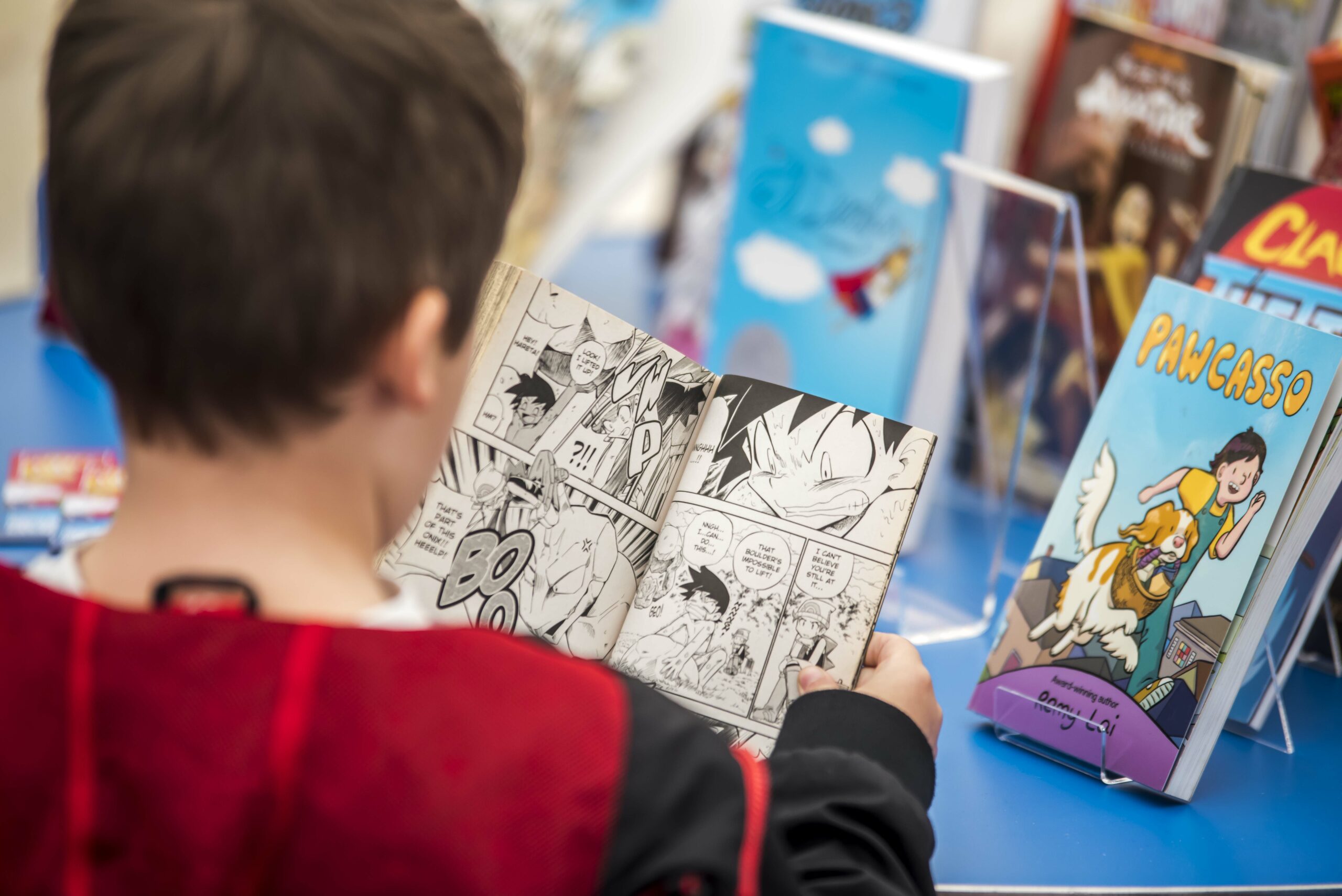
This includes, as it darned well should, plenty of outreach to children about comics, with this month bringing the launch of the new LICAF Comics in the Classroom videos on its YouTube channel as part of its ongoing Comic Potential project, launched by LICAF in 2022.
The aim of Comic Potential in general and Comics in the Classroom in particular is work with schools to support learning and further the use of comics as a teaching resource.
The comics videos are designed to offer teachers valuable information, tips, and techniques on using comics in the classroom across all age ranges and across the curriculum, the videos are part of an ongoing project to inspire the use of comics in education.
The films are presented by Little LICAF co-producers Hester Harrington and Sim Leech, who have a wealth of experience using comics in the classroom and come from a teaching background.
The first film, Comics and Speech, presented by Sim, outlines how speech and thought bubbles work in comics, and ways that they can be used in the classroom.
Comic Sequences, also presented by Sim Leech, explains how the sequential nature of comic panels can be used in the classroom, plus an introductory look at comic features.
Two further films, presented by Hester Harrington, will be released in early 2024. Comic Splash Page! explains how to use comic features to create a single page bursting with action-packed information, whilst Comic Zines! provides a guide on how to create hand-made short comics on any topic.
All in all, an excellent idea, one that’s sadly still needed. Because although things are certainly getting better and more and more teachers and educators are realising the benefits of having their kids devouring comics, there’s still that hold-out group of teachers. You know the ones – they have a habit of asking why the kids can’t read ‘real’ books. So, congrats to the folks at LICAF for this one.