
Book Review: ‘Ferocious Ambition: Joan Crawford’s March To Stardom’
by Rachel Bellwoar
Sometimes when it comes to celebrity biographies there’s a consensus around which biography to read first. Sometimes there aren’t that many options. Plenty of deserving actors haven’t been written about at all. That hasn’t been the case with Joan Crawford. While there’s been no shortage of books about the actress (and that’s not counting the two books Crawford wrote about herself), there hasn’t been one that’s been held-up as a definitive text on her life (and maybe there never will be).

It’s not like writing such a book would be easy. Crawford’s career lasted over forty years (starting with silents and going into television). She was an ambassador for Pepsi after marrying her fourth husband, Alfred Steele, and she was also involved in a lot of Hollywood drama (as TV shows like Feud, about the filming of What Ever Happened to Baby Jane? and the fights between Crawford and Bette Davis have addressed).
To the general public who might not be familiar with Crawford’s work as an actress, it’s Christina Crawford’s book, Mommie Dearest, that’s often been given the last word (and not even the book so much as the film version starring Faye Dunaway). As Crawford’s daughter, Christina’s account of what Joan was like as a mother to her adoptive children needs to be considered and not glossed over just because it’s uncomfortable (child abuse should be uncomfortable). I also didn’t realize until reading Robert Dance’s book that Christina didn’t like the movie, which is why it’s always important not to assume that just because a film is adapted from a book that they tell the same story.
If you agree that it should be possible to separate an artist from their work, though (and it’s complicated – everyone will draw different lines) than ignoring everything Crawford achieved as an actress is to ignore a vital part of her legacy (or what should be a part of her legacy – the good and the bad).
One of the things I like about Dance’s book, Ferocious Ambition: Joan Crawford’s March to Stardom, is that it doesn’t get bogged down in re-treading everything Christina’s already written about her mother. No, it’s not the definitive Crawford biography. It’s not claiming to be either, and there is something missing, in terms of understanding Crawford on a deeper level – what made her tick or become a drinker later in life (if Dance identifies a starting point it’s Crawford’s second divorce to actor, Franchot Tone). At one point Crawford’s mother comes to live with her and then isn’t mentioned again until the day she passed away, and Dance doesn’t really bring up Crawford’s habit of obsessive cleaning until fan magazines caught onto it, which is a little late (especially for anyone going into this book without any foreknowledge of Crawford). It’s like Dance doesn’t want to spend too much time on the talking points that have been widely covered elsewhere but at the same time you can’t get the full picture without all the details. Since a lot of the key players have passed away and can’t be interviewed, maybe there’s only so much more intimate a biography about Crawford can get when it comes to her personal life and relationships.
What Dance does best is consider Crawford’s career, and the choices both she and the studios made to cultivate her star image. Lucile Le Sueur didn’t become a star by accident (although initially her dream was to become a dancer on stage, not the movies). Every decision was intentional and given how important work was to Crawford, that is probably what she would’ve wanted to be remembered for. The most interesting sections are when Dance compares Crawford’s career to those of her contemporaries, Greta Garbo and Norma Shearer, and reveals how differently they were treated (despite the fact that Garbo started at MGM at the same time as Crawford).
They certainly had different responses to their fans. As transparent as Crawford was with hers, Garbo preferred distance, but because Crawford’s fans were so loyal and would see her films, regardless of how they were reviewed, her box office returns were undeniable. It was often because of Crawford that the studios were able to fund their other projects yet it took her much longer to get the contracts and pull Garbo and Shearer were given (Shearer also ended up marrying MGM producer, Irving Thalberg). It’s also interesting to see what kinds of roles Crawford was given at different points in her career. Unlike Shearer and Garbo, for instance, period dramas were never a good fit, and for a while all of her films followed the same formula because it didn’t seem to affect audience attendance. Few actresses, though, could’ve pulled off the career Renaissance Crawford did with Mildred Pierce in the forties when she moved to Warner Brothers and her willingness to play unlikable characters also served her well in films like Harriet Craig.
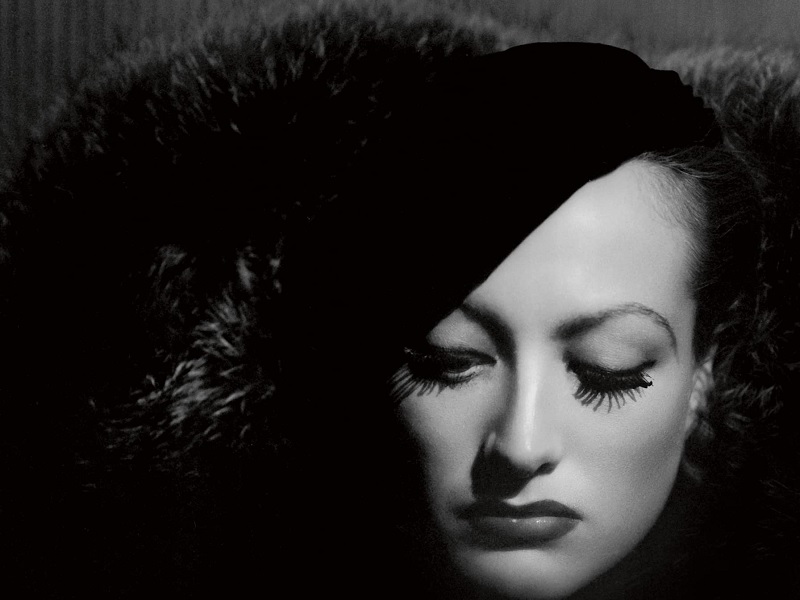
Unsung players, like costume designer, Sheila O’Brien, and photographer, Ruth Harriet Louise (both of whom often get overshadowed by Adrian and George Hurrell, respectfully), get their due in this book as well, which isn’t surprising after you realize Dance has written books on Garbo and Louise, too.


