
Talking ‘Hollywood Pride’ With Author Alonso Duralde
by Rachel Bellwoar
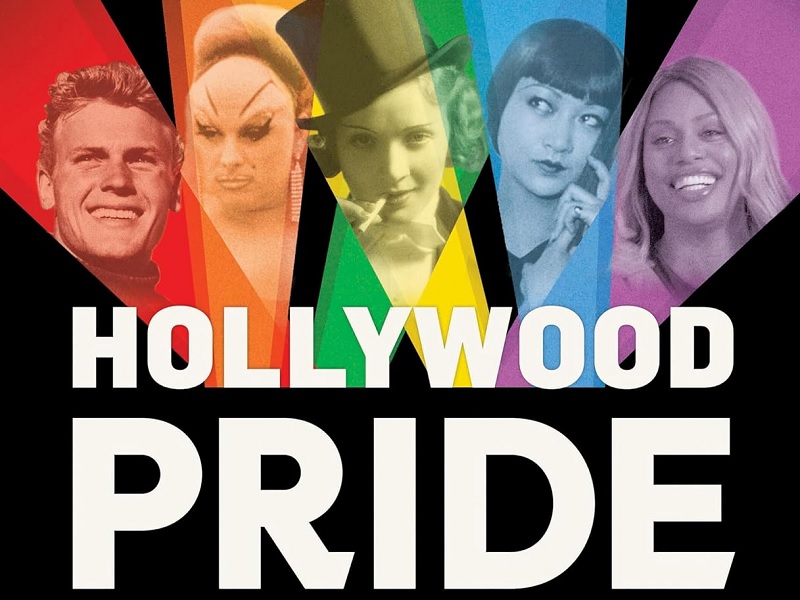
Tab Hunter. Divine. Marlene Dietrich. Anna May Wong. Laverne Cox. These are the five LGBTQ+ icons that appear on the cover of Alonso Duralde’s upcoming book, Hollywood Pride, which looks at the impact queer artists and films have been making on the film industry since the very beginning. From the silent era to the present day, Duralde’s book covers them all and you can find out more about it in the following interview:

Rachel Bellwoar: Forty-three years after the publication of Vito Russo’s book, The Celluloid Closet, in 1981 (and twenty-eight years after Rob Epstein and Jeffrey Friedman’s 1996 documentary of the same name), how do you feel Hollywood Pride builds on and picks up the baton from that earlier work?
Alonso Duralde: Well, first of all, I’m honored to be considered in the same breath with both the film and the book, both of which were real game-changers for me in terms of understanding the history of queer cinema and queer storytelling on the big screen. I like to think of Hollywood Pride as a next, small step in a line that includes The Celluloid Closet, William J. Mann’s Behind the Screen, and so many other books that have explored the hidden history of the LGBTQ+ artists who helped to shape classic Hollywood and of the films that told our stories, for better or worse. There has always been an effort to erase queer people from the historical record — even the historical record of the cinema — and so it’s my honor and privilege to add to what came before. Russo and Mann, Robin Wood, B. Ruby Rich, David Ehrenstein, Jenni Olson and many, many more people did this work; I can only hope to be of some help to the next generations of critics and historians who tackle this subject.
Bellwoar: What are some of your earliest memories of encountering queer characters on screen?
Duralde: I’m sure that in my earliest years, I encountered a lot of coded-gay characters, and moments where homosexuality (or panic over homosexuality) was played as a joke. But one of the first gay moments that really stuck in my head, in a bad way, was in the 1981 horror film The Fan, which I caught on cable while I was still in high school. To throw the cops off his trail, stalker Michael Biehn picks up a guy at a gay bar who matches his basic physical type. The two go to a rooftop, where the pickup begins to perform oral sex (off-camera) on Biehn’s character, who grabs a straight razor and slashes the poor guy’s throat. He then sets the corpse on fire and leaves a fake suicide note so the police will think he died in the fire. I’ve often joked that The Fan extended my stay in the closet at least two years.
Bellwoar: How has working on this project made you reconsider the value of gossip as a reliable source?
Duralde: In my introduction, I quote B. Ruby Rich: “If oral history is the history of those denied control of the printed record, gossip is the history of those who cannot even speak in their own first-person voice.” LGBTQ+ history exists outside of normal channels of research — you’re not going to find queer people via their birth certificates or marriage records or land-holding deeds. We are often left with an oral history, and with the direct reminiscences of people who were there. It doesn’t make all gossip true, or all sources of information equally credible, but it does wind up being the one way we can rescue our foreparents from disappearing. As William Mann once noted, “Researching gay history also requires weighing the vast body of gossip, film lore, and beyond — too often high-handedly dismissed without even cursory consideration by writers consumed by their own seriousness.”
Bellwoar: Alfred Hitchcock is a director whose filmography you regularly check in on over the course of the book. Ultimately do you think the LGBTQ+ characters in his films did more harm or good, or are those the wrongs terms to be using?
Duralde: I think “positive” and “negative” characterizations are in the eye of the beholder. Hitchcock, for better or worse, acknowledged the existence of LGBTQ+ people and made an effort to include queer characters at a time in film history when there were official rules prohibiting writers and directors from doing so. The killers in Rope or Mrs. Danvers in Rebecca are in no way role models, but they do constitute a brand of queer visibility in an era when the ruling forces of Hollywood were happily eliminating us from the screen.
Bellwoar: While the book is called Hollywood Pride you also touch on some international films and creators. Was it difficult coming up with the parameters for which films to include and which to leave out?
Duralde: There are many volumes to be written about queer film and filmmakers from around the world; since this book was focused on Hollywood (and American independent) cinema, I limited myself to movies that were widely seen by American audiences and had an impact on American film culture.
Bellwoar: This book is about films, not television, but how do you think film has done, comparative to television, in regards to representation and providing space for queer artists to tell their own stories?
Duralde: TV and the internet are often outpacing the cinema in terms of queer representation, mainly because of their unique parameters; unlike the old days, when we had three major networks and PBS, TV is now being aimed at increasingly niche demographics, and the relative permissiveness of streaming and pay-cable allows creators a freedom that earlier generations of TV writers didn’t have. (It also helps that TV creators are less concerned about being banned or censored in other countries, while the creators of Marvel movies don’t want to lose their audiences abroad.)
Bellwoar: Documentaries don’t always get their flowers. Do you feel there’s more of an appreciation for documentaries among queer audiences?
Duralde: For generations, LGBTQ+ viewers had few options outside of film festivals if they wanted to see LGBTQ+ content and characters, and festivals have always nurtured and championed documentaries. Nowadays, queer content is more generally available, but I think there’s still always interest in our stories and our history — it’s been particularly gratifying that Ryan Murphy’s deal with Netflix has included the creation and distribution of documentaries like A Secret Love, Circus of Books, and Pray Away.
Bellwoar: Were there any films or filmmakers that you discovered over the course of doing research for this book that were new-to-you?
Duralde: Quite a few! From silent stars like J. Warren Kerrigan to below-the-line titans like Angela Morley (the first out trans woman to be nominated for an Oscar) and James Crabe (a cinematographer who made campy shorts with L.A.’s Gay Girls Riding Club before shooting blockbusters like Rocky and The Karate Kid), there have been many figures from film history that I knew little or nothing about beforehand, and I hope readers have that same sense of discovery.
Bellwoar: If you could recommend one classic and one modern film that readers should check out after reading this book, which would you suggest?
Duralde: Gay filmmaker George Cukor’s comedy Sylvia Scarlett (1935) was a flop in its day, but audiences have come to appreciate its comedic commentary on gender — Katharine Hepburn‘s Sylvia disguises herself as Sylvester, and in the process, comes to discover her inner strength and daring that she’d never been allowed to express as a woman. More recently, I think not enough people have seen Dee Rees‘ breakout feature Pariah (2011), featuring a heartbreaking performance from Adepero Oduye as a young lesbian figuring out who she is while her family disintegrates around her.
Bellwoar: Thanks for agreeing to this interview, Alonso!
Hollywood Pride goes on sale May 14th from Running Press.

