
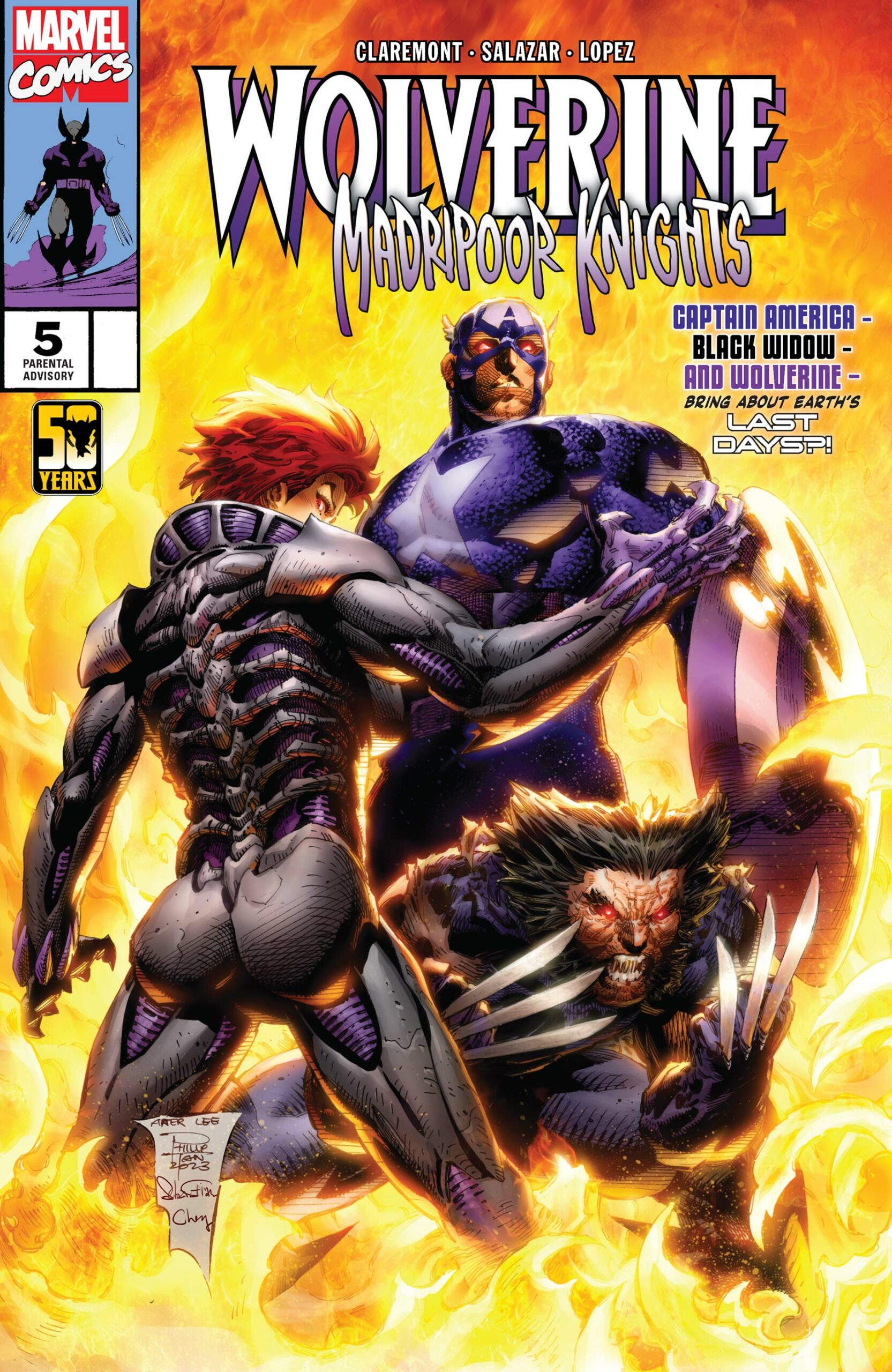
Review — Claremont Gives In To His Dark Side In ‘Wolverine: Madripoor Knights’ #5
by Austin Gorton
Overview
Wolverine: Madripoor Knights #5 is exactly what it says on the tin, a late-period Wolverine-centric Chris Claremont story, for good and bad. Thanks to Claremont’s strong grasp on Wolverine’s voice and some suitably macabre art from Edgar Salazar, there is more to good than bad, providing a satisfactory conclusion to the miniseries.
Overall
6/10Say this for modern day Chris Claremont: you know exactly what you’re going to get when you crack the cover. Wolverine: Madripoor Knights #5 is the conclusion to the miniseries-sized sequel to Uncanny X-Men #268;a fan favorite (and Claremont’s favorite – he included it in his Marvel Visionaries collected edition) mostly because it did the “look into Wolverine’s past” bit when that was still novel and was drawn by Jim Lee.
As the final issue of the series, all the pieces are in place, and it’s time to run out the string on the plot. Of course, “pieces” mean “the main characters are possessed by an evil entity” and “run out the string” means, “fight back against their darkest urges to prove themselves heroes”, because again, this is a Chris Claremont comic.
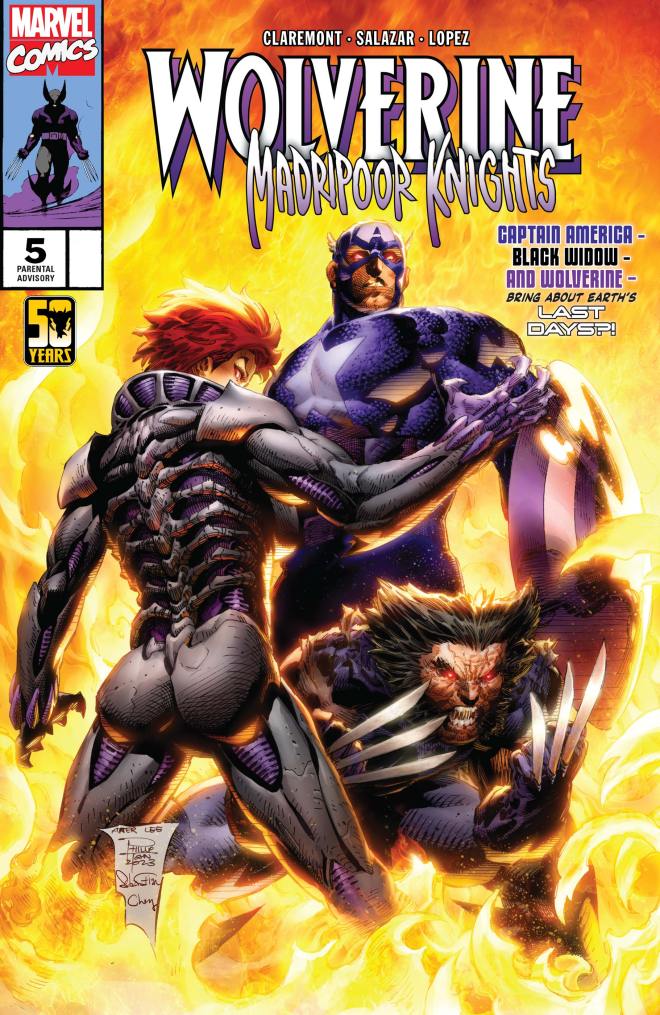
The issue opens, like so many Claremont comics, with the trio of main characters — Wolverine, Black Widow, and Captain America — not in their right minds. All three have been transformed into dark reflections of their true selves in service to the Hand.
This is what the Hand originally wanted to do with Black Widow back in Uncanny X-Men #268 (and, it is worth mentioning, not unlike what they did to Psylocke when they first transformed her into a ninja assassin). Characters being brainwashed and/or possessed as well as characters fighting their darker sides are such tropes of Claremont’s it’s more or less reached the point of parody, but he effectively changes up a couple things with them here.
For one, as with previous issues, Claremont still writes the captions from the perspective of Wolverine, only now, they’re Evil Captions. It’s a subtle difference (cuz Wolverine’s kinda gruff and mean regardless), but Claremont more or less originated Wolverine’s signature voice, so he pulls it off. For another, while there’s some of the typical “internal struggle to overcome the darkness” business, Wolverine and his allies ultimately prevail by embracing the darkness rather than fighting it.
Of course, in the end, everyone goes back to normal (thanks largely to Wolverine getting half his flesh burned off and his healing factor “curing” his possession while it regrows his skin), but the fact that they defeat the Hand before ultimately breaking good is notable.

Edgar Salazar‘s art continues to be a little stiff and shy on background details. But his somewhat-stretched, mildly-distorted figures suit the plot well. In particular, the reveal that the series’ MacGuffin weapon causes the user to shoot blasts of hellfire from their mouth via the distended jaw of an Ogun-like mask suits Salazar’s style. He makes the effect particularly twisted and macabre, which fits the the way this story overall leans into the mystical elements of the Hand and their demonic influences.

Overall, the miniseries is probably an issue too long, padding out a four-issue plot into a five-issue run with some gratuitous action spread across its story. But that’s probably more the fault of Marvel marketing or editorial than Claremont. But as a final issue, Wolverine: Madripoor Knights #5 proves a satisfying conclusion to the story.
By continuing to display a firm grasp on Wolverine’s voice and leaning into his known tropes, Claremont finishes the story on a strong note. Did we need a follow-up to the original “Madripoor Knights” story, especially one drawn by someone other than the artist responsible for the majority of the fondness fans continue to carry for it? Probably not. But as later-period continuity- insert Claremont-penned miniseries go, this could be much worse.

