
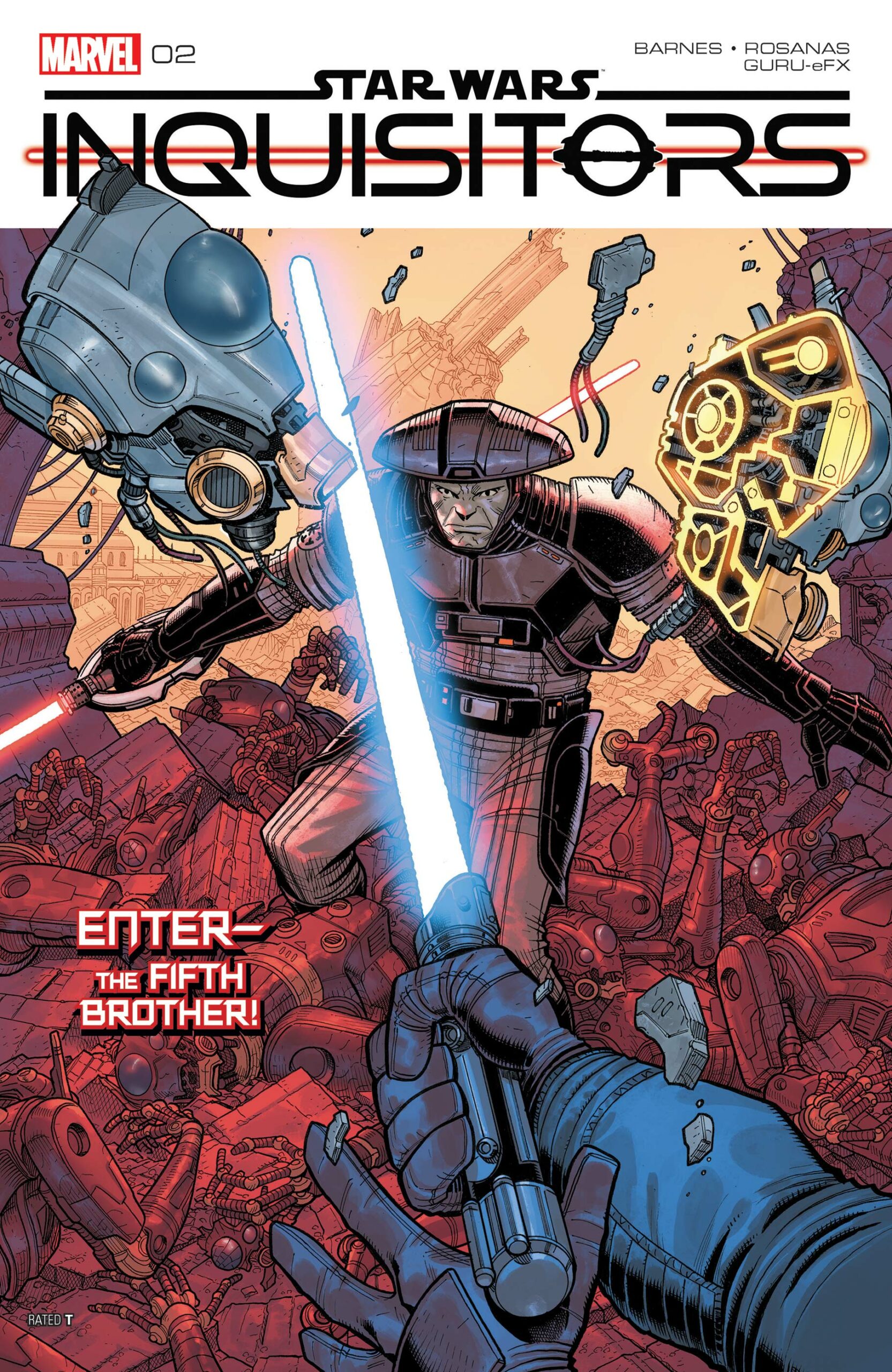
Review: Different Villain, But The Same Problems In ‘Star Wars Inquisitors’ #2
by Austin Gorton
Summary
Star Wars Inquisitors #2 puts a new Inquisitor in the spotlight, but is otherwise much the same as the first issue – for better and worse.
Overall
6/10Star Wars Inquisitors #2 is another entertaining issue chronicling the adventures of Jedi fugitive/freedom fighter Tensu Run. In it, Tensu pulls a bit of “Jedi trickery,” engages in a space battle with a group of bounty hunters, and faces off against the fearsome Fifth Brother. Unfortunately, this comic isn’t The Adventures of Tensu Run; instead, it’s a comic where its title characters are still the least interesting thing about it.
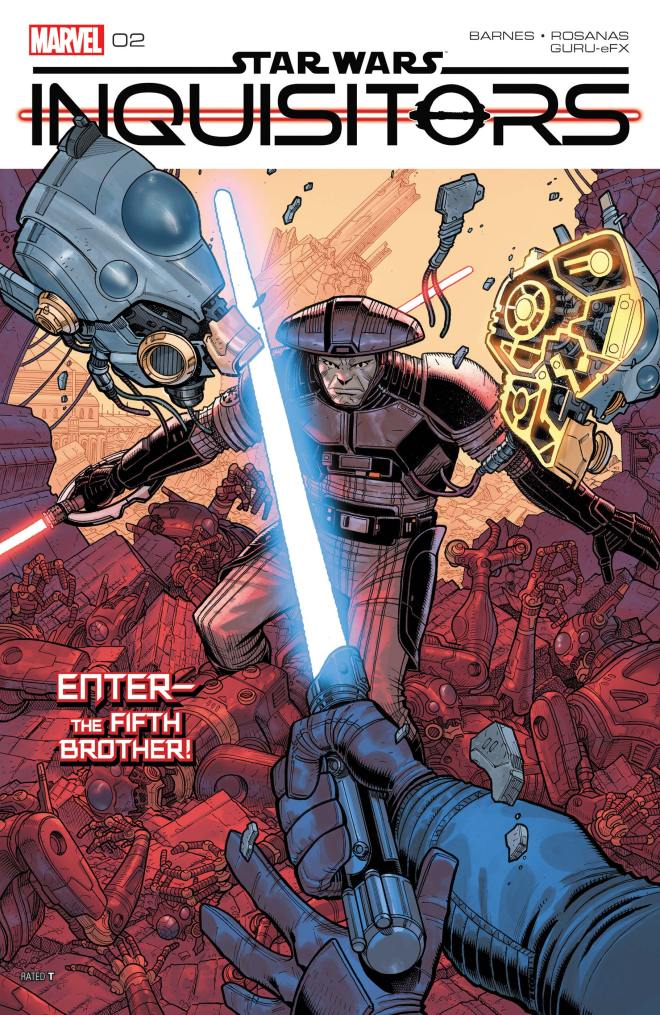
After the Grand Inquisitor led off the first issue, this one shifts its focus to the Fifth Brother (whom you might remember from Rebels or Obi-Wan Kenobi). This suggests that the series might be taking a quasi-anthology approach, where each issue focuses on a different Inquisitors’ run-in with Tensu. Hopefully, that won’t be the case. While it can serve as an effective means to showcase different members of a large cast, because of the way this series is setup it runs the risk of making its protagonists look like chumps.
If Tensu Run is meant to be the central antagonist of the book (which, after two issues, it sure seems like he is), then this would becomes a series where a different Inquisitor gets dunked on every issue until, I dunno, Vader steps in to finish off Tensu. While that may still lead to an enjoyable overall story, that doesn’t seem like the kind of story this series wants to be or was sold as.
It doesn’t help that Tensu is a far more engaging character than the Fifth Brother throughout the issue. Writer Rodney Barnes does his best to give us a peak at the Fifth Brother’s motivations and backstory. But while Fifth Brother gets two panels of flashbacks, Tensu gets two pages. The subtle way Ramon Rosanas establishes that the Fifth Brother killed his former Jedi Master is appreciated.
There’s potential in the backstory of the Inquisitors, at least collectively. The notion of former Jedi embracing the Dark Side and taking up arms against their brethren is a captivating one. Telling that tale, either individually or collectively, should pay dramatic dividends. But that’s not really happening in Star Wars Inquisitors #2.

Writing a villain-led series is tough. These are characters created to be antagonists, that exist in relation to the heroes they’re meant to oppose. Flipping that dynamic and making the villain the protagonist of their story requires more work than just giving them more page time per issue than the hero. The story has to be written in a way to support the villain as the protagonist.
The three Darth Vader series of the current Marvel Era of Star Wars have all managed to pull this off by making sure to depict Vader as the hero of his own story, complete with a supporting cast and antagonists of his own trying to foil his goals (everyone from Imperial functionaries to the Emperor himself).
Pointedly, Luke Skywalker and other heroes of the Rebellion don’t show up in Vader’s comics very often. A villain can be beaten again and again when they’re not the protagonist of the story. But no one wants to read a story where the hero gets defeated by a villain over and over. When you cast a villain as the protagonist, that becomes an all too easy trap to fall into.

And that’s what we’re getting so far in Inquisitors. Certainly, it wouldn’t be terribly entertaining to read four issues of the Inquisitors just cutting down half-trained Jedi refugees indiscriminately. They need a recurring antagonist of their own. At the same time, as intriguing a character as Tensu Run is, he’s a character who needs to piggyback on some established character or bit of lore in order to get his story told — a four issue miniseries starring a Star Wars character no one has ever heard of isn’t going to sell as well as one with the name ID of an established group of characters like the Inquisitors. But the balance between the two continues to be off. Inquisitors #2 casts the Fifth Brother as both one of the protagonists of the series and the antagonist of the story. The problem is, he can’t be both. They’re structural opposites, and the dissonance that erupts from that decision overwhelms the issue.


