
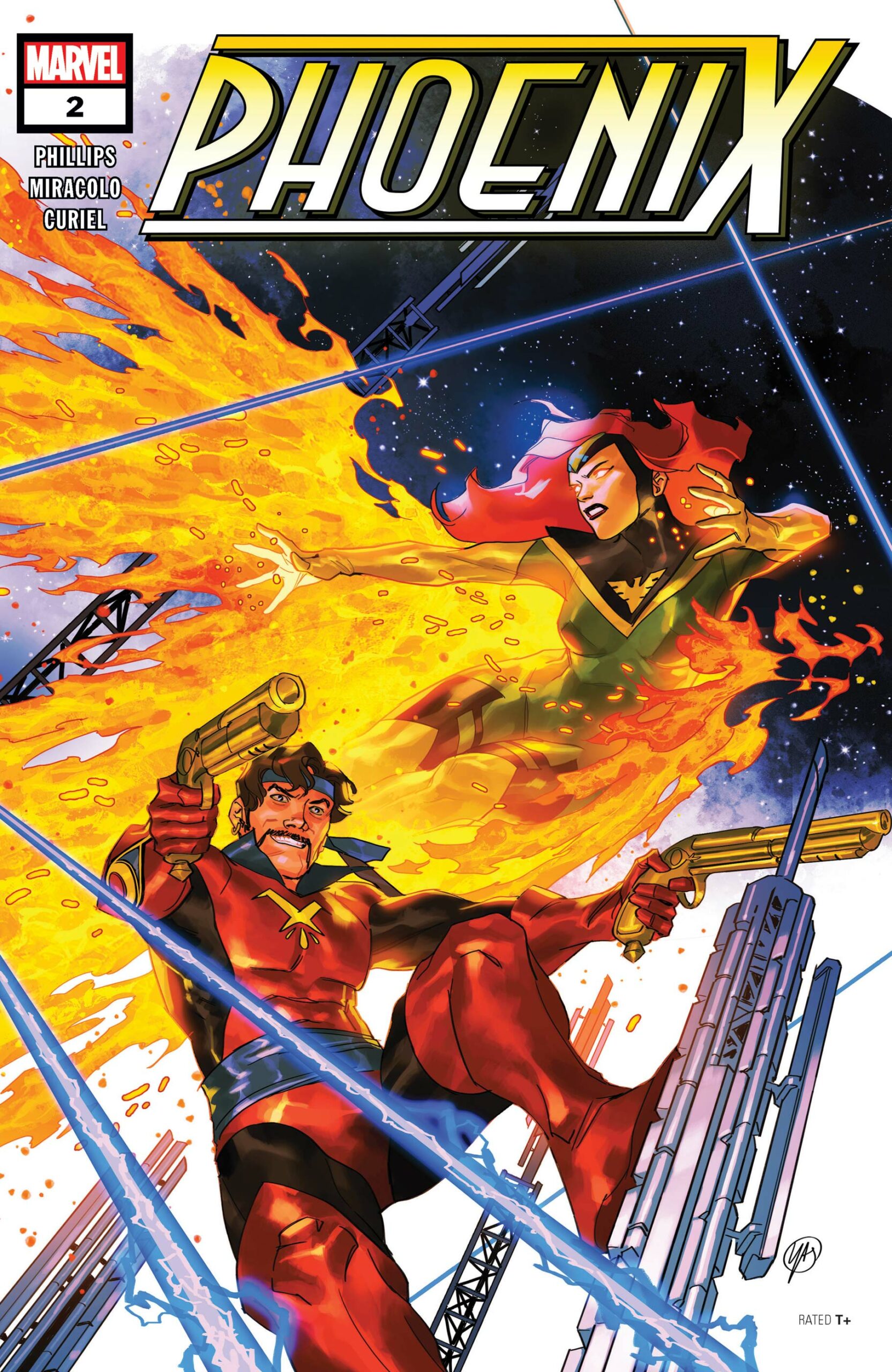
Review: The Least Interesting Thing In ‘Phoenix’ #2 Is The Titular Character
by Austin Gorton
Summary
More swipes, an out-of-character Corsair, and a frustratingly passive title character makes for a disappointing Phoenix #2.
Overall
3/10Phoenix #2 has two big things working against it. The first is its portrayal of Corsair. He’s written wildly inconsistently with how he’s been portrayed for much of the last 40 years. Writer Stephanie Phillips is clearly leaning into the “space pirate” angle, rendering him as a sleazy rogue only ever looking out for himself.
While he’s certainly been a space pirate for all of his comic book existence, his on-page actions have never before quite struck the tone that Phillips is striking here: cocky but in a sleazy way, less roguishly brash and more impish and immature. He is also operating alone, telling Jean that the Starjammers have kicked him out for essentially being such a cad. That’s simply not how the Starjammers — a group whose bond was forged in the slave pits of the Shi’ar Empire, to say nothing of the long term romantic relationship Corsair has with fellow member Hepzibah — roll.
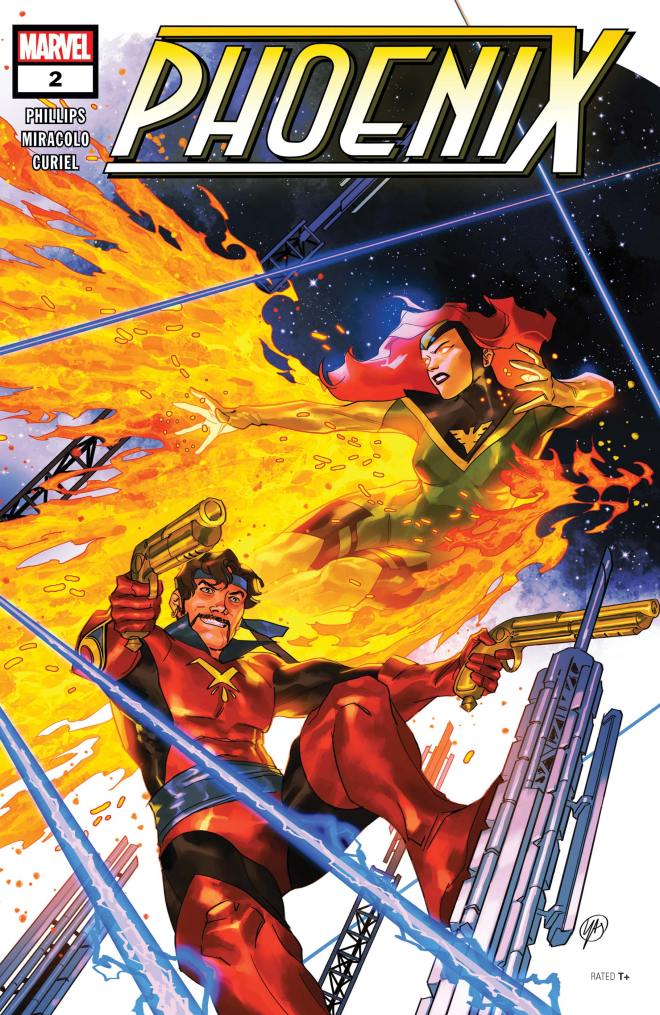
Even Cyclops cautions Jean about Corsair, via another one of their long-distance check-ins, which also rings false. Corsair has never been portrayed as a great dad, even after learning his kids were alive, he chose to stay in space with his pirate family rather than stick around on Earth to be with them. But Cyclops and Corsair made their peace ages ago.
The time-traveling teenage Cyclops even had a solo series where he served aboard the Starjammer alongside his father. Corsair has been consistently depicted as a staunch, if occasionally boundary-crossing, ally to the X-Men for years. Here, he’s suddenly running around naked in front of his daughter-in-law and acting like a wannabe Jack Sparrow.

More concerning is the fact that Jean remains remarkably reactive throughout Phoenix #2. Depicting characters taking consistent aggressive action is always tricky, as it’s simply easier to start off a story with “someone calls for help, the hero responds” and much more difficult to come up with ways to work dramatic conflict into a story if the hero is constantly ending threats before they start.
But if the purpose of this series is to put Jean on a larger stage where she can use her cosmic abilities to take big actions, she’s now 2 for 2 in simply sitting back and waiting for someone to inform her of a situation that needs her attention. Obviously, even as Phoenix, she’s not omniscient, but it’s a troubling — albeit early — pattern in which she’s relying on other people to present her with situations where she can help. For all the sweeping cosmic vistas of her using her power, she feels like the most passive character in her own book.
It’s also worth noting the art. Artist Alessandro Miracolo somewhat came under fire after the release of issue #1, when people on social media started pointing out just how flagrantly the artist was seemingly tracing art from other creators. While swiping is not an entirely uncommon practice in comic book art (and was, once upon a time, celebrated by editors and publishers as a way to maintain a certain house style or mimic a popular artists style), the volume of it present in the first issue of such a high profile series was concerning, and there are some credible suggestions he is at it again.

All in all, it’s not a strong start for Phoenix as a series. Humorously enough, the best material in Phoenix #2 is probably the handful of pages in which Adani and the Dark God Perrikus verbally spar with one another in the wake of Perrikus’ murder of Adani’s father. Their back and forth, contrasted with the running commentary from the older Adani in the narrative captions, features more electric dialogue than any of the banter between Phoenix and Corsair. It’s not clear yet what role Adani will play in the series and how that will tie in with Jean’s thematic and narrative arc, but at the moment, she’s both the least-developed and most isolated character in the series, yet somehow also its most interesting. Which doesn’t bode well for the book.

