
Talking ‘The Tin Can Society’ With Writer Peter Warren
by Benjamin Hall
Writer Peter Warren is one of the creators behind the upcoming comic The Tin Can Society. This title is part of writer Rick Remender‘s imprint, Giant Generator, at publisher Image Comics. Warren previous writing includes the screenplay for the movie, Sid Is Dead (2023). The Tin Can Society is his first time writing for comic books. Warren’s co-creators on the book are artist Francesco Mobili and artist Chris Chuckry.

Benjamin Hall: Why tell this story in comics rather than on a screen?
Peter Warren: This is an incredibly intimate story, and reading is the most intimate way that we engage with stories. Whether you’re reading under the covers with a flashlight or on the subway to work, it’s just you and I there, talking to each other. You’re helping me tell the story, too — the characters sound however you decide they do, inside your head. It unfolds at your pace, you can linger where you like. Reading is a very personal, vulnerable experience, and this is a very personal, vulnerable book. And then, of course, there’s the ability to see the story rendered so stunningly by artists like Francesco and Chris, with Rick steering the ship. And while there may be some plans in the works for this story to come to life on screen (shh, you didn’t hear that from me,) we will forever be chasing their brilliance, trying to live up to the magic they conjured on the page.
Hall: Will we possibly see some form of therapy for any of the cast of characters due to the focus on disabilities?
Warren: I think this group could use a small platoon of therapists, period. These friendships have been put through a meat-grinder over the years, fucked with by fame and wealth and betrayal. It seems like everyone is either harboring a secret, holding a grudge, or hiding a talking car. Now that I think about it, I’m not sure any therapists would want to touch these guys with a ten foot pole. But if they do, I wish them nothing but luck.
Hall: Why the focus on disabilities and ableism? For instance, is it in any way a personal issue?
Warren: Because every story about superheroes is about disability, whether it realizes it or not. Any time we talk about someone with special or superhuman physical gifts, we are talking about how power or ability is distributed — who has it, who doesn’t, what privileges it affords, what limitations it bestows. Plus, comic books have always featured stories about folx with iron super suits or adamantium skeletons or other fantastic inventions that allow characters to do things they normally wouldn’t be able to — similarly to anyone who uses crutches, wheelchairs, and other devices to better navigate a world designed for the abled. Johnny says it himself in Issue 2: what is a super suit but just a really good mobility aid, at the end of the day? I wasn’t sure that I could tell a story about any superhero that didn’t engage deeply with the politics of bodies and their abilities, and how our world perceives that.

Hall: The synopsis of the first issue makes the hero/victim sound like he is similar to either Marvel’s Tony Stark/Iron Man or DC’s John Henry Irons/Steel. Of the two which would you say your character, Johnny Moore, is more similar to personality-wise?
Warren: What links those two iconic characters isn’t the fact that they both wear metal suits — it’s how complicated they both are as ambitious, flawed, ruthless entrepreneurs. Whereas, Bruce Wayne couldn’t care less about Wayne Enterprises, Tony Stark was always at war with his own narcissism and the war between his morals and his company, it’s what made his character so rich. Steel similarly turned away from a company that betrayed him and perverted his own inventions. Johnny absolutely belongs in this club of brilliant, messy, at times genuinely shitty men—he was no angel, and certainly wasn’t immune to the corrupting effects of his fame, celebrity and wealth. After all, you don’t build an empire, nor lose most of your best friends, by being a sweetpea.
Hall: What would you say makes artist Francesco Mobili and colorist Chris Chuckry the right choices for this tale?
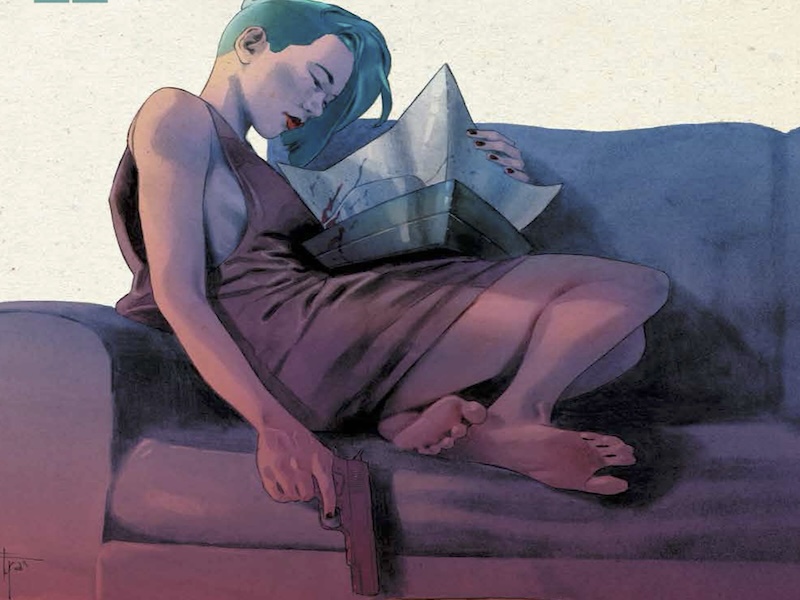
Warren: There is a strong argument to be made — and I would like to make it — that this is one of the best art teams in comics. Francesco has this effortless elegance that he brings to even the big action sequences. But what has truly stunned me is his work on the more intimate, quiet moments. We have tried to be fearless in this book, in how we render everything from tragedy to sexuality, and every panel feels like a painting (partly because he, you know, painted a lot of them.) Chris Chuckry has a truly expert hand when it comes to color and lighting, somehow they are both masters at their craft but together are doing something bigger than the sum of its parts. I am so, so deeply spoiled. I am trying to come to terms with the fact that I may never write for a better art team, and still I will have been the luckiest writer in comics.
Hall: Do you want to tease anything more about the series?
Warren: Buckle up. There isn’t a single issue in the series that doesn’t go for the jugular, emotionally, and come with a twist that will have you screaming at me on social media (@peterbwarren everywhere, hi!). So, welcome to The Tin Can Society. Prop your bike up against the tree and plop down in the grass with your new friends.
Thank you Peter Warren for your time and answers!
The Tin Can Society #1 sees release on September 18th from Image Comics and Giant Generator.


