
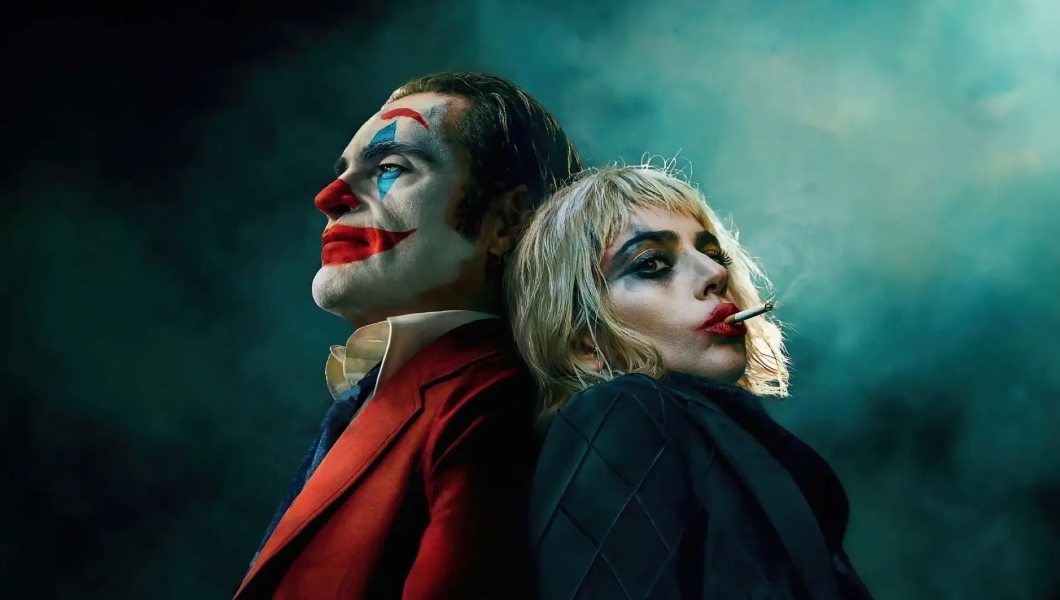
Commentary — ‘Joker: Folie à Deux’ Demonstrates Joker’s Real Power Is His Notoriety
by Frank Martin

The Joker constantly ranks high amongst not just comic book super villains but super villains across all of media. There’s something versatile and terrifying about the character. He’s had so many different forms in live action, comic books, animation, and film, but his villainy has always been adapted in interesting ways depending on the format and medium. There’s no doubt he’s horrifying as a killer who brings terror with a smile. But Joker: Folie à Deux takes a unique and different kind of approach to him. The real threat he poses isn’t from violence but from attention and notoriety, something that speaks directly to today.
This sequel picks up with Arthur Fleck (Joaquin Phoenix) in prison. He eventually stands trial for the murders he committed previously. Given the societal unrest raging through Gotham at the time, Arthur becomes something of a folk hero for the lower class, especially when he embraces his Joker persona. The trial becomes a media frenzy as his main supporter, Lee Quinzel (Lady Gaga), utilizes the media to stoke tension and cause controversy around the trial.
Even though the film takes place in the 1970s, there are a lot of parallels to today’s society. The way Joker becomes a larger than life persona, fueled by Lee’s manipulation of the media, is an incredibly powerful message for today’s vanity driven society. Had the film taken place in the present day, there’s no doubt that social media would play a humongous factor. It revealed that the true scope of Joker’s villainy isn’t just the acts commits but the societal repercussions that follow in his wake. Unlike the first film, Joker isn’t a monster roaming the streets who can kill at any moment. He’s a caged force of nature who uses his infamy to affect the city outside the prison walls. In this way, the film demonstrates that Joker is a perfect villain for today’s image obsessed society.
Joker: Folie à Deux now streaming on Max.
