
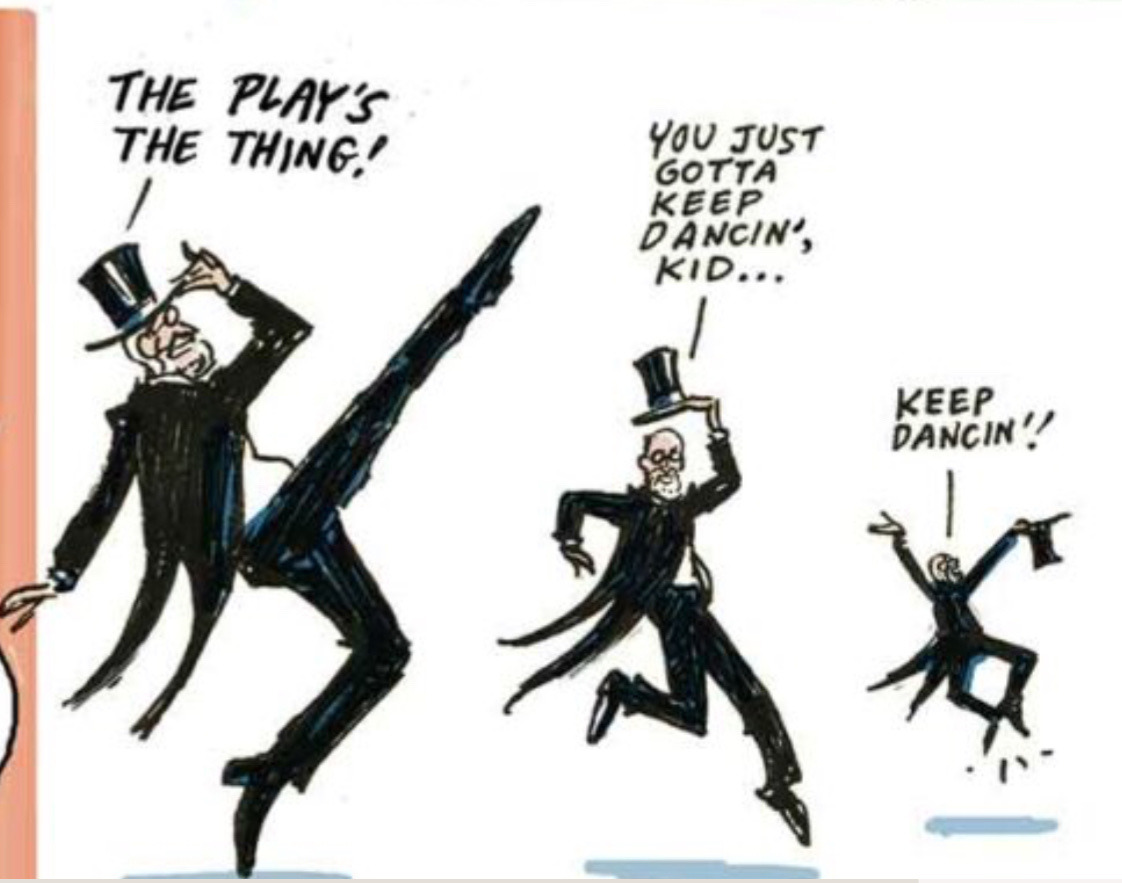
RIP Jules Feiffer: The Master Of Making The Line Dance Has Left Us
by Richard Bruton
Jules Feiffer, legendary artist, passed away on 17 January, aged 95.

Jules Feiffer made incredible, unmistakable, amazing art. And now this comics and cartooning great is gone at 95 and the comics works is lessened by his passing. You know the phrase, we won’t see his like again – well, that.
It wouldn’t be overstating it to say that Feiffer was one of the most important and influential cartoonists in America, superbly talented as a satirist, a comic maker without peer, one of those artists who could turn his hand, brilliantly, to anything – and do it better than anyone.
Winner of the Pulitzer Prize in 1986 for editorial cartooning, Feiffer’s work was brilliant from the very start, and then just got better.

He started off co-writing episodes of Will Eisner’s The Spirit in the ’40s, followed by creating his own gag comic Clifford that ran from 1949 to 1951. But Feiffer’s brilliance moved into political cartooning with a strip in The Village Voice, and later syndicated, that ran from 1956 to 1997, beginning as Sick, Sick, Sick, before changing to Feiffer’s Fables, and ending as simply Feiffer. All this alongside plenty of work for Playboy, and making art for so many gorgeous picture books. Truly, his cartooning broke new ground, becoming an opinion piece about political and social issues of the times.
His work alongside his editorial cartooning includes the graphic novels Tantrum (1979) and the Kill My Mother (2014-2018) trilogy (Kill My Mother, Cousin Joseph, The Ghost Script). But he also worked as an author, playwright, and both an animation and movie scriptwriter, creating children’s books, writing plays, and working in the movies, all alongside making so many wonderful cartoons, cartooning that would lead to the 1986 Pulitzer Prize.

His cartooning broke boundaries, covering the civil rights movement, the sexual revolution, racism, and the politics of the day. He testified for Lenny Bruce at his obscenity trials, he criticized J Edgar Hoover, the Vietnam War, and Nixon, he went where others didn’t.
And it was all done with his perfect, minimalist line. Spontaneous and alive on the page, his cartoons spoke to so many.
We genuinely won’t see his like again.

Jules Feiffer (January 26, 1929 – January 17, 2025)
Clifford —


Sick, Sick, Sick & Feiffer —


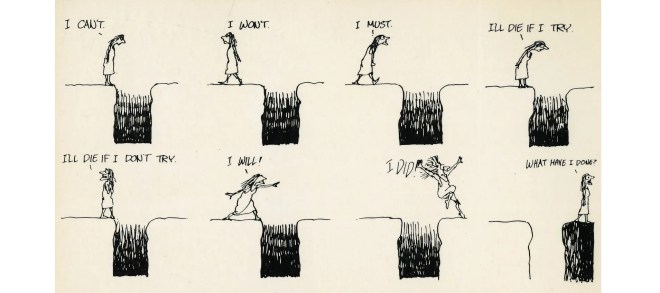


Tantrum —


Kill My Mother —


Cousin Joseph


The Ghost Script


Amazing Grapes


And we’ll end with more Feiffer — gorgeous —

‘Big Town’ – 2015


