
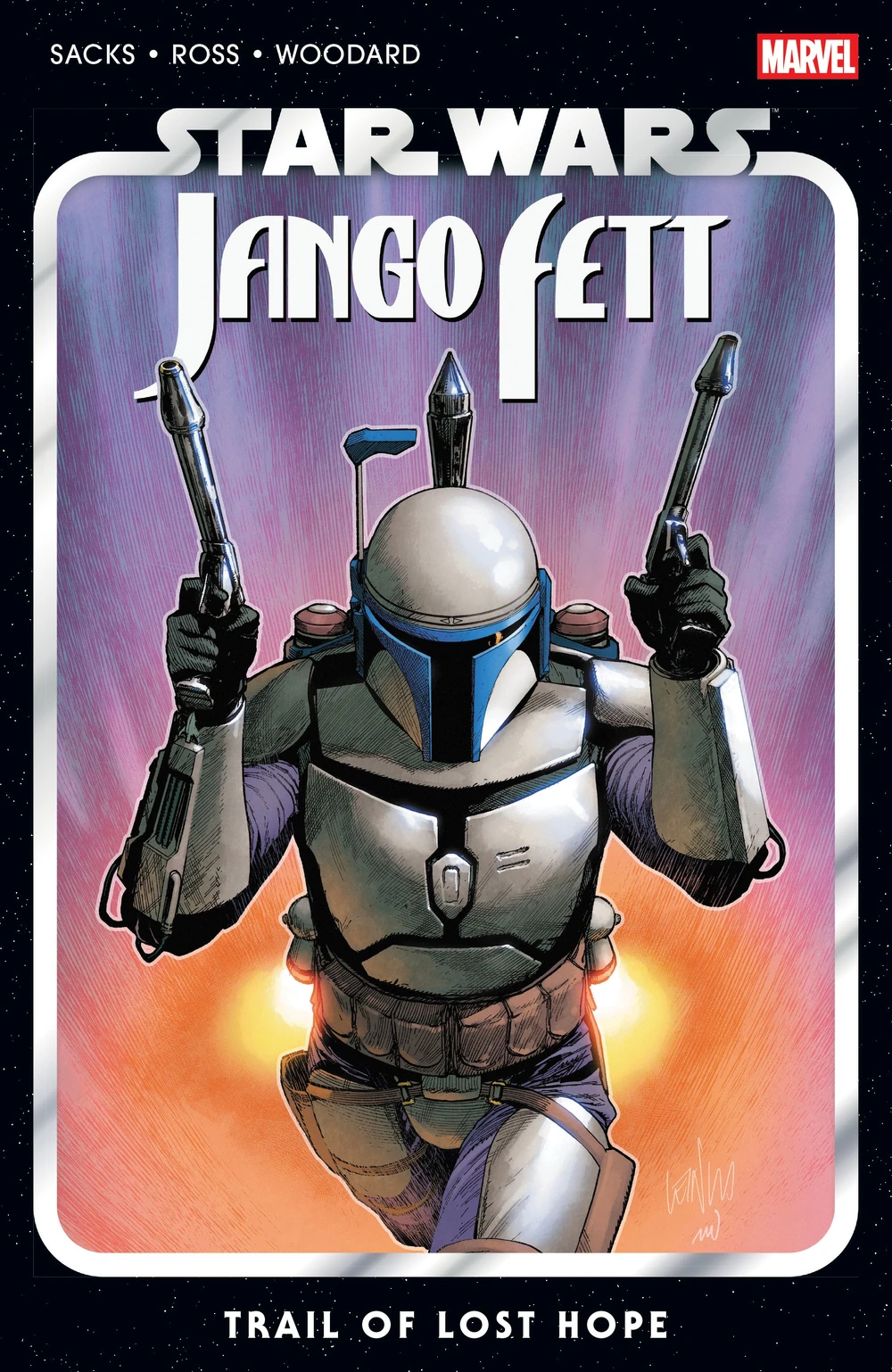
Review — ‘Jango Fett: Trail Of Lost Hope’ Successfully Spotlights The “Simple Man” Of ‘Star Wars’
by Austin Gorton
Summary
Ultimately, the miniseries works best when it presents Jango as a distinctive character. He has no horse in the political (and soon to be military) fight between the different factions in the story. He just wants to get paid. Cementing Jango, who previously was best known as the guy responsible for birthing an entire army of clones into the galaxy, as one of those “everyday joe” characters is a smart move, and it helps make this series an ultimate success.
Overall
8/10In the grand scheme of Star Wars, of all the characters descended — either biologically or spiritually — from Jango Fett, Jango himself is the least interesting. Boba Fett? Everyone loves him. The clones? Rex, Gregor, the Bad Batch, all fan favorites. The Mandalorian? He’s the anchor of Disney’s live action TV shows, and Grogu’s best pal. But Jango? Well, Jango is mostly notable as being the less cool. Or, at least, the less memorable version of all those other characters. He looked neat, then he died. Can one comic book miniseries single-handedly change all that and help elevate Jango Fett? To be fair, asking any single story, let alone a four issue comic book miniseries awash in a sea of comics in 2024, to single-handedly elevate a character to the likes of Boba Fett or the Mandalorian is a pretty big ask. Certainly, Jango Fett: Trail of Lost Hope does not accomplish that herculean feat. But it does succeed as both an entertaining story and an effort to define Jango Fett as something other than “the boring Fett.”
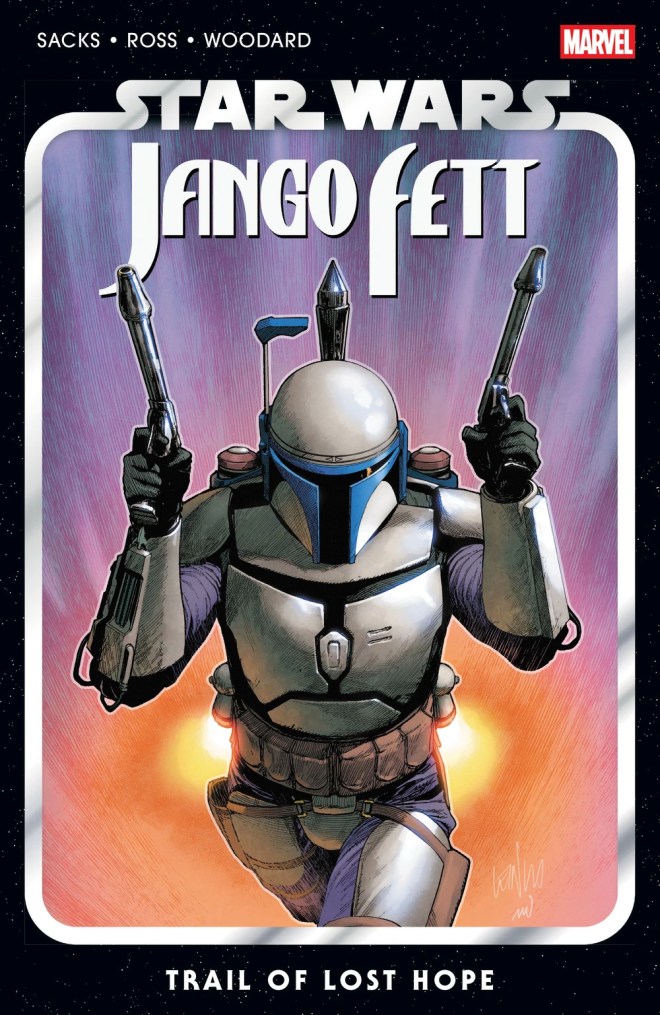
This comes in the form of a kind of blue collar weariness that permeates writer Ethan Sacks and artist Luke Ross’ depiction of the character. Presumably inspired by his “I’m just a simple man trying to make my way in the universe” line in Star Wars: Episode II — Attack of the Clones (a line directly quoted in issue #1), they depict the title character in Trial of Lost Hope as someone who just wants to do his job, get paid, and move on. But he is constantly having roadblocks thrown up that cause everything to be more difficult than it should be for him, whether it’s the bounty in the opening pages of the story refusing to come quietly, or the promise that the MacGuffin at the center of the plot will be a piece of cake only for Jango to learn it’s a hotly contested item being sought by multiple bounty hunters and has the potential to set off a planetary — and possibly wider — war.
Here, he takes a simple retrieval job and ends up getting drawn into warring factions on alien world. Later in the Skywalker Saga, he donates some genetic material for cash (and a son), and he ends up spawning an entire army that plunges the galaxy into war and upends a thousands-of-years-old political order (and loses his head in the process). Jango Fett is a sort of spiritual opposite to Anakin Skywalker or Luke Skywalker; someone who wants a life of insignificance free of adventure, but finds himself dragged into the arch plots of the Star Wars narrative is a characterization that sets him apart from his biological and spiritual successors.
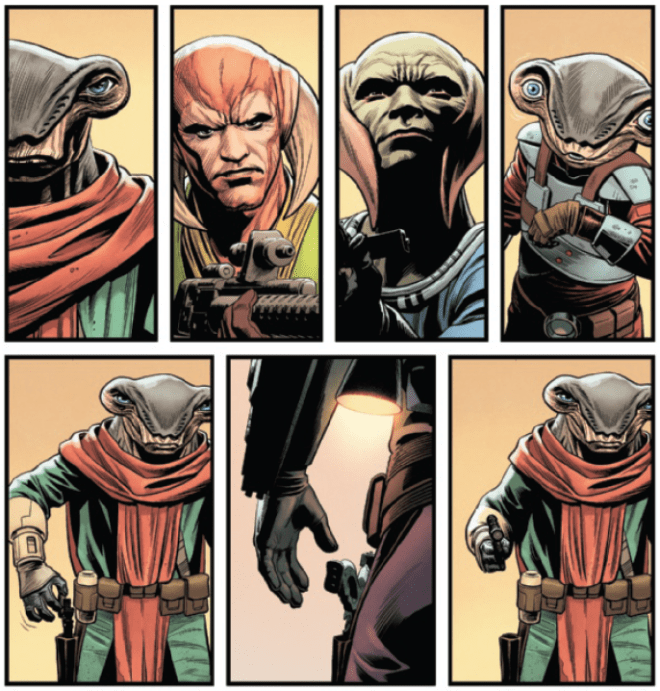
Trial of Lost Hope also taps into Star Wars’ western roots, featuring morally gray lawmen walking into taverns in search of their prey and showdowns in the middle of backwater towns between a hired gun. Sacks and Ross use these sequences to showcase Jango’s skills and ingenuity as a fighter, such as when Jango uses his jetpack not to escape but to kick up enough dust to create a chaotic scene, allowing him to strike as an invisible figure as if from out of nowhere.
Occasionally, the story suffers when it downplays Jango, allowing him to get overshadowed by the likes of Aurra Sing, another largely underdeveloped bounty hunter with a distinctive look from the Prequel Era who eventually functions as Jango’s partner (of sorts). It’s also less engaging when it deviates from its characterization of Jango as a hardworking jobber, pushing him instead into a less interesting “badass bounty hunter” role that seems more suitable for his son.
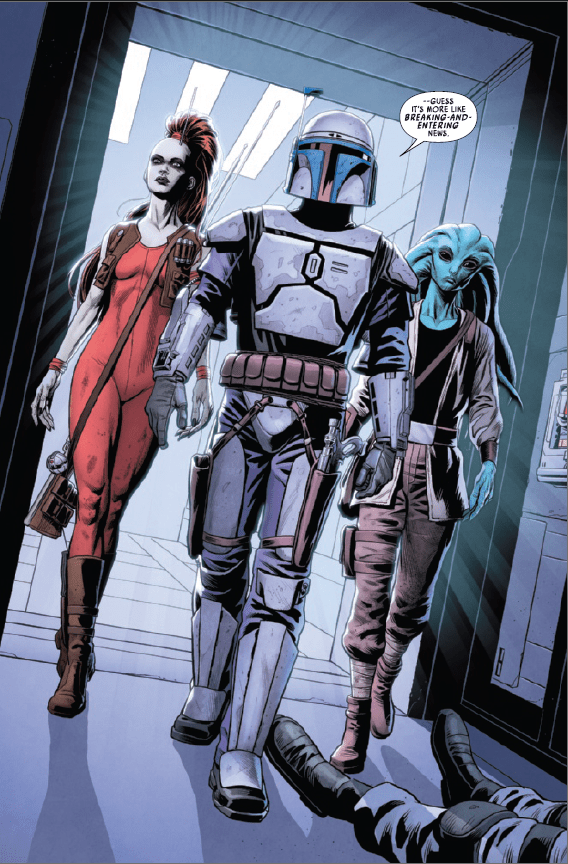
Ultimately, the miniseries works best when it presents Jango as a distinctive character. He has no horse in the political (and soon to be military) fight between the different factions in the story. He just wants to get paid. He even cracks dad jokes on occasion. The Star Wars universe has lots of knights and princesses and assassins and spies and generals. It doesn’t have a ton of jobbers — beings who don’t care about the twists and turns of galactic politics or the millennia-long conflicts between assorted space monks who nevertheless get swept up in the wake of those conflicts. Cementing Jango, who previously was best known as the guy responsible for birthing an entire army of clones into the galaxy, as one of those “everyday joe” characters is a smart move, and it helps make this series an ultimate success.
