
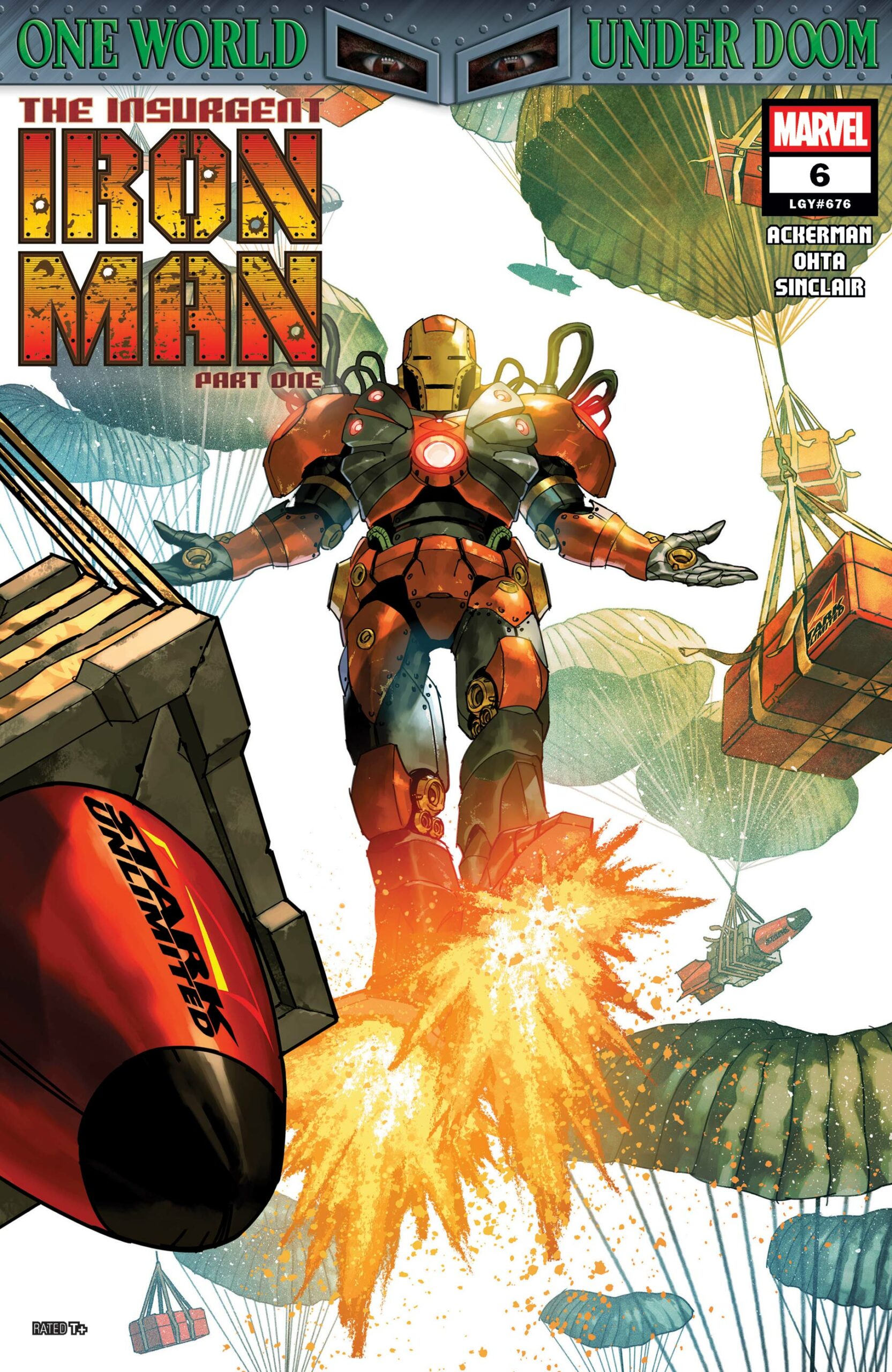
Making The Most Of A Crossover Tie-In — Reviewing ‘Iron Man’ #6
by Austin Gorton
Overview
Iron Man #6 is that all too rare comic that manages to participate in a linewide-crossover in an engaging way, while using the tie-in to advance the book’s regular plots and themes.
Overall
8/10Usually, when a major crossover plunges its narrative tendrils into a series that doesn’t otherwise have a direct connection to it, the result is one of two things. Either the tie-in issue is ultimately superfluous, paying lip service to the crossover but little else (the recent X-Factor #7 is a good example of this). Or the tie-in completely derails the series, pushing whatever ongoing character and plot threads are being developed into the background in favor of the crossover.
Certainly, whatever Iron Man was heading off to do after last issue likely isn’t what happens in Iron Man #6. Yet this issue, nevertheless, is a rare case of a book taking a crossover tie-in, focusing in on an element that speaks to the series’ strengths, and turning out an issue that, while not directly advancing the ongoing plotlines, still feels like a “regular” issue.
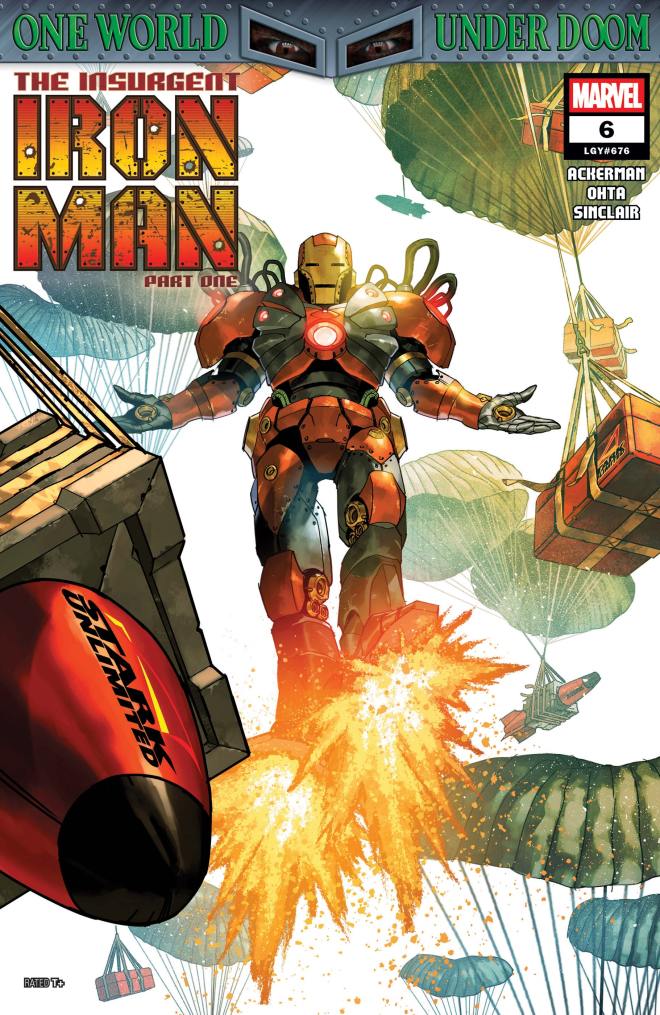
Tying into “One World Under Doom“, Iron Man #6 is a taut political thriller of an issue. Opening in media res, it details Tony Stark’s negotiations with an anti-Doom Latverian resistance group. Their leader, Hunyadi, wants Iron Man armor. Tony counters with an unlimited font of cryptocurrency. But what Hunyadi really wants is Stark-made weapons.
Here, writer Spencer Ackerman smartly brings it all back around to the series’ ongoing narrative. Last issue ended with Tony declaring his intent to shut down Stark Solutions’ weapons manufacturing once and for all. Now, thanks to the crossover, he’s presented with a scenario where making weapons might be the best tool to defeat a world-conquering tyrant.
This kind of stuff is right in Ackerman’s — an accomplished political journalist’s — wheelhouse. Tony doesn’t even don his armor until about 15 pages into the story, yet those 15 pages are more tense and compelling than any of the superhero action that follows.
The way Ackerman mixes a kind of real-world verisimilitude with the realities of the characters existing in a comic book universe populated by Iron Man, Doctor Doom and the Avengers throughout the back-and-forth between Tony and Hunyadi is captivating. It strikes the right balance of being serious and sophisticated without outright ignoring the more outlandish elements of the setting.

If anything, the sequence in the back third of Iron Man #6, when Tony dons his armor and engages in battle with the Russian Winter Guard, feels more like a tacked-on surrender to the conventions of the genre than doing a crossover tie-in book in the first place.
Artist Julius Ohta continues his strong work — you can hear the clicking and clacking as the Repulsword forms itself because Ohta puts in the work to render all the different gears and mechanisms in great detail. But with the Winter Guard sequence, the issue settles back into the series’ usual “solid comic book storytelling” mode, instead of the more elevated & engaging material at the start.

Still, Iron Man #6 is a success. It shows the best way for a series to handle inevitably getting pulled into participation in a big crossover event: lean into the skid. Rather than pay lip service to it or put all the book’s regular business on hold, find the element of the larger story that speaks to the nature of the series, and use the crossover to still advance the overarching themes of the series. That way, as this issue illustrates, the tie-in can service both masters.
