
Review — ‘Star Wars: Inquisitors’ Succeeds Despite Its Title Characters
by Austin Gorton
Overview
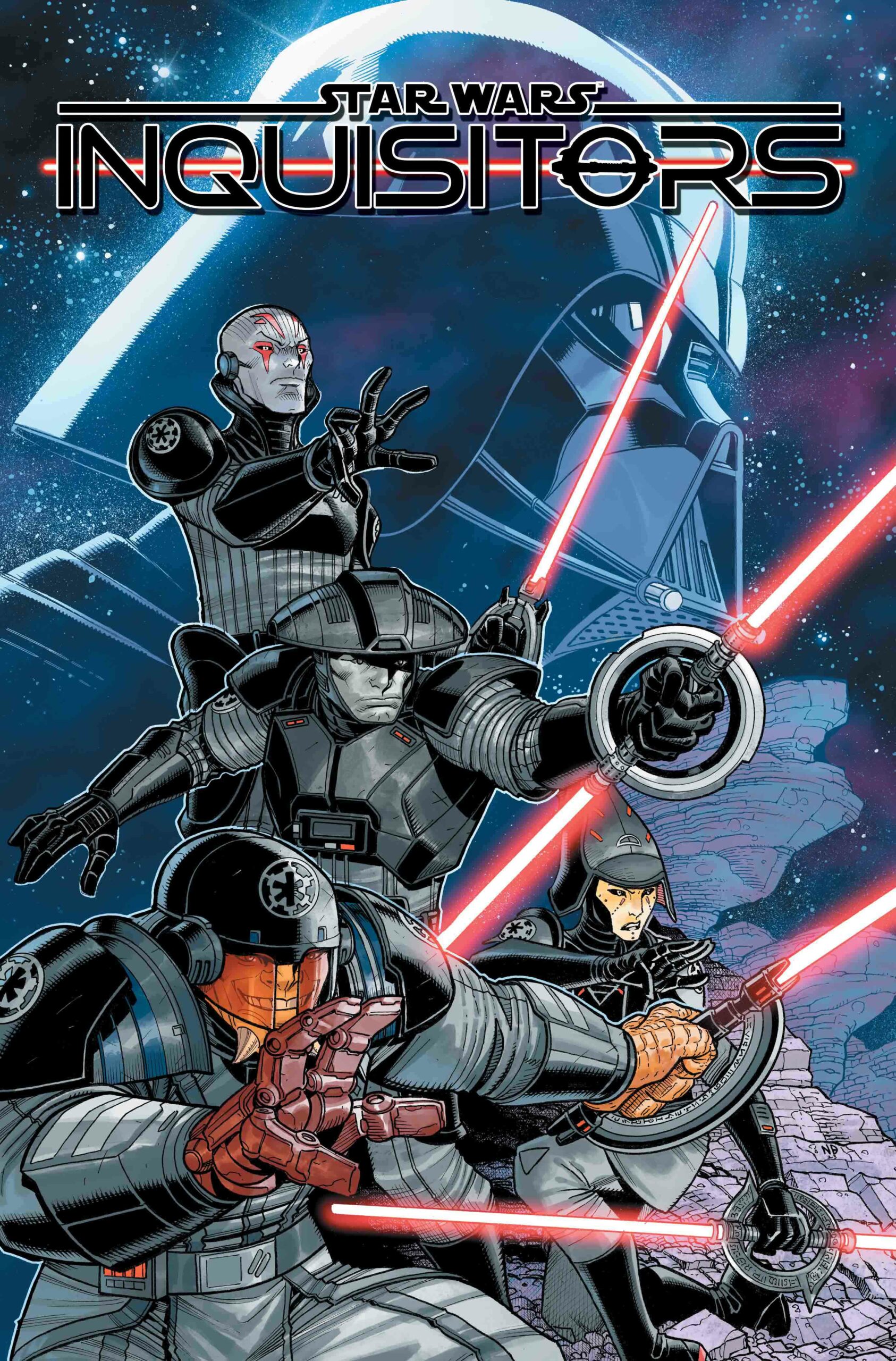
Star Wars: Inquisitors collects the miniseries by the same name, and is a fun Star Wars adventure starring a new character and featuring richly-detailed art from Ramon Rosanas. But if the goal was to dig into the Inquisitors and make them interesting, it fails, as they’re the least engaging thing in their own book.
Overall
7/10The Inquisitors occupy an interesting place in the Star Wars mythos. Seemingly born of the need to give the good guys somebody with a lightsaber to fight that isn’t Darth Vader (since, after all, if Ahsoka, Kanan Jarrus, and Ezra Bridger are fighting Vader all the time, it diminishes his impact), the Inquisitors fall into the same almost Rule of Two-breaking area as Asaji Ventress before them.

They are Force-using, red lightsaber-wielding bad guys who aren’t technically Sith. But beyond that, there isn’t much which defines them, as individuals or a collective. That leaves a fair amount of wiggle room to explore the motivations and characterization behind these villains, but aside from Reva in Obi-Wan Kenobi, no project has really set out to do so. Whether it intends to or not, by building this miniseries around them, Star Wars: Inquisitors is poised to explore that realm.
Yet somewhat ironically, it isn’t really about the Inquisitors. Instead, the series is really about Tensu Run. A survivor of Order 66, Run is positioned as sort of a proto-Luke Skywalker. Thanks to a heroic rescue mission depicted via a lengthy flashback sequence in the middle of the first issue, he’s become somewhat legendary throughout the galaxy. So much so that Darth Vader fears his growing (political) power, prompting him to make Tensu Run the Inquisitors’ chief mission for the duration of the miniseries.
On the one hand, it’s a smart move on the part of writer Rodney Barnes. It gives readers someone to root for, an original character with the space to develop however the story needs, without fear of tripping over events in the chronological future of the Star Wars narrative. Via a (loosely fleshed out) supporting cast, Run is established as being close to the fantasy literary tradition of knights that inspired the Jedi Knights.
He has, essentially, a sidekick and squire, a cleric, an elderly master from whom he can seek guidance, and a growing flock of refugees from the Empire that look to him for protection. It has an archetypal purity to it that serves as quick shorthand for characterization.

Yet on the other hand, the creation of Tensu Run means he is often a far more engaging character than any of the Inquisitors. Barnes gives us periodic peaks at specific Inquisitors’ motivations and backstory, yet they still pale in comparison to the effort put into fleshing out Run. There’s potential in the backstory of the Inquisitors, at least collectively. The notion of former Jedi embracing the Dark Side and taking up arms against their brethren is a captivating one. Telling that tale, either individually or collectively, should pay dramatic dividends.
Writing a villain-led series is tough. These are characters created to be antagonists, that exist in relation to the heroes they’re meant to oppose. Flipping that dynamic and making the villain the protagonist of their story requires more work than just giving them more page time per issue than the hero. The story has to be written in a way to support the villain as the protagonist. But that’s not really happening in Star Wars: Inquisitors.

The art comes from Ramon Rosanas, who has amusingly bounced between the Star Wars books at Marvel and the Star Trek books at IDW over the last couple years. His work here and elsewhere is strong in a way that isn’t terribly showy. It’s very clean and detailed — backgrounds are always deep and varied, the clothing of everyone in a crowd scene is unique and fully rendered.
He consistently gets work in licensed books, presumably, because of a knack for likenesses, in which he manages to echo the look of familiar characters without resorting to pure photorealism (which isn’t as much of an issue here, where the only previously-appearing characters are Darth Vader — who wears a mask — and the Grand Inquisitor, who has already appeared elsewhere with varied looks). His action scenes aren’t always the most dynamic, sticking to standard panel sizes and layouts, but there’s a richness to them that makes them easy to appreciate.

Certainly, it wouldn’t be terribly entertaining to read four issues of the Inquisitors just cutting down half-trained Jedi refugees indiscriminately. They need a recurring antagonist of their own. At the same time, as intriguing a character as Tensu Run is, he’s a character who needs to piggyback on some established character or bit of lore in order to get his story told — a four issue miniseries starring a Star Wars character no one has ever heard of isn’t going to sell as well as one with the name ID of an established group of characters like the Inquisitors.
Yet should this series have any lasting legacy, it will likely come in the form of Tensu Run, its proto-Luke Skywalker, and his very own band of merry rebels, a character built of tropes which hint at a deeper, even more involved story just below the surface. If so, that might make the Star Wars galaxy a little more interesting, but would still be a bad look for its title characters, who fail to take advantage of the opportunity to become more than sinister-looking jobbers killing time before Darth Vader inevitably shows up.