
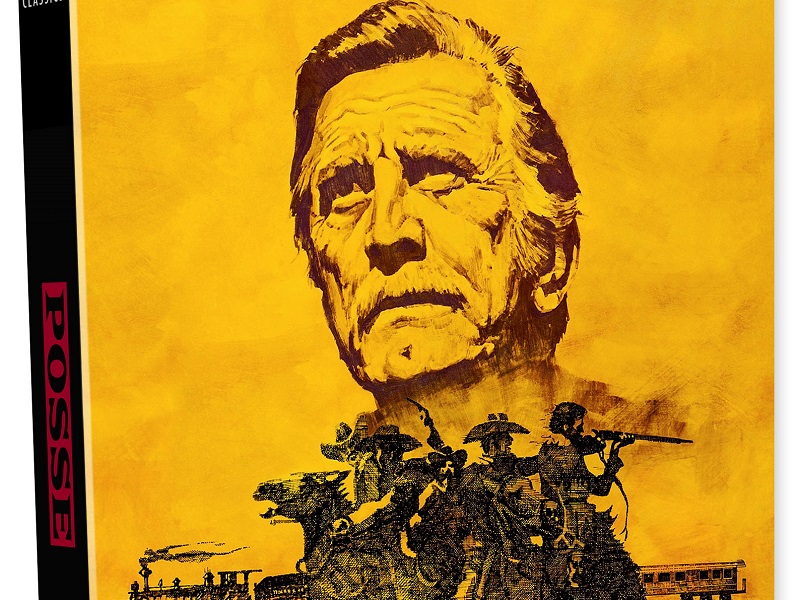
You’ve Heard Of Black Hats In Westerns But What About Denim? ‘Posse’ Reviewed
by Rachel Bellwoar
Part of the magic of watching movies is their ability to transport viewers to another time. That’s why a film shot in the ’70s can still take place in 1892. When it’s made isn’t supposed to matter, but as far as the historical accuracy of Kirk Douglas’ Western, Posse (1975), goes, it feels very ’70s, and not just because it features New Hollywood actor, Bruce Dern, alongside aging leading man, Kirk Douglas, but because, for being set in the 19th century (allegedly), these locals have very ’70s hair.

Then there are the costumes, or more specifically Dern’s pristine denim jacket and jeans ensemble. A cowboy in jeans isn’t unheard of by any measure – in fact, quite the opposite, and yet there’s something about this particular denim outfit being used to set Dern apart from everyone else (he’s the only one wearing the fabric) that’s delightful but in a it’s-so-wrong-it’s-amusing way and not because it feels true to his rugged outlaw character. I mean, all they would’ve had to do to sell it was roughen the denim up and show some rips or stains. As the cast member representing the up and coming Easy Rider generation, too, putting Dern in denim exudes ’70s, like he walked onset in his street clothes. It does not, on the other hand, sell the period illusion of a guy who’s been on the run from the marshall (Douglas) and his posse and should look the part.
Surprising no one, though, Dern can act and his performance is this movie’s biggest selling point. As for Douglas, Posse marks the second and last film he would direct after Scalawag (a pirate film where Douglas also gave himself the lead). It’s not a particularly visually exciting effort. At one point Douglas holds the camera on the posse’s reflection as the water ripples and it feels forced, or he doesn’t cut away but waits for the train to fully stop. These are deliberate choices but they come across as limp and uninspired. Then there are the performances he pulls from some of the ensemble cast. The mob is not mobbing in this movie and the rednecks he throws in the posse’s way to act as cannon fodder – clearly they were told to play it broad and lean into caricature but the result is not having to grapple with the human cost of violence.
There is something interesting about Posse. I know I’ve spent a lot of time ripping it apart and I do feel the flaws stand out more than the film’s successes yet there’s value to sticking it out to the end and it is a different kind of Western. That’s how it was advertised, as filmmaker and historian Steve Mitchell goes over in his commentary, and for once it’s not hyperbole. Christopher Knopf and William Roberts’ screenplay takes some surprising turns and it is a good example of a film using genre to send a message about political corruption.
As someone who wasn’t as taken by Posse, I highly recommend Mitchell’s commentary, too. His perspective is more positive and I came away from it with a newfound appreciation for Fred Koenekamp‘s approach to lighting in this movie. Mitchell also talks about the influence of The Wild Bunch in the use of more squibs for the blood and makes some interesting observations about how the posse are presented as a group. He also touches on the horse stunts in this movie which appear extremely dangerous, but doesn’t confirm whether any horses were hurt – only that there were concerns.
Posse is available on Blu-ray starting April 29th from Kino Lorber.