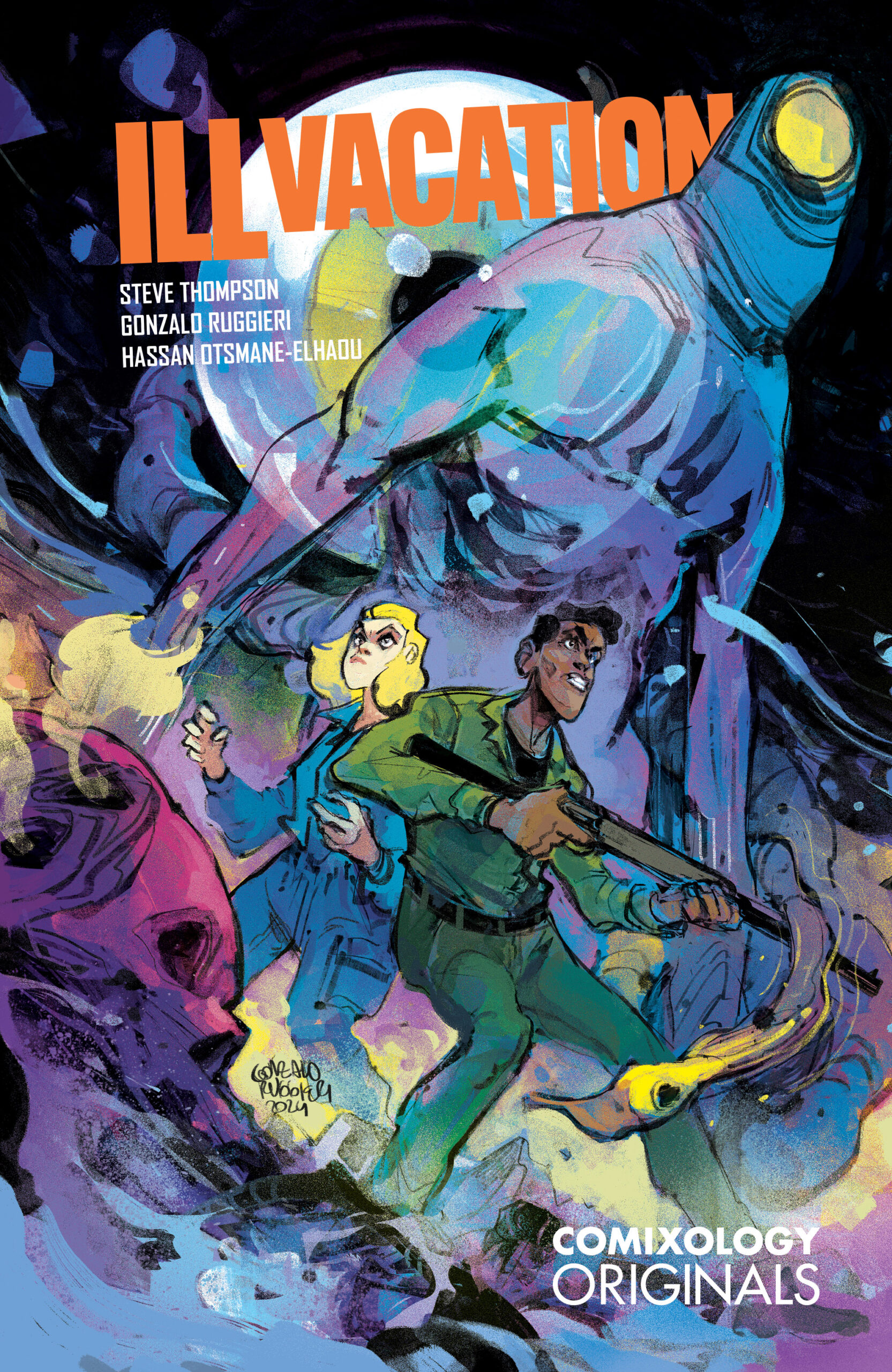
EXCLUSIVE: Steve Thompson Reveals His Inspirations For ‘Ill Vacation’ Graphic Novel Debuting On ComiXology This Week
by Olly MacNamee
British writer Steve Thompson and Argentinian artist Gonzalo Ruggieri are teaming up to make their Comixology Originals debut this summer with the graphic novel Ill Vacation, “a psychological thriller about two young soldiers who volunteer to take an experimental drug in the 1940s.” And we’ve been given an exclusive insight into the inspirations that fuelled this new digital-first graphic novel debuting this Tuesday, 17th June.

So, without further ado, take it away, Steve:
Inspirations for Ill Vacation:
Films
Overlord (2018)
A second world war film that’s written like a B-movie but with a budget and performances that elevate it. It’s a lot of fun and it moves fast, and while there are a few surprises, it plays out much as you’d expect, and that’s not a bad thing at all. The attention to detail in the setting is great, and I recommend it to horror fans.
Captain America: The First Avenger (2011)
Captain America’s first movie is a great superhero movie, as well as a war film, because its central character is shown to be heroic even before the supersoldier serum kicks in and gives him super strength and reflexes. Just because the Steve Rogers we see at the start is scrawny and weak, his resolve and desire to do good are already way above an average person. It’s a hard film not to love.
Jacob’s Ladder (1990)
Jacobs Ladder honestly doesn’t look like anything else. Visually inspired by Francis Bacon and featuring moments that are much more disturbing than they are gory, this horror movie plays with the idea of trauma and losing control in a way that truly inspired me.
Army of Darkness (1992)
Like all the Evil Dead films, this is a great example of going over the top and then keeping going on to absurd lengths to make the viewer either repulsed or laugh out loud. The way the camera moves gives you vertigo, and while not completely scary, it is creative and silly in just the right ways.

The Keep (1983)
My first exposure to a war film that’s also a horror film, and it has a fantastically memorable soundtrack to boot. I’ll admit that the performances don’t always work, but it still conjures dread and awe in all the right ways. The basic plot is that a group of Nazi soldiers overtake a Romanian keep and start to die. I wish it were better and more cohesive, but it is memorable and beautiful in places
Under the Shadow (2016)
Under the Shadow isn’t just a great horror/ghost film; it also has something to say about the trauma left behind by conflict and upheaval. Set in Tehran and centred on a mother and daughter, it shows very little of the “evil presence” terrorising them, but when something does appear, it is truly shocking and unexpected in the best way. By holding back for most of its time, the film creates unease mostly through suggestion, and it looks great, too.


TV shows
A plane crashes on a “deserted” island, and the survivors have to battle monsters and those who arrive first to find a way home. There are a few parallels in Ill Vacation to Lost, chief of which is that it’s mostly set on one island, which other people keep finding their way to. Lost also reveals its secrets in stages, and I do appreciate the overall mythology of the show, even if not everything was completely explained. Having watched all of Lost recently, though, I do really like the storytelling, with certain episodes being standouts among a roster that includes many more lame ones. Overall, it’s quite a ride.

Books
The Turn of the Screw by Henry James
What I love about this ghost story is the slow unfolding of the events that preceded a governess taking over the care of two young children, while their father is absent, in an old country estate. The bad stuff starts when she sees a man looking at her from the battlements on top of the house, and the unhealthy relationship that this dead man and his lover had with the children. Meanwhile, the children pretend they cannot see the ghosts, while it becomes clear that they might. All of this is told by the governess herself, an unreliable narrator swayed by romanticism and reading things into situations that possibly aren’t there. It all leads to a shocking climax of a story told in a desolate and forbidding place with tons of atmosphere.