
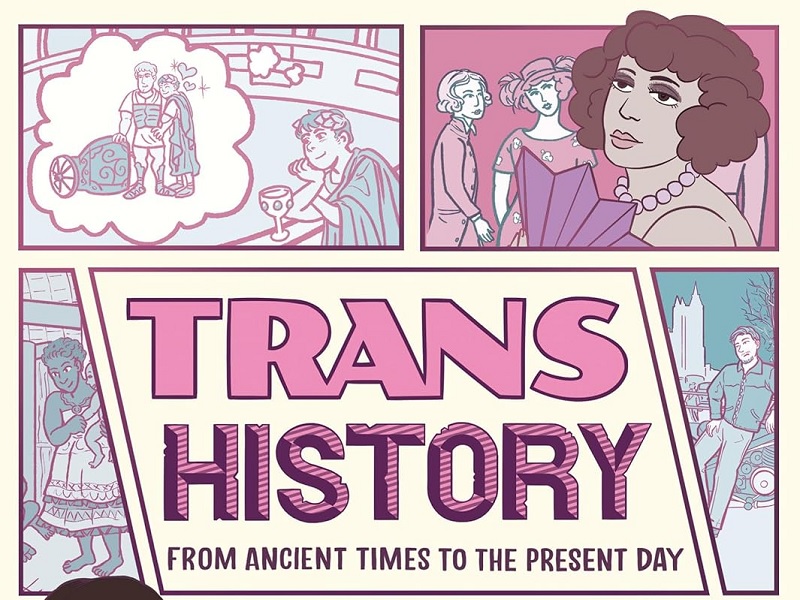
Talking ‘Trans History: A Graphic Novel’ With Alex L. Combs And Andrew Eakett
by Rachel Bellwoar
Trans people have always existed but, while it’s one thing to say that, it’s another to be able to point to specific examples and provide a more concrete timeline of trans history. Alex L. Combs and Andrew Eakett have collected just such a record with their new graphic novel, Trans History: From Ancient Times to the Present Day and you can learn more about it in the following interview:

Rachel Bellwoar: Trans History covers so much territory. How did this project even start and were you always set on the final product being a graphic novel?
Alex L. Combs and Andrew Eakett: We knew we wanted to do a graphic novel from the start, but we had a couple different ideas of what it was going to be. Near the end of 2019 we’d been doing some research in the GLBT Historical Society Archives which was so inspiring and energizing! That’s when we decided we wanted to continue researching trans history and make a graphic novel about it. Although there were some great picture books and graphic novels about LGBT history that included trans people, there weren’t any at the time that specifically focused on trans history, so it seemed the perfect time to do one.
Bellwoar: Were there a lot of points you knew you wanted to cover going in or was it a lot of discovery?
Combs and Eakett: We had a few historical figures and movements that we knew we wanted to cover for sure going in, but as we continued to dig into the available research the potential scope of the project seemed to expand exponentially. It turns out there’d been a lot of work being done recently by scholars, historians, and archeologists that’s only become available in the past decade. A lot of the papers that we found had only recently been published and that made it extra exciting to be getting that valuable information out to a wider audience, including people who aren’t trans. Everyone can benefit from unlearning simplistic myths about history.
Bellwoar: As you go over in the book, the sources for some of these accounts are sometimes less than ideal (like arrest records, which can be both prejudiced and one-sided) but the stories they reveal are crucial. What was it like trying to locate these documents?
Combs and Eakett: For the most part historians had already done the hard work of finding and publishing these documents in their own scholarly papers and books. We wanted to try and avoid making any new claims or putting forth any new theses that hadn’t already been researched and written about by professional historians. When we did go looking for primary documents on our own we were surprised at how accessible a lot of them were online, because archivists had already digitized them. That’s why we dedicated the book to these historians, archivists, and activists that made it all possible.

Bellwoar: I’m curious about the choice to sometimes include a narrator character (like in the Medieval section), whereas other times the narrator is left a voice. Was that planned or figured out as you went?
Combs and Eakett: Since the book took shape over multiple years, and over that time we tried a lot of different framing techniques. At first we considered creating a character or group or characters to narrate throughout the entire book, but eventually decided that we needed to just give as much room for the actual information as possible. Ultimately we decided the information was interesting enough that it didn’t really need a framing device. Alex asked for advice on the structure from one of his former college professors, and ultimately we decided that having a slightly different vibe for each chapter helped keep it moving and prevented it from being boring like can sometimes happen with history books. We are also hoping that this will facilitate readers in being able to just open the book to any part and read one short self-contained story.
Bellwoar: Today we hear of millionaires investing their money and using their power towards the most horrible of aims that it feels shocking to learn of a trans millionaire. What can we learn from the efforts of trans philanthropists like Reed Erickson?
Combs and Eakett: There are definitely a couple trans millionaire philanthropists out there today, but they tend to stay mostly private. However, we can say that these are some of the people who contribute to keeping trans archives and trans studies programs going today. In Reed’s case, he identified what was needed, knew he could help, and he went for it. That kind of bold action in the service of others is admirable.
Bellwoar: This whole book is a massive achievement but are there any stories you’re especially proud of or excited to bring to people’s attention?
Combs and Eakett: Thank you, we’re very happy with how it came out and we’re excited to continue to use comics to share stories from trans history and today. We hope that this will be just a starting place for people to dig deeper into these stories and histories, and the many more that aren’t in the book. It’s hard to point to one specific takeaway, but if anything we hope that people will see that throughout history trans people have held many different positions in their own societies, and that it has changed and can change. Sometimes we have been scapegoated and attacked, but there are other times when we have lived in harmony with our fellow human beings.
Bellwoar: Thanks for agreeing to this interview, Alex and Andrew!
With letters by Tif Bucknor, Trans History: From Ancient Times to the Present Day is on sale now from Candlewick Press.
