
Previously on X-Men: Everything New Is Old Again in ‘Omega Kids’ #1
by Austin Gorton
The four “Age of Revelation” tie-ins in this week’s X-books further an odd corollary that has emerged about the event: the less a tie-in issue has to do with the overarching plot of the event, the better it seems to be.
Astonishing X-Men #41 by Tim Seeley, Alex Paknadel & Phillip Sevy

The X-Men continue to fight the X-Cutioner’s team of anti-mutant zealots targeting Morph.
- The news report saying of Banshee’s team that he would, “struggle to call them X-Men” is a cute gag.
- Sevy’s art is particularly strong in this issue — lots of detail and good use of the format.
- Ceecee Werblowsky, a celebrity/influencer whom Paige says she used to transform into when she was less confident in herself, was previously mentioned in issue #21.
- Banshee is able to emit a sonic frequency that is able to loosen Cassandra Nova’s hold on X-Cutioner, which is a clever use of his power.

Plot-wise, this is pretty basic, but it’s maybe the best looking chapter of the story yet.
The Last Wolverine #1 by Saladin Ahmed & Edgar Salazar

In the Age of Revelation, Kid Wendigo has adopted the mantle of Wolverine to serve as Vancouver’s local superhero.
- This obviously standing in for the regular Wolverine book in the “Age of Revelation.”
- The title character is Leonard, the teenager-turned-Wendigo whom Wolverine mentored in the first arc of Ahmed’s run. It is not yet clear what prompted him to become a Wendigo again, given his arc in the series concluded in issue #8 with him being cured of the curse. Ultimately, it may not matter.
- Edgar Salazar has, of late, seemingly been the official artist of Chris Claremont‘s retro Wolverine miniseries, drawing both Madripoor Knights and Deep Cut. For reasons I can’t fully explain, I liked his work better in those than here, but nothing here is bad.
- Vancouver seems largely normal/unaffected by the changes wrought by Revelation back east, which makes sense given it’s on the other side of the continent. At the same time, the way the relative dystopia of this timeline is more or less limited to the Eastern seaboard/mid-Atlantic robs the efforts to reverse/prevent it of some urgency (compared to, say, “Age of Apocalypse” in which Apocalypse’s rule over America was total and humans/”weak” mutants were being routinely executed en masse).
- Leonard is also notably more chipper than your average superhero (in any timeline, frankly), which may be him compensating for being a cannibal monster or trying to keep spirits up in his hometown even if its far removed from the more apocalyptic setting back east (or both).
- Nightcrawler makes his “Age of Revelation” debut, having been transformed into a “normal” human by Revelation (though its not clear if this was a punishment or not). It’s a weird beat, in part because Nightcrawler looks nothing like he previously did when depowered but also because, despite being retired, he’s wearing his X-Men uniform more or less just because.

- He is married to MacKenzie Deneer, the woman from Uncanny X-Men whose daughter he saved, sparking her efforts to turn New Orleans into a sanctuary city for mutants.
- Given the apparent age of their daughter, Frieda, and “Age of Revelation” taking place 10 years in the future, her birth must have occurred early in this timeline; whether or not that was before or after Nightcrawler was transformed may or may not matter.
- The Vindicator who appears at the end of the issue is Heather Hudson, last seen as Nemesis in the “Fall of X” Alpha Flight miniseries, which left her in a coma (when Alpha Flight appeared in X-Men #11, there was a new Vindicator on that team).
- She says she found a way to “save my husband, a way to save Wolverine.” It’s unclear if this means she married Wolverine at some point between the start of “Age of Revelation” and when he fell under Revelation’s control, or if she means she found a way to save both her husband (presumably James Hudson) AND Wolverine.
Leonard is probably my favorite thing from Ahmed’s run so far (he’s a great combo of the familiar — Wolverine mentors a young kid — with the unexpected/absurd — the kid is a Wendigo!), but I recognize he doesn’t work for everyone. Nevertheless, weird Nightcrawler stuff aside, I enjoyed this, and am more intrigued to see what comes next than with many of these series.
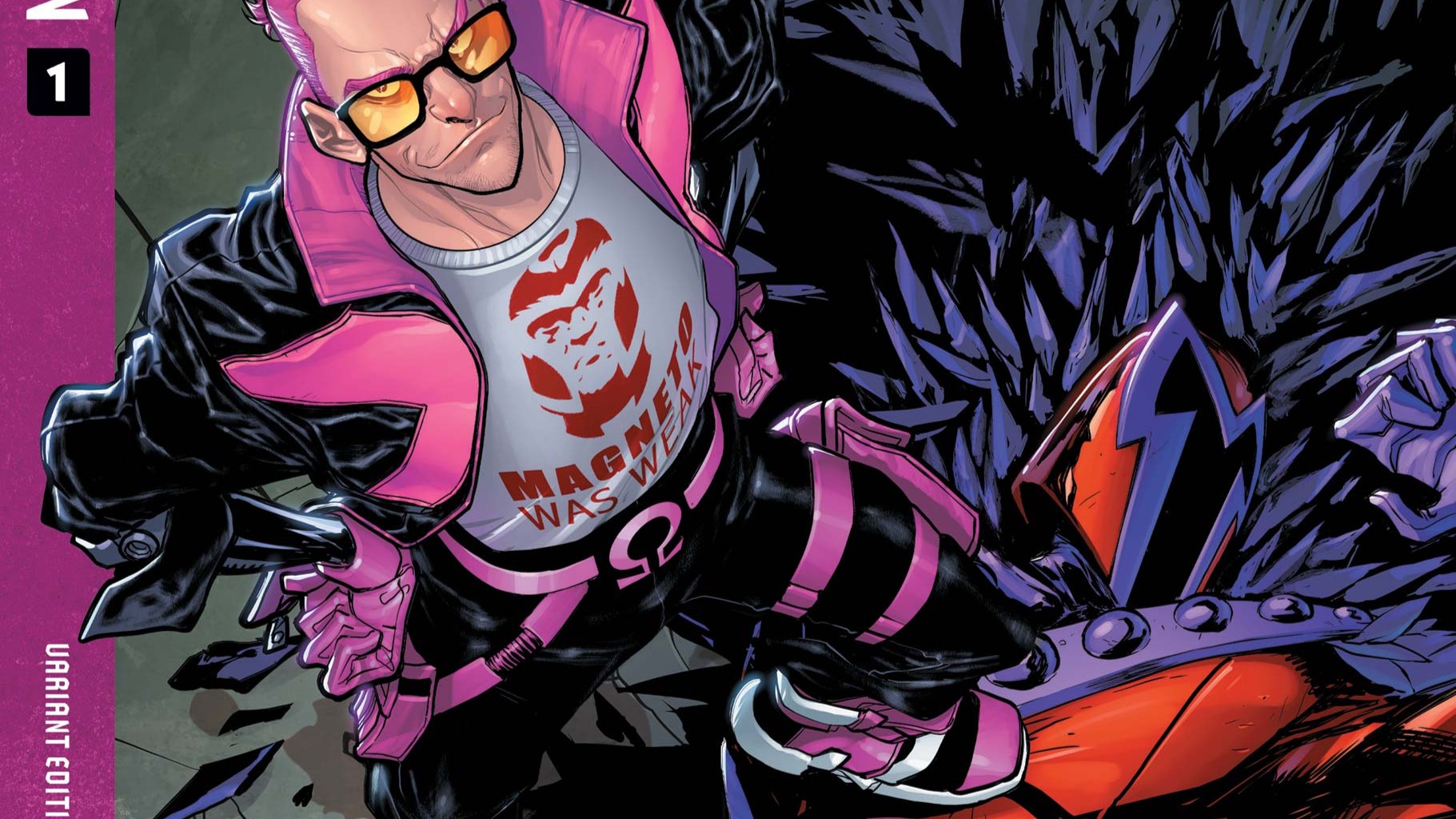
Omega Kids #1 By Tony Fleecs & Andrés Genlot – Book of the Week

Quentin Quire trains the next generation of Revelation’s psychic spy network — but the students may already have surpassed the master.
- Quentin’s Omega Kids spy network has been mentioned before in the event, but this book isn’t really about that; it’s about Quentin working specifically to train the best of the bunch (and, of course, it’s not really tying in with any of the event’s plotlines, aside from using the setting as a jumping off point).
- As such, we’re introduced to another new batch of characters; following on from the three main “From the Ashes” X-Men books all introducing new characters and then this event throwing a bunch more at us, I have new character fatigue, and can’t really muster up the energy to remember this latest bunch — especially when they just have “normal” names and not fun codenames — even if one is an adorable little psychopath.
- But that’s okay, because the book — at least at this point — isn’t really about the new kids, but rather, about putting Quentin in the role of professor to a class full of Kid Omegas like himself.
- Phoebe Cuckoo (one of the Stepford Cuckoos) first appeared in New X-Men #118 (and thus predates Quentin). The two crossed paths through the years, but didn’t begin dating until the Krakoa Era, and Phoebe became the telepath who routinely downloaded his memories into his new body after he was killed.
- Phoebe says of the new kids that they don’t know how easy they’ve got, and always have their heads in some screen, which just goes to show adults say the same things about kids no matter what the timeline/setting.

- The twist that the Omega Kids are running a simulation on Quentin and he’s talking to no one is well-executed, and I’m glad they didn’t hold the reveal for a future issue.
There’s two different tensions at play in this issue. One is the notion that Quentin has become the old, out-of-touch adult type he used to rail against without realizing it (and without realizing his students are the same kind of anti-authority zealots he himself was). The other is that adult Quentin is perhaps the most straightforwardly-heroic we’ve ever seen him. He’s not being compelled to serve Revelation (like Wolverine is), he genuinely believes in Revelation’s mission. But he’s also not a zealot, and doesn’t want to kill the rebels for fun or unnecessarily torment them. And so we have a Quentin whose methods and approach we can root for, but is using them in service of the villain of the story. Those two tensions make this a compelling read — even while featuring another batch of new kids.
Radioactive Spider-Man #1 By Joe Kelly & Kev Walker

Despite requiring regular doses of radiation to do so, Spider-Man continues to protect New Yorkers as best he can – even from some unexpected places.
- Amazing Spider-Man and the rest of the Spider-Man books are not part of this event, so this is another “new” tie-in miniseries rather than a replacement book. But regular ASM writer Joe Kelly is writing it and Spidey group editor Nick Lowe is editing, so it’s not a complete throwaway.
- It does a bunch of world-building that, as yet, hasn’t been referenced in the other books. The term “lowlock” gets thrown around as a kind of racial slur, there’s a kind of genetic caste system in place (in which mutants are considered better than mutated humans like Spider-Man), some kind of “Manhattan Massacre” gets referenced, and Manhattan has been split a la Madripoor into an upper class “Hightown” and a “everyone else” Lowtown.
- Spider-Man fighting back against an overzealous police force feels a little “ripped from the headlines” even as its set in an alternate future timeline with superpowered people.

- Cecilia Reyes first appeared in X-Men (vol. 2) #65 and while Joe Kelly didn’t create her, he did use her in his short-lived X-Men run which began shortly after she first appeared.
- Spider-Man’s little mutated arms creep me out.
- The Marauders are obviously named after Mister Sinister’s team of mutant assassins who perpetuated the Morlock Massacre (and/or the crew of the ship by the same name who helped smuggle Krakoan drugs much later).
- Aunt May being the monstrous creature is a fun twist.
Though it’s clearly set in a heavily-altered future, there’s still very little about this that connects it to the wider “Age of Revelation” setting specifically; this could just be set in some random future and it wouldn’t change much. But Kelly and Walker are both consummate professionals who turn out a strong issue regardless. This isn’t an issue anyone needs to read to follow the event, but it’s one of the better tie-in issues in terms of craft regardless.
X-Men: Book of Revelation #1 by Jed MacKay and Netho Diaz

A new Chorister is introduced ahead of an important meeting with Apocalypse’s emissary.
- This is not a “replacement book” for an existing title, but given that it’s written by MacKay, the architect of the event, drawn by Netho Diaz, the effective “B-penciller” of MacKay’s X-Men book, and does more with the overarching plot of the event than any other tie-in released thus far, this almost feels like it could be the second issue of X-Men in one of those months where Marvel double ships it (which it may well be).
- Diaz’s art is generally strong throughout this issue, but he uses extra panel gutters/creates smaller panels on the edges of pages for reasons I can’t figure out, and it gets distracting at times.
- Elbecca Voss is a new character.
- Revelation references Topaz’s death; she was indeed killed by Glob Herman in X-Men: Age of Revelation Overture #1.
- Cortez being a dick is more or less in character (though he had a little bit of a face-turn during the recent Mystique limited series that is more or less being ignored here).
- Revelation’s conversation with Elbecca is fascinating in terms of his power, suggesting that his innate understanding of language extends as far as knowing how best to deploy it, in terms of manipulating people/getting what he wants. Curious if that’s an extension of his Apocalypse-boosted powers or something “regular” Doug could do.

- He says that that the general public expects him to sound like a cross between Magneto & Doctor Doom, which is indeed more or less how he sounds in the opening of this issue.
- This Death is the Death from the Krakoa Era X-Men Red, who is a literal child of Apocalypse (via Apocalypse’s one-time wife Genesis).
- We still don’t know what was in Bei’s message (delivered to Apocalypse via Xavier), but whatever it was, it has led Apocalypse to believe Doug is planning something he considers an “abomination.” Which, given this is Apocalypse, is probably something different than “kill a lot of people.”
- I really like the idea put forth via Cortez’ monologue just before he pushes Elbecca off the ledge that he’s been warped through the years by the fact that his power makes him the best at making other people better.
- The “ghost of Philadelphia” being Kitty Pryde makes sense — she more or less headlines one of the three main X-Men titles and we haven’t seen her yet in the event, plus her powers make her ghost-like — even if I still would have loved it to turn out to be Amelia Voght instead.
Elbecca is the umpteenth new character in this event we’re being asked to learn/care about, which makes this a bit tedious, even as she serves as an effective POV character into Revelation’s inner circle. The showdown with Death is fun and the idea that Revelation is planning something that Apocalypse wants to shut down is intriguing, but Revelation himself continues to be largely a cipher (no pun intended); too much of what little we know about his motivations comes from marketing materials and not the stories themselves, and that continues here.


