
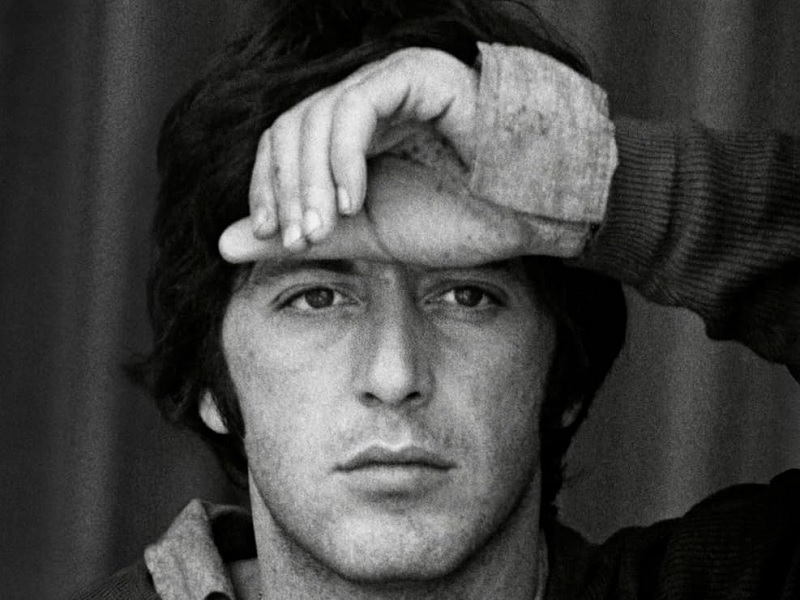
From Corleone To Attica: Reviewing Al Pacino’s Memoir ‘Sonny Boy’
by Rachel Bellwoar
There are memoirs that deal in juicy gossip. There are memoirs that read as very guarded or impersonal. The very best memoirs, though, are the rare ones that are capable of being honest and objective — to have the distance that is often easier to achieve with a biography but the knowledge that can only come directly from the source.
The reason Al Pacino‘s memoir Sonny Boy is so much fun to read is because it reads like a book written by Pacino. The language and voice sounds exactly like you’d think he would sound. There is no sense of pretense or an actor drinking his own kool-aid. It’s all very colloquial and self-aware. Pacino is famous but it’s an artist, not a star, who shines through.

Born in the South Bronx, Pacino starts with his childhood — his three best friends who would all see their lives cut short by drugs; his mom who gave him the nickname “Sonny Boy” and took him to the movies as a kid; his maternal grandfather who (in one of those coincidences that make for great sound bites) was actually born in Corleone, the Sicilian town that would give Pacino’s character, Michael, his last name in The Godfather.
Then there are the professional colleagues, like producer Marty Bregman, who would change his career and acting coach Charlie Laughton [not to be confused with Charles Laughton] who would remain a lifelong friend. It’s always a treat to read stories of actors who met before they became famous and such is the case with Pacino and Martin Sheen who were roommates in New York before either of them made it big. Sheen would break first and Pacino writes about how he tried to help Pacino by getting him a job as his understudy in a play. As will become a pattern, Pacino would end up getting fired from that job due to being unable to step into another actor’s performance.
Pacino is very candid about his bad financial choices and his willingness to walk away from jobs even when he arguably had no business turning down the work. It’s not that Pacino glorifies these choices at all (or isn’t equally willing to admit when he did take roles because he needed money), but Pacino wasn’t a movie star when he made The Godfather (and, indeed, he was nearly fired from that film as well). He’d gotten praise and award attention for his role in the play The Indian Wants the Bronx (alongside frequent co-star, John Cazale — it’s great to realise just how far back their relationship went) and starred in the excellent, if devastating, film Panic in Needle Park, but The Godfather put Pacino on the map in a completely different way.
Learning, then, that he was willing to walk away from The Godfather Part II (even when the studio suggested they would pay him a million dollars for it) because the script wasn’t right (and he ultimately did hold out for that better script) is pretty unheard of and endearing for an actor who had not yet fully established himself or had the critical streak of four successful films in a row like The Godfather, Serpico, The Godfather Part II and Dog Day Afternoon (technically Scarecrow came before Serpico, but that’s far from a step down, if not a tent pole film like the others).
Pacino goes over his theatrical work as well (one of the gifts that come from reading a memoir like this since, unlike films, you usually can’t watch those performances), along with passion projects like Looking for Richard which Pacino directed on William Shakespeare‘s Richard III.
While nothing Pacino reveals is likely to inspire clickbait headlines, Sonny Boy is filled with anecdotes that real fans and movie buffs will revel in, like Pacino’s spaghetti lunch with Marlon Brando or his thoughts on some of the directors he’s worked with, like Sidney Lumet and Brian de Palma. He talks about being labeled “difficult” over creative disagreements, touts the benefits of therapy in dealing with issues like alcoholism and fame, and covers both the heavy hitters in his credits as well as films like Bobby Deerfield that were significant for personal reasons if not necessarily embraced by audiences.
Pacino credits assistant director Burton Harris with his infamous “Attica” line from Dog Day Afternoon. He also touches on some of his past loves, including many fond memories of Diane Keaton and Jill Clayburgh.
Early in Sonny Boy, Pacino expresses a love for reading and that appreciation for books shows in his memoir. If you’re a fan of Pacino’s works then this chance to appreciate the person who’s brought so many incredible roles to life is a real winner.
Sonny Boy is available now from Penguin Press.


