
Comicon’s Best Single Issues Of 2025
by Erik Amaya
Welcome to Comicon.com’s Best of the Year Awards, gathering the best comics and comics talent of the long-yet-short year that was 2025. This year, we will be awarding in the following categories: Best Comic Series, Best Original Graphic Novels and Collected Editions, Best Single Comic Issues, Best Writers, Best Artists, Best Cover Artists, Best Colorists, Best Digital/Webcomics, and Most Progressive Comics.
Contributors to Comicon’s Best of the Year Awards this year include: Rachel Bellwoar, Richard Bruton, Tito W. James, Olly MacNamee, Tom Smithyman, and Tony Thornley.
The following are Comicon’s 5 Best Single Issues of 2025.

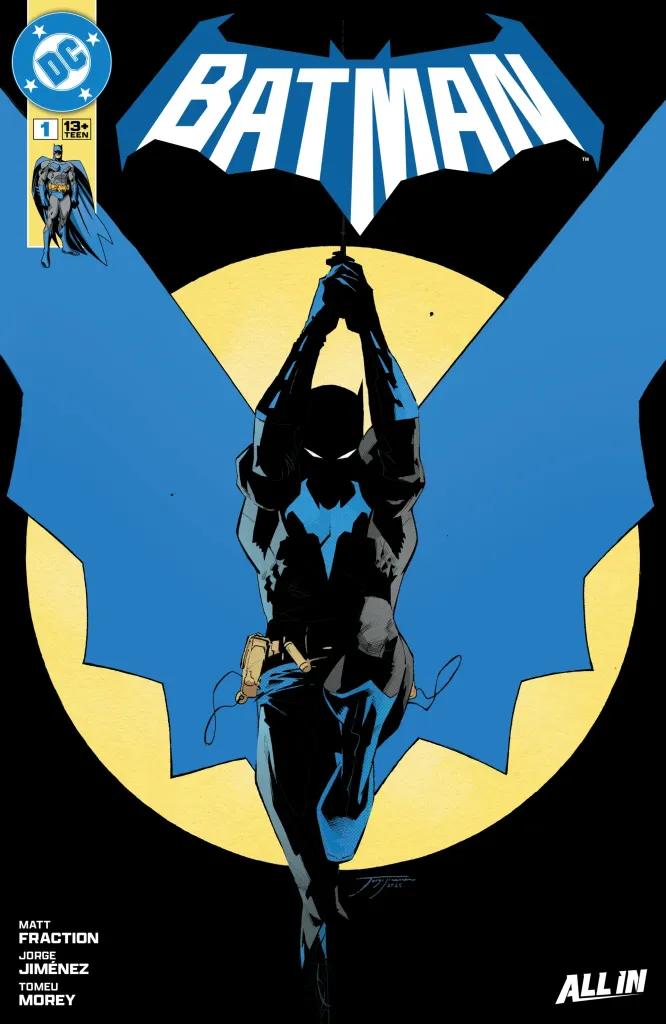
Batman #1, published by DC Comics; written by Matt Fraction; drawn by Jorge Jimenez; colored by Tomeu Morey; lettered by Clayton Cowles
If I had a nickel for every time an instant hit Batman run started with a confrontation with Killer Croc, I’d have two nickels, which isn’t a lot but its weird it’s happened twice.
So what makes Batman #1 (2025) different? For the first time in years, if not decades, we got a Batman story focused on what actually makes Batman great. It’s not competence. It’s not prep time. It’s not all his fantastic toys. It’s his humanity and his ability to adapt, showing compassion instead of brandishing whatever new gadget he made today. It’s exemplified by Batman gearing up to fight one of his most violent foes and realizing that compassion and empathy is what was needed, not fisticuffs. In just 23 pages, we see the mission statement of this new volume and a return to form for what makes Batman great.
— Tony Thornley

John Le Carré: The Circus — Losing Control #1, published by Dark Horse Comics; written by Matt Kindt; drawn by Ibrahim Moustafa; colored by Brad Simpson; lettered by Simon Bowland
An original story set in the world of John le Carré’s spy novels, Losing Control follows Maggie — mother to Control — as she experiences an unusual day on the job, but has to act like it’s a normal day. Sporting all the suspense and tension a spy fan could want, the beautiful thing about watching Kindt and Moustafa’s words and art interact is that, to look at some unlettered pages for this issue, you would think Maggie was an office worker. The intrigue comes from the sudden hints at violence, like a room marked “inquistors” that’s represented by some bloody tools. It’s all the nostalgia of classic spycraft but with narrative reasons for why the tech might not be so advanced.
— Rachel Bellwoar

Adventureman: Family Tree #2, published by Image Comics; written by Matt Fraction; penciled by Terry Dodson; inked by Rachel Dodson; graphic design Leandro Olea; colored by Terry Dodson; lettered by Clayton Cowles
This has quite a few great qualities as an issue of a comic book series. The primary one: the high quality visuals that help make it dynamic in characterization. However, the arguable best qualities come from the writing. There is checking-in on some supporting characters while focusing on one contributing member of the cast. Also, there is another who gets an origin story. By doing all this, the tale moves forward while developing differing individuals with astounding art and colors plus terrific lettering.
— Benjamin Hall

Absolute Batman Annual #1, published by DC Comics; written and drawn by Daniel Warren Johnson, James Harren, Meredith McLaren; colored by Mike Spicer and Dave Stewart; lettered by Clayton Cowles
Annuals are often flash-in-the-pans, excuses to burn inventory stories, or an attempt to be important without being so important that you’re lost if you miss it. In the case of Absolute Batman though, Johnson told a lead story that was titillating on the surface, but turned out to be much deeper. From first appearances, it was a clear statement on Batman’s stance towards fascism and white supremacy. You follow that ideology, Batman’s gonna break your elbow (in a two-page splash that is easily the comic page of the year). But on a deeper level, it was a story about the relationship between fathers and sons, and doing the right thing in the face of evil, particularly as paired with Harren’s story about a son doing the wrong thing because of his father’s influence.
— Tony Thornley

Universal Monsters: The Invisible Man #2, published by Image Comics; written by James Tynion IV; drawn by Dani; colored by Brad Simpson
It’s no surprise that one of the best series of the year produced one of the best single issues. What is odd, though, is that the strongest chapter comes in the middle of the series. Universal Monsters: The Invisible Man #2 has everything you could want in a comic book whether you know it or not. You come into the issue expecting to see the titular character, but instead get drawn into a scientist’s descent into madness. Writer James Tynion IV defies expectations and doesn’t deliver readers the vanishing man, yet still manages to suck his audience in and hold them there. And artist Dani gets into the act as well, keeping scientist Jack Griffin hidden even when he’s in plain sight. When she finally reveals him late in this issue, the results are marvelously frightening.
— Tom Smithyman

