
An Interview With ‘The Book Of Murmurs’ Author Candice Purwin
by Rachel Bellwoar
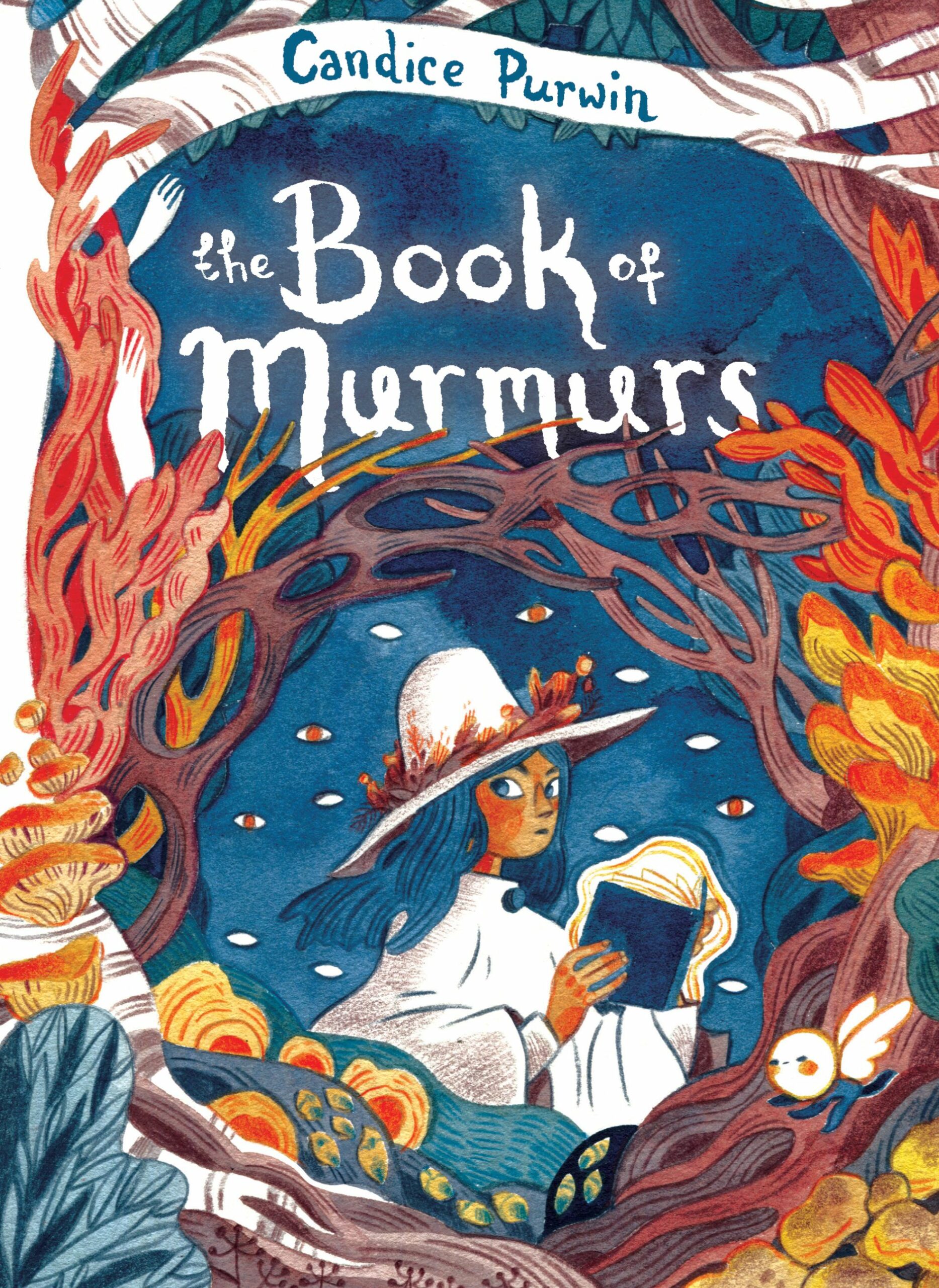
There’s always a risk in reading a scary story before bedtime. In The Babadook, it was the babadook who was unleashed. In Candice Purwin‘s The Book of Murmurs, it’s the shenk. If Little Moon is to have any chance of defeating it, she’ll need to travel to other realms she only just learned existed. For more on what goes into creating a magical world, check out this interview with Purwin below:


Rachel Bellwoar: With The Book of Murmurs, readers are introduced to a world as vast and magical as Lewis Caroll’s Wonderland. Where does one even begin crafting such a rich universe from scratch?
Candice Purwin: It was a weirdly organic process. In hindsight, I was creating these worlds in some iteration or other over a long time. The characters began coming to me when I was walking a trail called the West Highland Way about ten years ago. The way the landscape changed was akin to passing through different worlds, and I couldn’t help but populate each one with fantastical creatures. The stories began to grow from there.
Bellwoar: The first relationship established is the bond between Little Moon and her mother. Why did you want to focus on that parental bond over Little Moon’s dad, who remains a voice offscreen, and was it important to start with a more familiar, human world before adding magic?
Purwin: The matrilineal connections are how the magic moves through Little Moon’s family, so the relationship to her mother was always foremost in my mind. It is where the Monster can find a way into her world and how he can attempt to take her power. In earlier drafts of the story, the relationship between Little Moon’s parents is more developed but there is a style of storytelling that runs through children’s literature and fairy tales where a hero’s journey starts quickly and quite violently. Establishing the father and mother as a source of love and stability in the barest of strokes before catapulting her onto this quest honoured this and keeps Little Moon and the reader wonderfully unmoored for a minute as the narrative builds.
Bellwoar: The Shenk becomes Little Moon’s primary antagonist and the monster that sets her on her hero’s journey. How early did you know you wanted to associate the Shenk with eyes and what struck you about a monster made up of disembodied parts (all arms, eyes, and hands)?
Purwin: I wanted to design a monster that was an epitome of invasive violence. I didn’t want it to be a singular body that can be fought and destroyed by a single person. The Shenk is a corruption of stolen power and what signifies that better than an undulating mass of ever-grabbing hands and all-seeing eyes?
Bellwoar: Along the way Little Moon meets various guides who become her friends and allies. What was it like figuring out their different personalities and finding time to get into their personal mythologies within the larger narrative?
Purwin: I very much enjoyed writing all of Little Moon’s guides and friends. They are an amalgamation of people I know and love. I took the time to think about who would have come to The Fault and why. It helped not only to write those characters, but to establish a long and fractured history of magic and the many worlds. From the book’s earliest iteration, storytelling was an important thread which eventually informed The Book of Murmurs’ structure: little folktales punctuating the greater narrative. This also enabled me to take a little more time with some of the characters’ personal mythologies, for example, The Goblin.
Bellwoar: Purely because I find them so delightful, I’d like to ask specifically about Goblin. When did they become a part of the story?
Purwin: I was drawing the earliest version of Little Moon based on walks over Arthur’s Seat (a familiar landmark in Edinburgh for anyone who’s been here), and there is a moment when a tussock of grass unfurls itself into a hairy, little creature: The Goblin was born. I really enjoyed exploring the friendship between the Goblin and Little Moon. They present themselves as an authority in The Fault, but they are hiding a lot of sadness, loneliness and fear. Goblin and Little Moon bring out each other’s strengths, and they are ultimately able to learn from one another. One of my favourite relationships to write was between Goblin and Oja. Two tired veterans who have seen too much and are very far from home. I was able to infer a lot of the history of the many worlds in their small interactions.
Bellwoar: As magical talismans go, I love the hat Little Moon is gifted for protection. Did you go through a lot of hat designs before landing on the final one?
Purwin: The hat is an ode to Snufkin of the Moomins. I wanted to be Snufkin when I was younger, a wise and weary wanderer and best friend to Moomintroll. Tove Jansson is such a massive influence on everything I am as an artist and writer. The silhouette of Little Moon in her hat and cape is a very big nod to her. The hat, also having a personality of its own, an old witch’s overly verbose gardening companion, was quite a joyful thing to write.
Purwin: At a time when writing is being undervalued to push AI and history is being suppressed, why was it important to you to create a book about the importance and power of storytelling?
Purwin: Oral histories and folk traditions are powerful and irreplaceable things. They are the keepers of so much wisdom, identity and history. Being able to tell one’s own story is fundamental to one’s ownership over themselves. These things are repressed or destroyed by colonising or oppressive powers for a reason. Suppressed stories and hijacked narratives are acts of violence and must be fought against.
The graphic novel being realised when AI is taking hold as a threat to human creativity wasn’t planned. I have been writing this comic for about 10 years. I wonder if we don’t quite understand what we’re giving up as we pass everything we are and could be into the hands of the ethically and morally bankrupt individuals motivated only by profit and power. When there’s no water left for our children, perhaps we’ll wonder if asking AI for a pasta recipe was really worth it.
Bellwoar: The Book of Murmurs could’ve been marketed for adults (and it has all-ages appeal). Do you think children’s literature is especially equipped to tell these epic tales?
Purwin: My partner is a theatre maker, and a couple of years ago, I accompanied her to The Children’s Festival here in Edinburgh. The theatre we saw there, originating from all over the world and aimed at children and young people, was some of the most ambitious and creatively bold storytelling I had seen in a long time. Perhaps we allow our imaginations to go to more interesting places when we try to tell stories that transcend language. It’s as if, while we condescend and overexplain ourselves to our adult peers, when we cross into intergenerational worlds, we have the capacity to become brave explorers filled with wonder and hope again.
Bellwoar: Thanks for agreeing to this interview, Candice!
The Book of Murmers goes on sale on May 19th from Fantagraphics.
