Fire & Blood Files: What Is A Hedge Knight Anyway?
by Austin Gorton
“It’s like a knight but … sadder.” – A Knight of the Seven Kingdoms Episode 1, “The Hedge Knight.”
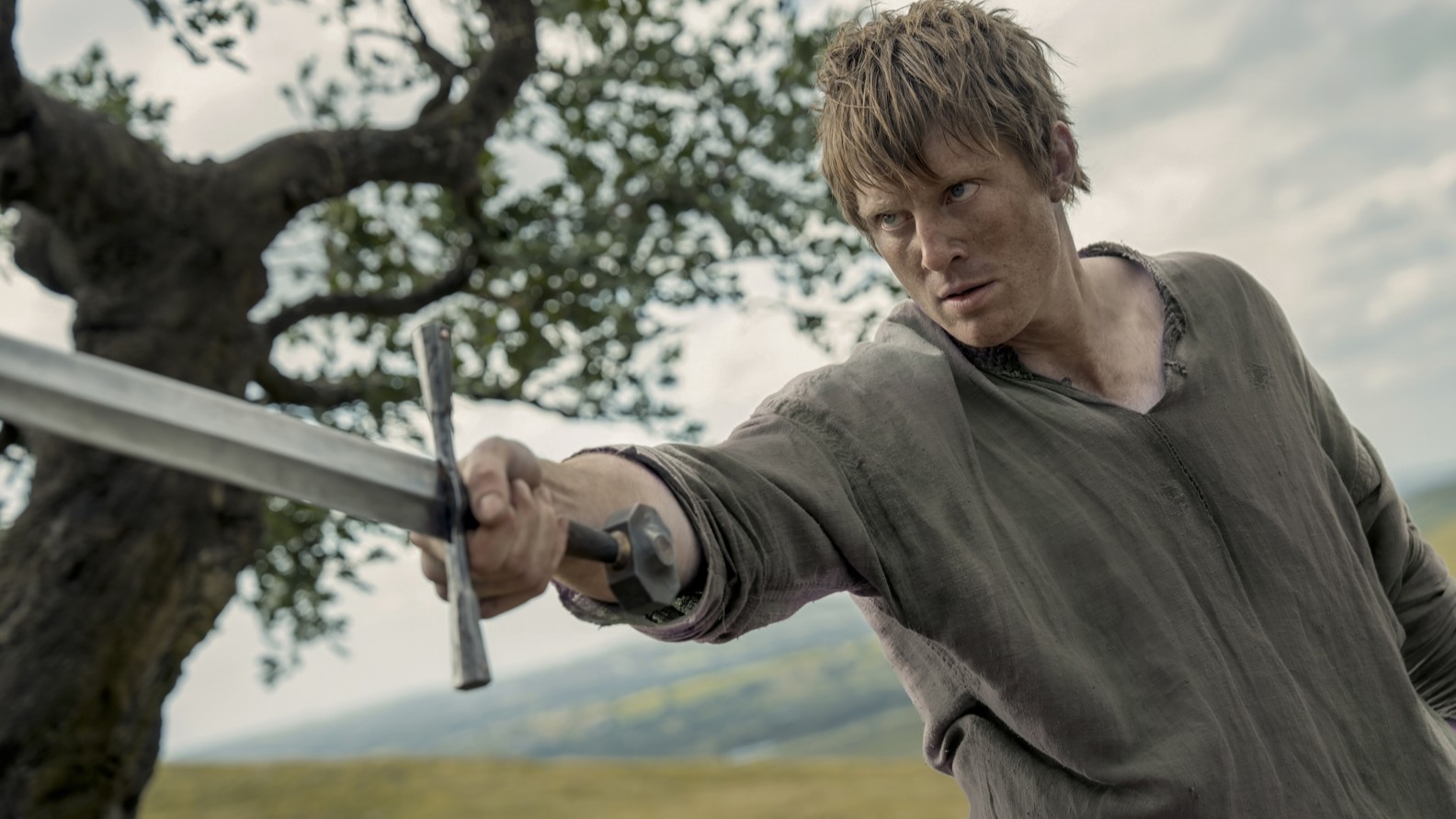
“The Hedge Knight” is both the title of the first episode and the novella on which the entire first season of HBO’s new series set in the world of Game of Thrones is based. It is also the occupation and, functionally, the identity of the show’s main character, Ser Dunk/Duncan the Tall (Peter Claffey). Which in turn begs the question: what exactly is a hedge knight is, and how is it different from a “regular” knight?

In the “like feudal medieval England, but with dragons and we spell ‘sir’ with an ‘e'” world of Westeros, the majority of knights are considered “landed knights.” This means they own land, maintain a castle/keep, and are considered part of the nobility. They are not themselves lords, but are sworn to fight on the behalf on their specific liege lord, the lord who maintains dominion over their land. Also, the status of a landed knight is considered hereditary, meaning their land and possessions pass to their heirs upon their death (their knighthood, however, does not — that has to be earned on its own merits). Most of the knights featured in both Games of Thrones and House of the Dragon are landed knights; Gregor “the Mountain” Clegane (Hafþór Júlíus Björnsson), Davos Seaworth (Liam Cunningham), and Ser Rodrik (Ron Donachie) are all landed knights with fealty sworn to a specific liege lord: Tywin Lannister (Charles Dance), Stannis Baratheon (Stephen Dillane) and Ned Stark (Sean Bean), respectively.
If landed knights are essentially “contract knights” then, in contrast, hedge knights are more like free agents. They don’t own land; what wealth and possessions they acquire exist in their arms, armor and horses. And because they don’t own land, they don’t owe their service to a specific lord. Instead, they wander through the country, offering their services to lords in exchange for shelter. Ideally, a lord may take them into their service, giving them a more steady gig. As a result of this, they spend much of their lives on the road, and more oft than not, sleep under trees, or hedges — hence the term.

Hedge knights are distinct from robber knights — individuals who have been knighted, but have turned to banditry to get by — but the strict class & feudal system in Westeros leads many to be suspicious of hedge knights; it is said that a hedge knight and a robber knight are two sides of the same sword. Hedge knights are also distinct from sellswords, who are essentially mercenaries, they are not knights and have sworn no vows, who sell their martial prowess for coin — like Bronn (Jerome Flynn) when he first meets Tyrion (Peter Dinklage), or Daario Naharis (Michael Huisman) when he encounters Daenerys (Emilia Clarke). While hedge knights are essentially “selling” their skills to lords, they are not explicitly looking for money in return, and in their temporary service still vow to uphold the chivalric values to which knights in Westeros are meant to adhere.
That last point is why, for all the class-based bias against hedge knights, an argument could be made that hedge knights represent the purest form of knighthood. Landed knights swear the same oath as hedge knights, but have more to lose; the potential for a conflict if interest is thus greater. And in swearing fealty to a specific liege lord, landed knights begin to pile on the potentially-conflicting vows Jamie Lannister (Nikolaj Coster-Waldau) so famously decried. What happens when a liege lord you’ve vowed to serve gives you an order that conflicts with the more broad oath you swore to become a knight (to harm woman and children, for example)? Which oath do you follow? Hedge knights typically can avoid such conflicts.

As readers of “The Hedge Knight” know, Dunc’s status as a hedge knight amongst the more traditional, upper-class landed knights at the Ashford tournament (to say nothing of the lords and royals in attendance) will drive much of the tension in the first season of A Knight of the Seven Kingdoms. And underscoring that tension will be the question of what it means to be a true knight, and who has the better claim to it: landed knights with their silk pavilions and fancy clothing, or the “sadder” knight who sleeps under the stars?