
Talking Virginia Woolf With ‘Orlando: A Graphic Novel’ Creator Susanne Kuhlendahl
by Rachel Bellwoar
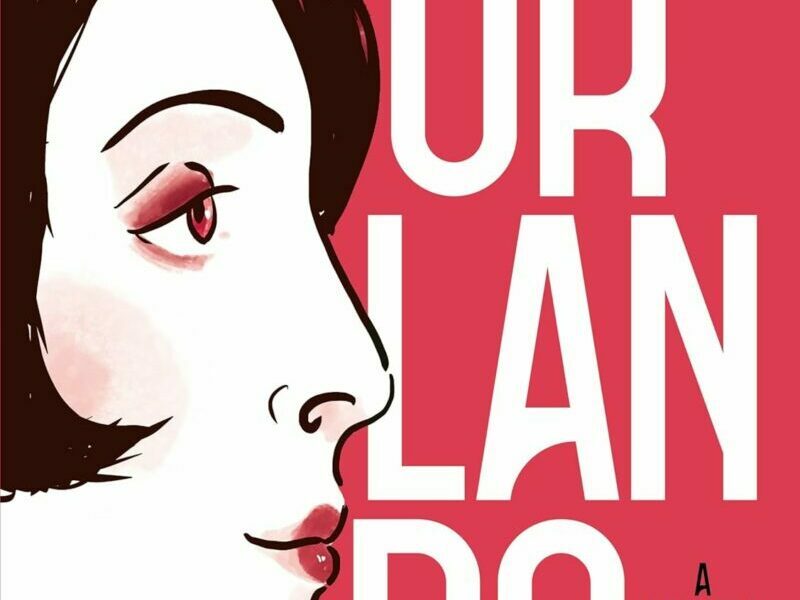
Whether you’re familiar with the film starring Tilda Swinton or Virginia Woolf‘s original novel, Orlando now has a graphic novel adaption courtesy of illustrator Susanne Kuhlendahl and here’s what the writer/artist had to share about working on the project:

Rachel Bellwoar: What excited you the most about adapting Virginia Woolf’s Orlando as a graphic novel?
Susanne Kuhlendahl: I really loved the playful way Virginia Woolf treats serious topics like women’s rights and sexuality. I was very intrigued by her humor and subtle irony. What’s more, as an illustrator, it was a wonderful task to draw all these beautiful pictures of landscapes, houses, and changing fashion over the centuries. But above all, I kind of fell in love with Orlando — the clumsy dreamer, the romantic poet, and passionate lover.
Bellwoar: Each chapter opens with a portrait of the royal family member currently in power. Did you always want that visual reminder of how much time has passed and that Orlando’s timeline defies a usual human lifespan?
Kuhlendahl: I thought the pictures of the kings and queens would give a vivid impression of the time in which the next chapter of the story is set. If the reader sees the fashion and the way the royals are presented, it gives a better sense of the era and the passing of time than just a date of a year.
Bellwoar: Throughout the book you change up mediums and don’t restrict yourself to one art style. How was it finding the right approach for each sequence?
Kuhlendahl: That is difficult to explain … I always tried to reflect the sentiments expressed by the story. For example, in the beginning the style is all a little bit washed out, as if the colors faded in the passing of the centuries. Or later, Sasha brings life and color with her, but the grief about her cheating makes Orlando’s world dark. The Victorian age, so strict in its customs, is depicted in grayscale to contrast the playful rococo era that preceded it.
Bellwoar: When did you know you wanted to make Woolf a character in her own book?
Kuhlendahl: While Virginia Woolf is the biographer of Orlando’s life, she often comments or has opinions about her characters’ lives, abandoning the objectivity a biographer should have. Because of this unique authorial presence, I decided that she should have a role in the story too.
Bellwoar: More than Orlando’s transformation, one of the things that really stands out about this book is Orlando’s reaction to transitioning, as well as how other people react when they see them as a woman, having previously known them as a man. For a book originally published in 1928, what do you think new readers can take away from Woolf’s Orlando today?
Kuhlendahl: I think the most important thing for readers today is that the transformation is something quite natural. Neither Orlando, nor her staff, or her dogs have any doubt about her identity. Though the transition is not explained, they are not surprised; it just happened. He was a man, she is a woman, though is still the same person.
Bellwoar: Of the many people Orlando crosses paths with, do you have a favorite encounter or a moment you were looking forward to drawing the most, like Orlando’s whirlwind romance with Sasha or the introduction of the Archduchess?
Kuhlendahl: That is hard to say … all the people in the story are fascinating: the untamable Sasha, the ridiculous Archduchess, the mean little Sir Nicholas … But I think I liked Marmaduke Bonthrop Shelmerdine, Esq. the most, a fascinating androgynous character bravely sailing round Cape Horn or jumping off a plane.
Bellwoar: Thanks for agreeing to this interview, Susanne!
Orlando: A Graphic Novel is on sale now from Helvetiq.