
Interview: Exploring Inevitable Endings With ‘Closing Act’ Creator Chris W. Kim
by Rachel Bellwoar
Alice followed a White Rabbit and wound up in Wonderland. In the newest graphic novel from Chris W. Kim, Lea gets her bag stolen and winds up lost in a maze when she tries to follow the thief. Will her sense of direction return or will her attempts to get home become her Closing Act?
For more on what’s in store for Lea, check out this interview with Kim below:

Rachel Bellwoar: “Closing Act” is a title that can be interpreted a number of different ways, from end of life to end of a play. The common factor, though, is “endings.” How do you approach choosing the titles for your books and is it an easy process or one that varies depending on the book?
Chris W. Kim: The title usually comes last. I have a document where I’ll write any potential title that comes to mind, then I choose one when I finish the book. But it’s not easy, I always find it a struggle to decide which one best represents the story.
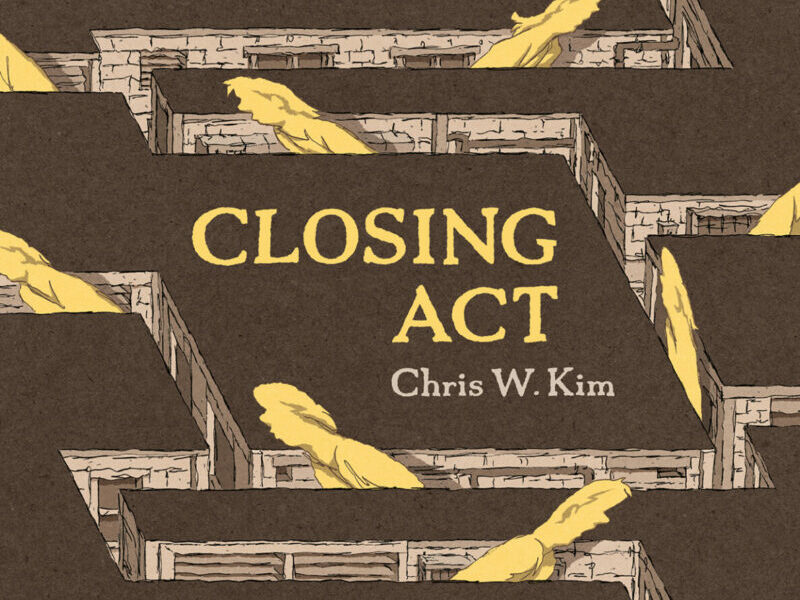
When I chose “Closing Act”, I wanted to convey that the story is about the final stage of the alleyways, as well as the fact that they are literally closing up.
Bellwoar: Lea getting her bag stolen is her White Rabbit moment — the event that sets this book in motion and lands her in the maze. Was that always set in stone or did you consider other ways to begin?
Kim: This was always how the story started. I like the immediacy of it, and how it kicks off the relationship between Lea and the thief.

Bellwoar: What was it like developing the relationship between Lea and the thief and deciding how often to have them run into each other?
Kim: I tried to make them encounter each other in a way that had a rhythm to it, which would eventually culminate in them escaping the alleyways together. My intention was for their relationship to be central to much of the action in the story, and central to why Lea remains in the alleyways. I didn’t want it to be a true relationship, however, but more of an excuse that Lea uses to stay where she is, a justification to herself.
I also meant for Lea and the thief to have contrasting attitudes toward the alleyways, to show two different ways that outsiders may deal with this situation.
Bellwoar: Lea initially attempts to come up with literal answers for what’s happening to her but gradually lets that go as the book goes on. Do you hope that’s how readers will approach Closing Act?
Kim: Yes, the reader is meant to be in the same position as Lea, and as all the characters in the book. The struggle of existing within a situation that is beyond their grasp, and trying to act in the face of that.

Bellwoar: What was it like conceiving the maze? Did you always want to use a limited color palette? What interested you in an urban maze versus a hedge maze, for instance, and for being set in alleyways, did you always want that small town mentality of everybody knows everyone else?
Kim: I used a lot of photo references of different alleys. Some from Toronto, as well as online sources from all over the world. In a sense I stitched all these alleys together to form the world of the comic, so to me it feels like a very international space.
I did intend to have the limited palette from the start. At some point I was considering reds and oranges, but it didn’t fit the tone of the story.
The urban setting was essential to me. I was less focused on the idea of a maze and more interested in the idea of an in-between space, a niche within the city where these characters live an alternative life. I did want the alleyways to have the feeling of a local community, including all the tensions and bickering that can come with it.
Bellwoar: Is there a character you identify with the most?
Kim: Perhaps Jo, the woman on the rooftops, because she is the one observing everything from a bird’s eye view. That is how I felt when making the comic, like an outside observer of this little world I was creating, and that sense of remove is also in the narration.

Bellwoar: Both Dee and Jo express that it’s nice having someone new to talk to, the subtext being that they’re used to people not being interested or getting tired of their remarks. Do you feel that’s at the root of so many problems: people feeling like they have no one to listen to them or that they’re constantly boring others?
Kim: With Dee and Jo I was trying to emphasize how idiosyncratic and narrow these characters have become, and so they run the risk of alienating others.
It does feel like it’s easier than ever to become locked into our own particular interests, and that can make it difficult to connect at a more general level. “Graphic novel? What does that mean? Why are you telling me about this?”
Bellwoar: Thanks for agreeing to this interview, Chris!
Closing Act goes on sale April 28th from Conundrum Press.

