
An Interview With ‘Travis Muñoz And The Fire Of The Aztecs’ Writer Mark Stack
by Rachel Bellwoar
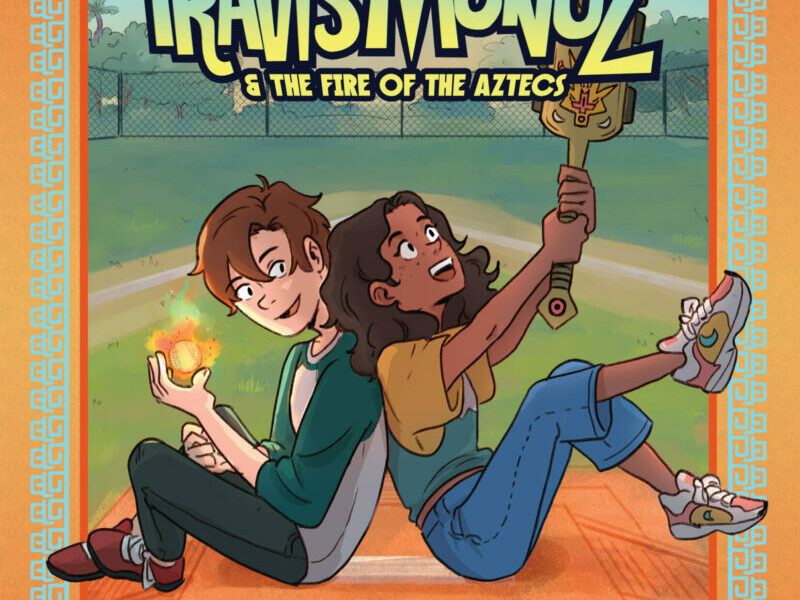
It’s been fourteen years since the last eclipse. In fact, as Travis comes to discover, the last one occurred on the day he was born. Now, with the next eclipse, Travis is brought in on a family secret: he’s descended from a long line of priests who have served the sun God, Huitzilopochtli. What does that mean, and why can Travis shoot fireballs from his hands? It’s all in writer Mark Stack and artist Anne Marcano‘s new graphic novel, Travis Muñoz and the Fire of the Aztecs. With letters by Andworld Design, here’s what Stack could reveal about Travis’ story:

Rachel Bellwoar: So much of the mythology in this book is fascinating. How much did you know about “holy flower wars” and Aztec sun gods going into this project and did you have a direction you wanted to take the story in from the start or was it more organic and about following the research?
Mark Stack: Mesoamerican myth and folklore was really interesting to me as a kid, but I didn’t have access to a lot of books about it. It was mostly relegated to some thin volumes in my elementary school library or a short section in the back of a world mythology book. My interest became reactivated my senior year of high school by a pretty rad comic called Sacrifice by Sam Humphries and Dalton Rose, which made a real point to combat the more reductive narratives around the Triple Alliance. That gave me a great starting point to start reading about the history. From there, I entered college at San Diego State (go Aztecs!) with a real excitement about the world history and Chicano studies courses I would be taking.
Our book went through a lot of changes from how it was first being developed (we shifted from young adult to middle grade, which is a much bigger change in storytelling than just aging the characters down), but one of the day-one elements was a semi-apocalyptic plot about an attempt to create a new world by replacing the Fifth Sun. Everything else flows from that plot point from the focus on Huitzilopochtli (patron deity of the Mexica people) to the fight with the Tzitzimimeh (creatures from the stars that want to devour the sun). Much like the Earth, our story revolves around the sun.
Bellwoar: Some of the names are on the intimidating side. Is there a key or trick to pronouncing Gods’ names like Huitzilopochtli?
Stack: Wee-tseel-o-poch-tlee! Speaking for myself here, the big trick was accepting that I probably wasn’t going to get them right on my own just by sounding them out and just looking up pronunciation guides that break the names down phonetically. There are people sharing Nahuatl names and stories all over platforms like Tiktok and you’ll see lots of comments from people excited to finally correct the pronunciations they’ve had going in their head.

Bellwoar: At the center of this story is the incredible bond between Travis and his best friend, Yolanda. Where did the idea to begin this graphic novel by showing their parallel lives come in?
Stack: We actually had a different title when we first pitched this book before being picked up at Vault, and in that initial pitch we were very upfront about Travis and Yolanda being co-leads of the book. We knew we would have to change our original title eventually, but it wasn’t Travis Muñoz and the Fire of the Aztecs until maybe halfway through production. So the opening was very important to establishing for our readers that this book wasn’t just Travis’s story but that both characters were going to go on a journey together.
And when writing that opening, it was really important to me to show that Travis and Yolanda 1) had very different home lives and 2) were equally important to the story being told. Yolanda lives in a larger house with both of her parents while Travis and his mother are in a lower income bracket. Showing those realities side-by-side seemed like the most effective way to let the children reading see those differences for themselves. Unless it’s part of a larger point or message to be made in the story, a lot of media for and about children tends to look away from the life of families who qualify for Medi-Cal. We never wanted to say it directly, but that difference in their home lives is a major element of the conflict that emerges between them because Travis does feel some unconscious resentment about not having a lot of the things that Yolanda has in her life. When he develops his powers and learns about his role as a priest for Huitzilopochtli, it’s finally something that he has that Yolanda doesn’t.
Bellwoar: The question of who to tell about your new superpowers has been causing heroes angst for millennia. With that in mind, I love how relatively quickly Travis decides to let Yolanda in on his secret. Was that a point of contention or did you always know you wanted to bring her up to speed right away?
Stack: I think we realized pretty early on that the book just wouldn’t be that fun if it focused on Travis trying to hide things from Yolanda. If we wanted kids to buy into their friendship and feel real concern when they start to get angry with and drift apart from each other, we needed to show how deep that friendship was from the beginning. Of course you want to tell your best friend everything even if someone tells you not to! Travis confiding in Yolanda, asking for her help researching what’s happening, and showing off what he can do does more to show that friendship than any line I wrote about how long they’ve known each other.

Bellwoar: Then there’s Travis’ Uncle Hector, who shows up to act as a mentor to him, but who has very set ideas about what Travis’ responsibilities are. What was it like figuring out his role and playing around with expectations when it comes to family?
Stack: Hector was a surprisingly tough character to get a handle on at first. Initially, he was a bit colder. More harsh in trying to guide Travis to doing things his way, but that ended up feeling really flat in a way that wasn’t necessarily respecting the intelligence of young readers. We ultimately went in a different direction where his scenes with Travis would try to highlight that they are actually beginning to develop a real connection after so many years of Hector not being around. That he’s sort of pleasantly surprised to actually form a bond with his nephew. So he evolved into a more complex guy who is really responsive to Travis’s emotions while also being a bit dismissive about his nephew’s concerns. It puts Travis in a more difficult position of trying to figure out where he stands as the book moves into its finale.
Bellwoar: As close as Travis and Yolanda are, I’ve never seen fighting portrayed in such a healthy way, where they can genuinely hurt each other’s feelings, but where there’s also this awareness that they’re going to keep talking because of how much they value their relationship. How difficult were those interactions to write?
Stack: Hardest part of the book! Our editor, Rebecca Taylor, was really helpful in navigating how to portray that conflict without making it too big or too slight. She kept reminding me that the stakes of the book weren’t just about Travis and Yolanda staying friends, but about them learning to be better friends to each other. We really looked over the second half of the book’s outline to make sure we found places to emphasize what the kids were learning from each other and where they could put it into action. If I was nervous about that all coming through, it only lasted until I saw Anne’s artwork and exhaled because I knew she portrayed the kids’ roiling emotions so well throughout those big scenes.

Bellwoar: Superman has his Fortress of Solitude. Travis has his temple where he goes to train. What was it like designing that building with Anne Marcano?
Stack: I can take absolutely zero credit for that because my part began and ended at suggesting referencing depictions of the Templo Mayor. As the primary temple in Tenōchtitlan dedicated to Huitzilopochtli (and the agricultural god Tláloc!), it made sense to draw on it as a big centerpiece location. I might have been the one to suggest portraying it in a sort of ruined condition, but that could have just as easily been Anne’s idea because we were both on the same page about how we wanted its condition to reflect some of the ideas in the story.
Bellwoar: Are there any plans to continue Travis’ story down the line?
Stack: We didn’t work on this book with the expectation of making any more after it was done because we really just wanted to focus on making the best thing we could without saving anything for a sequel that might never happen. But, yeah, I would definitely love to write another story about Travis and Yolanda, and Anne and I have talked about some ways we’d want to structure a follow-up story by expanding the cast a little bit, checking out some new locations, and bringing in more of the mythology. With Travis’s temple being inspired by the Templo Mayor, it would be pretty fun to bring in Tláloc and a warrior priest of his own since he does share the temple with Huitzilopochtli. There are a lot of places we could take this if young readers connect with what we did here.

Bellwoar: I truly hope that happens. Thanks for agreeing to this interview, Mark!
Travis Muñoz and the Fire of the Aztecs is on sale now from Vault Comics.

