
Star Wars Month: ‘Shadows Of The Empire’ Was A Fascinating Pop Culture Experiment
by Tony Thornley

Following the end of the original trilogy of Star Wars films, the universe was wide open, full of possibilities. But one of the most interesting questions went largely unanswered for years — what happened in the time between Empire Strikes Back and Return of the Jedi. In 1996, five years after the Expanded Universe’s birth, the minds at Lucasfilm decided to answer that question with one of the most ambitious projects ever created.

Star Wars: Shadows of the Empire was unlike anything fans had seen before. While the event set out to tell the story of the lost year between Empire and Jedi, it wasn’t just that. The project was a tightly coordinated and plotted initiative crossing multiple forms of media — the main story would be told across a novel, a comic book series, and a video game with tie-in toys, trading cards and more. The event even had a soundtrack album!
And it wasn’t just a connected story. Heir to the Empire and Dark Empire coordinated between creative teams, but the two conflicted in many ways. Writers Timothy Zahn and Tom Veitch often disagreed with one another, resulting in two different stories with concepts and ideas failing to mesh. Eventually, one basically superceded the other. Not so with Shadows.

In Shadows, the creatives — led by novelist Steve Perry and comics legend John Wagner — were on the same page from the beginning. The novel would tell the story of Luke, Leia, Lando, Chewie and others trying to find Boba Fett and thus Han Solo. They run afoul of the seedier side of the galaxy, resulting in an all-out war with Prince Xizor, head of the Black Sun crime syndicate. The comic series would tell a story set between moments in the novel, fleshing out side stories and minor characters, as well as Fett’s journey to Tatooine to deliver Solo. And the video game would introduce Dash Rendar, the mercenary hired to help our heroes through the events of the story.
Was it all perfect?
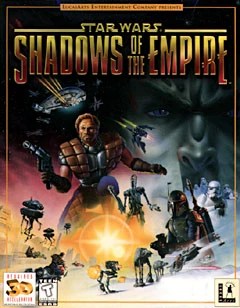
No, not by any means. While the story was interesting, it definitely had some problematic elements, like Xizor’s pheromone-fueled seduction of Leia. The new designs were also aggressively ’90s, which was exacerbated when you put them back-to-back with classic designs — such as Chewie’s bounty hunter disguise and haircut with Leia’s Boussh helmet and cloak.
But where it works, it works extremely well. The story is the expanded universe’s first long-form deep dive into the criminal underworld within the galaxy. Outside of Xizor’s creepy pheromone powers, he’s an incredibly compelling villain, and placing him in direct opposition to Palpatine and Vader emphasized that. And outside of the bad costumes, the stories of Luke, Leia and friends — showing how they went from Empire to Jedi — proved really successful, Luke in particular.

The event was the Star Wars expanded universe at its best. It is impossible to deny the impact it had, both on the canon and the storytelling. Even if Rendar and Xizor no longer technically exist in the Star Wars canon, they opened up a new avenue in the galaxy far, far away and gave us one of the greatest adventures within it.

