
Previously On X-Men: Sibling Dramas Kick ‘Magik & Colossus’ #4 Up A Notch
by Austin Gorton
A big(?) reveal, the conclusion(?) of a long-running arc and more in this week’s Previously on X-Men!
Magik And Colossus #4 – Book of the Week

By Ashley Allen & Germán Peralta
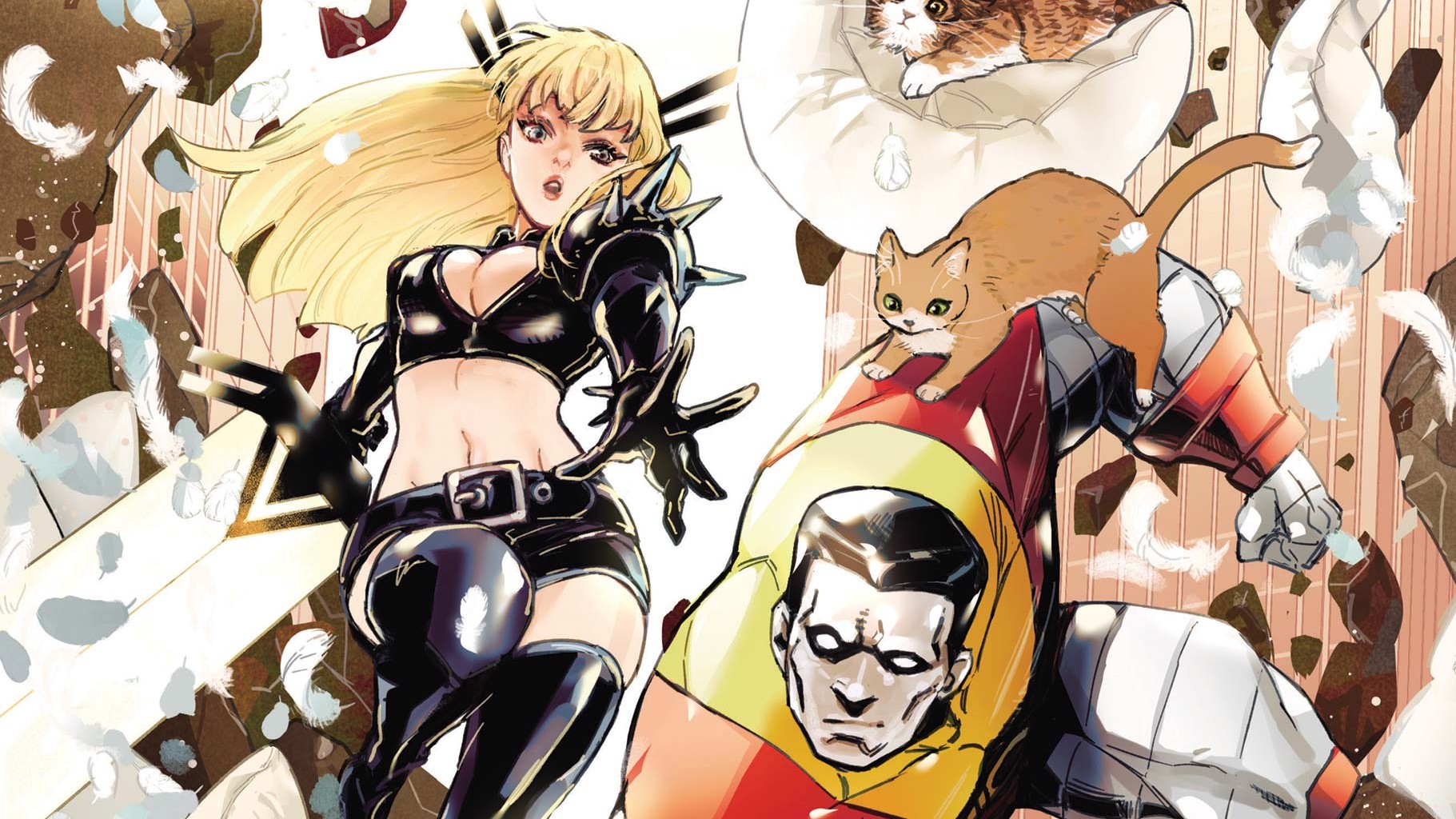
Colossus and Magik come face-to-face with the Immortal.
- The opening pages of this issue chronicle Colossus bringing the teenaged Illyana home for the first time after she emerged from Limbo as a teenager in Uncanny X-Men #160. As far as I can recall, this is the first time this has been dramatized (it’s not clear exactly when this happened, but it’s easy enough to slide in between old Uncanny issues).
- This Baba Yaga turns out to not be the real Baba Yaga.
- This panel is just lights out. Reflecting the oncoming attack from Baba Yaga/Lada in Colossus’ armored form is ingenuous.

- Colossus being jealous of Cyclops is a nice touch, especially when you realize how rarely Colossus has been on a team with Cyclops and Illyana since, like, the Avengers vs. X-Men era (whereas Cyclops and Illyana have been steadfast teammates for almost that entire time).
- This issues establishes that the plot involving the Immortal is connected to a battle between him and his sister, Lada, which of course makes it a thematic parallel to the struggles of the Rasputin siblings, a strong way to make the whole “fighting Russian demons” device more than just a genre-required backdrop to the Colossus/Magik family drama.
The back and forth between Colossus and Illyana is starting to get a bit tiresome (I am feeling Illyana’s exasperation with her brother at this point), but otherwise, this penultimate chapter of the series is coming together nicely. It continues to be refreshing to see Illyana as the more well-adjusted Rasputin sibling who has come to terms with her trauma (whereas her brother is still dealing with her trauma, let alone his) a fun metatextual acknowledgement of the fact that most Illyana stories over the past two decades (including the ones in Allen’s previous solo series) have been about her coming to terms with said trauma, whereas most Colossus stories over that same period have been about putting him through hell. The added background on the Immortal and his conflict with his sister is just what the story needed to connect the plot and character arcs as it heads into its conclusion.
Uncanny X-Men #28
By Gail Simone & Luciano Vecchio
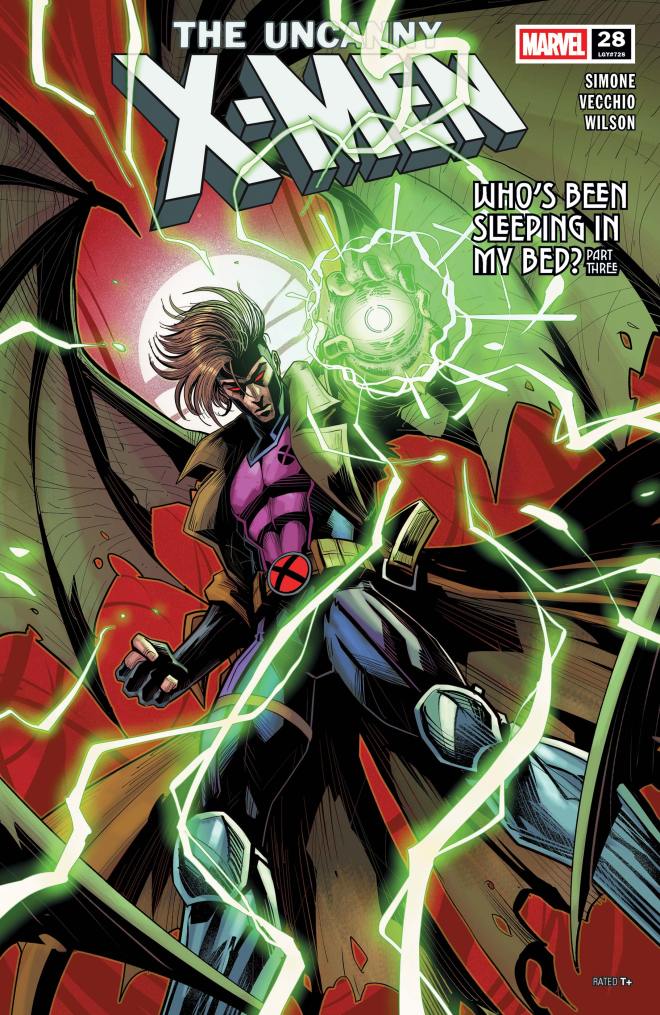
Inmate X is revealed as the Outliers draw closer to the truth of their new reality.
- Inmate X is revealed to be [drumroll] Warden Ellis’ heretofore offhandedly-mentioned brother, Oscar. To say this feels like a cheat after all the build-up is an understatement.
- For the record, Oscar was first mentioned in issue #8, and again in #20 (where it was established Monet was somehow aware of/in contact with him.
- His whole deal is very Proteus-coded: he existed first as a hidden prisoner with a codename (Mutant X/Inmate X), has a familial relationship with the person overseeing the facility imprisoning him, has reality-altering abilities and possesses the bodies of other people.
- Unlike Proteus, Oscar is by definition also a telepath, as Ellis referenced Inmate X as one of the Avians, who are all telepaths. This suggests his reality altering is less literal and more based on telepathic illusions (so less Proteus/Jamie Braddock/Jim Jaspers, more Mastermind).
- It also begs the question of how exactly, if he’s responsible for the illusory world in which the Outliers find themselves as well as the off-brand New Mutants (those creations are apparently the work of “AI”).
- That said, Oscar takes the name of Perimeter, which was the previously-used name for Graymalkin Prison’s security system, so it seems like a case of Oscar being responsible for the prison’s security, which might imply some kind of technological interface (this may be why Monet is able to disable her power inhibitor collar).
- Speaking of Monet, it remains unclear how she knows Oscar/has developed a relationship with him, but it seems pretty clear that the only reason she’s in the prison is to keep an eye/serve as a check on him.
- Her implication that the Trustees (Siryn, Fawn, Blob) are going to help her against him also makes me wonder if they’re also in the prison for the same reason, which in turn would suggest that the reason that all of the X-Men teams don’t seem to care that their former teammates are locked up and/or press-ganged into serving an anti-mutant bigot is because they’re all willingly undercover as part of Cyclops’ (or whomever) master plan. Or maybe that’s just wishful thinking that out-of-character behavior will eventually make sense.
- In addition to “how are Oscar’s illusions AI,” him being responsible for the various “realities” in this arc begs the question of how he knows stuff like Moira being involved in the formation of the New Mutants, or that Cannonball is very polite. Obviously, “telepathy,” but unless he’s someone like Gamesmaster who is just hooked into all minds at all time, he’d have to go looking for that info to get it.
- This issue reveals that Jitter is epileptic, which feels like something that should have come up at some point in the previous 27 issues.
- That triggers probably my favorite Mutina moment ever, when she’s the one who recognizes the symptoms and calls everyone else dumb-dumbs, essentially. I like her a lot more in the “callous loose canon early Wolverine” role than as a weirdo villain with vague powers and motivations.
- Deathdream’s “X is home, X is family” mantra is something he started saying in the wake of the “Dark Artery” story.
- I kinda dig the “evil” New Mutants — Sam being overly-polite while blasting Rogue, Rahne being a hard-drinking sass mouth, Roberto being … basically Roberto. Good stuff.
- Gambit can sprout dragon wings now. Cool.
Putting aside the Inmate X reveal/bait-and-switch, which is a real wet-fart of a troll (and entirely too cute by half, a bigger version of the Agatha Timely reveal in the previous arc aka “I made you think this character was a big deal you could actually reasonably guess but actually it’s an obscure character who technically fits the clues but is still a nothingburger of a character, aren’t I stinker?” which really sums up the “no readers, you’re wrong!” vibes of the Tom Brevoort editorial style and fits Simone’s proclivity for online trolling), I’m still digging the rest of this story. Largely because Vecchio continues to draw the hell out of it. Seriously, under anyone else (including possibly other series artist David Marquez, who is no artistic slouch), I’d have a lot less tolerance for much of this, but Vecchio is simply operating on an entirely new level with this arc and it’s a joy to look at it.
Wolverine #20
By Saladin Ahmed & Martín Cóccolo
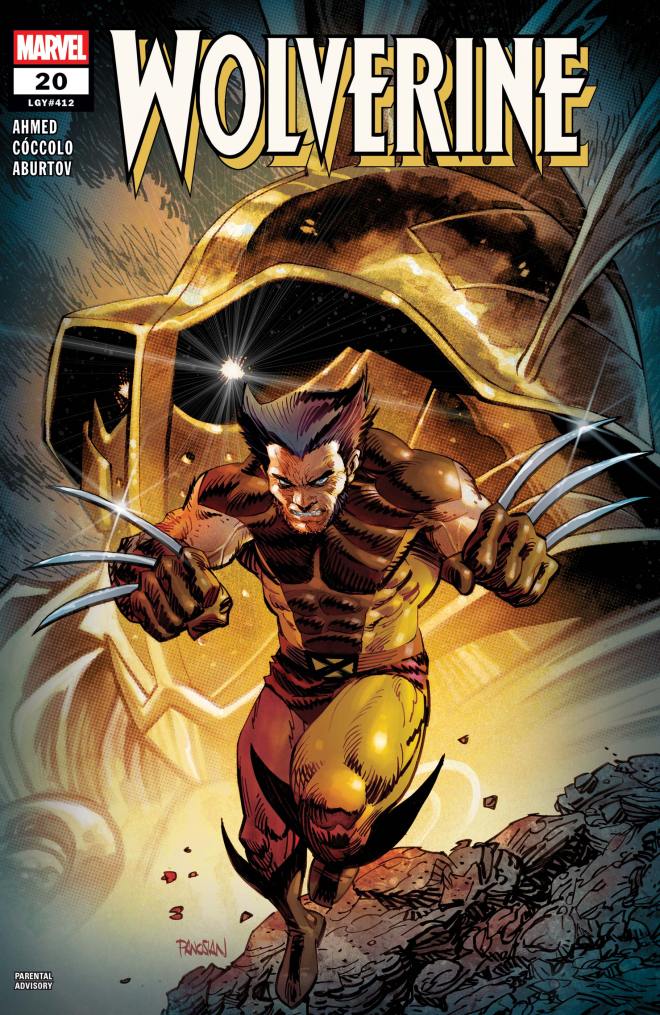
Wolverine gains some unusual allies in his fight against the Adamantine.
- The three alternate reality Wolverines who join the fight are Wolf With a Gun, a Western-themed Wolverine, Red Hare, a medieval Chinese Wolverine, and Boneclaw, a neanderthal/highly-devolved Wolverine. All three are appearing for the first time.
- Does this seem an awful lot like the recent Weapon X-Men miniseries, in which a team of alternate reality Wolverines fought Onslaught? Yes.
- It’s not made terribly clear why Wolverine’s (remaining) claws can defeat the Adamantine now when last issue they were shattered when trying to stab it; I guess the idea is that the arrival of the alt Wolverines somehow make it possible and/or this whole thing is a weird predestination thing where Wolverine can only stab the Adamantine when he believes he can.
- This also seems like the end of the New Morlocks story, though as with the Admantine, I suspect we’ll step away from it a bit and then return; at the very least, the question of who is paying Silver Sable seems like something that needs to be addressed.
What an utter mess. How does a story that’s been dragging out this long (arguably since the first issue of this volume) somehow feel, in its conclusion rushed, like it’s missing a key chapter or two? Why didn’t Ahmed tease the presence of these alt Wolverines via subplot pages in previous issue so their sudden arrival feels less random/deus ex machina-y? Why does Hercules entire character arc (accepting his role as a supporting player in this drama) happen off-panel between issues? How do you conclude the penultimate issue of the story with a (theoretically) big, jaw-dropping moment like having the Adamantine shatter three of Wolverine claws, and then end the story by having Wolverine … stab the Adamantine with the other three claws, and offer no clear, precise explanation for why/how it works this time? This ultimately reads like an issue where things happen because it’s the end of the story and so they have to happen for no other reason.
X-Men Infinity Comic #16

By Steve Orlando & Phillip Sevy
X-Factor battles the Durisphinx.
- We’ve gone from early 1990s X-Force to early ’90s X-Factor, specifically the government-sponsored team.
- That said, in a continuing tradition for this series, Polaris’ costume is incorrect given the presence of Forge. By the time he was involved in the team (post-X-Factor #92), Polaris had switched, first to her gold “sexy” costume and then to a variation of it in the traditional yellow and blue. What she’s wearing here is closer to her look when this version of the team launched.
- And yes, I know Orlando has said he’s adopted the Krakoan Era “people wear costumes from all kinds of eras!” approach, but this story is set in a specific era, and it would see, very odd for everyone but Polaris to wear the era-appropriate garb. So it just seems like more sloppy continuity.
- Similarly, the Durisphinx here says he encountered Havok’s brother Cyclops, “years ago” which more or less confirms the first arc of this story took place in the past, which simply doesn’t work.
- Two things Orlando does get right: “blork” was the made-up insult Strong Guy threw around in this era.
- Also, he was indeed a bouncer before joining X-Factor, working specifically for intergalactic rocker Lila Cheney.
- The fact that Orlando gets that stuff right but misses on the timeline elements really seems to suggest it’s not that he can’t keep it all straight, but rather, can’t be bothered to.
- When Multiple Man creates dupes, they don’t have any faces. I don’t recall this ever being the case before; not sure if it’s an artistic choice, or an artistic mistake.
- Havok blasting the Durisphinx is a good use of the “infinite” panel.
While I’m enjoying the general premise of “journeying through different eras of X-Men and its spinoff books,” the “best” thing about this continues to be spotting the continuity errors, while the general pattern of each new team’s introduction (Durisphinx shows up, drops it riddle, X-team fights it while one person tries to solve it, rinse, repeat) is getting exhaustingly repetitive.
