

‘Star Wars’ Month: 10 Notable Mandalorians From Across the Fandom
by Austin Gorton
From early preproduction mentions of Jedi-hating supercommandoes to the stars of their own Star Wars cinematic adventures, the Mandalorians have been a part of Star Wars lore almost since the beginning. Their story has been told, through the lenses of different characters, across movies, books, comics, animated series, video games and television. With the profile of the Mandalorians perhaps never higher than now, with the release of the feature film, Star Wars: The Mandalorian and Grogu, here are ten of the most notable Mandalorians, past and present, canonical and “legendary,” from across Star Wars fandom.

Boba Fett

The mysterious bounty hunter (why did he get the “no disintegrations!” call out?!?) Boba Fett (Jeremy Bulloch and Jason Wingreen) serves as the vehicle for the fandom’s introduction to the Mandalorians. First mentioned in production design notes later shared with the Bantha Tracks newsletter, Mandalorians (whose design inspired the look of Boba Fett) were explicitly linked to Fett via the novelization of The Empire Strikes Back by Donald F. Glut. However, it’s worth noting that he actually appeared before the film, first in the animated segment of otherwise-abominable Star Wars Holiday Special, and then as a special mail-away action figure available before Empire was released.
Fenn Shysa
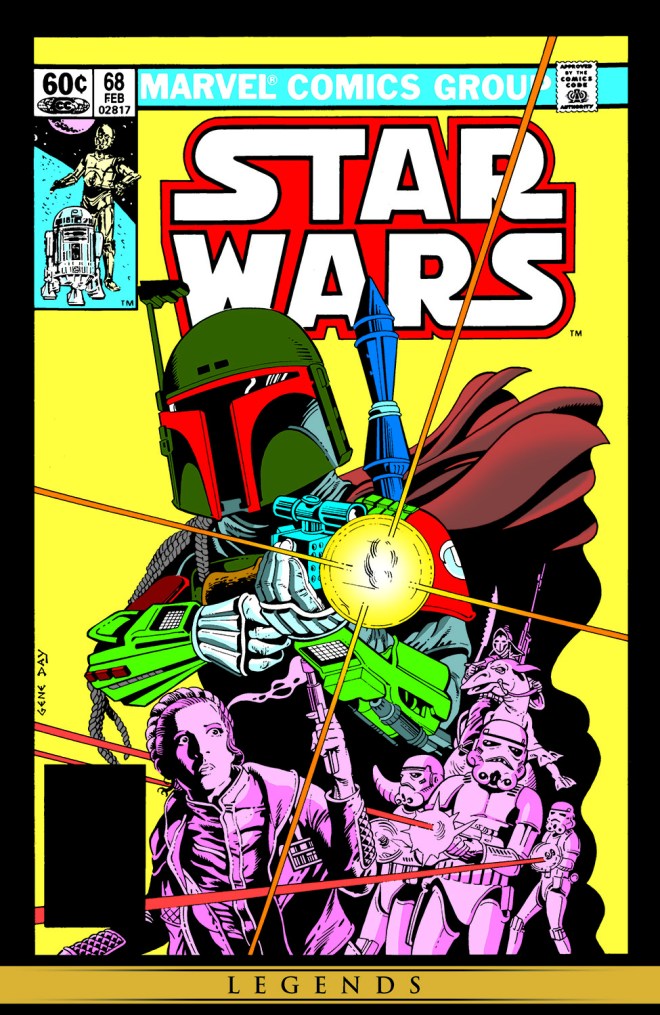
What happens when everyone loves Boba Fett and you’re creating the licensed Star Wars comic for Marvel, but you can’t actually use Fett because the third Star Wars film hasn’t come out yet, so he’s off-limits? Well, enter Fenn Shysa — a character who looks like Boba Fett (in Kermit green) and kind of acts like him (and a little Irish), but isn’t the famous bounty hunter. Through Shysa, creators David Michelinie and Gene Day were able to expand on the Mandalorian mythos (some of which has stuck in canon, some of which has not), notably providing the first appearance of the Mandalorian mythosaur, based on the skull emblem on Boba Fett’s shoulder pad.
Mandalore the Indomitable

A few years after Marvel Comics’ run of Star Wars comics completed, Dark Horse picked up the license. Alongside tales exploring the post-Return of the Jedi adventures of the movie cast were comics set in the deep past of the Star Wars galaxy. In that era, the Mandalorians allied themselves with the Sith Lords (and former Jedi) Ulic Qel-Droma and Exar Kunn and their Krath army under the leadership of Mandalore the Indomitable, so called for his prowess in battle. The ensuing war with the Republic and their Jedi defenders led to centuries of animosity between the Mandalorians and the Jedi — an idea built on the back of the pre-Empire Strikes Back premise that the Mandalorian supercommandoes were foes of the Jedi.
Jaster Mereel
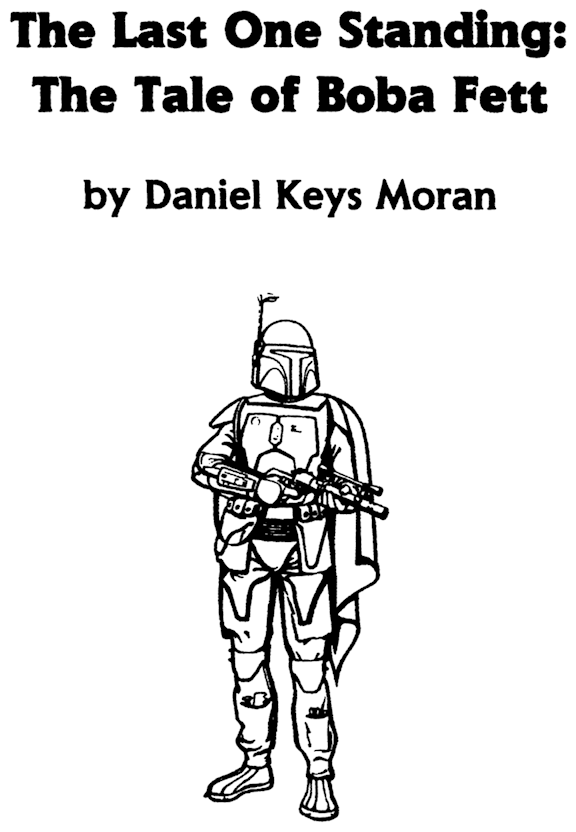
In the pre-Prequel Trilogy days of the Expanded Universe, authors occasionally tried to fill in the backstories of underdeveloped characters while still working within the boundaries laid down by Lucasfilm. Jaster Mereel is perhaps the perfect example of that: an attempt to give Boba Fett — a character most creators considered unlikely to receive much attention in future films — an origin. In a novella by Daniel Keys Moran published in the Tales of the Bounty Hunters anthology (and later repeated in non-fiction sources), Jaster Mereel, Journeyman Protector of Concord Dawn, is revealed as the Fett’s secret identity, the man he was before becoming an infamous bounty hunter. While Star Wars: Episode II — Attack of the Clones would shortly blow all that up by revealing a new canonical origin for the character, the different elements of Mereel’s story hung around in slightly revised form. Jaster Mereel was later established as the Mandalorian who found and trained Jango Fett (Temuera Morrison), making him a grandfather of sorts to Boba, the Journeyman Protectors become the royal guards, essentially, of Mandalorian rulers, and Concord Dawn became a planet in the Mandalore sector, homeworld of Jango Fett and base of operations for the Journeymen Protectors.
Canderous Odo
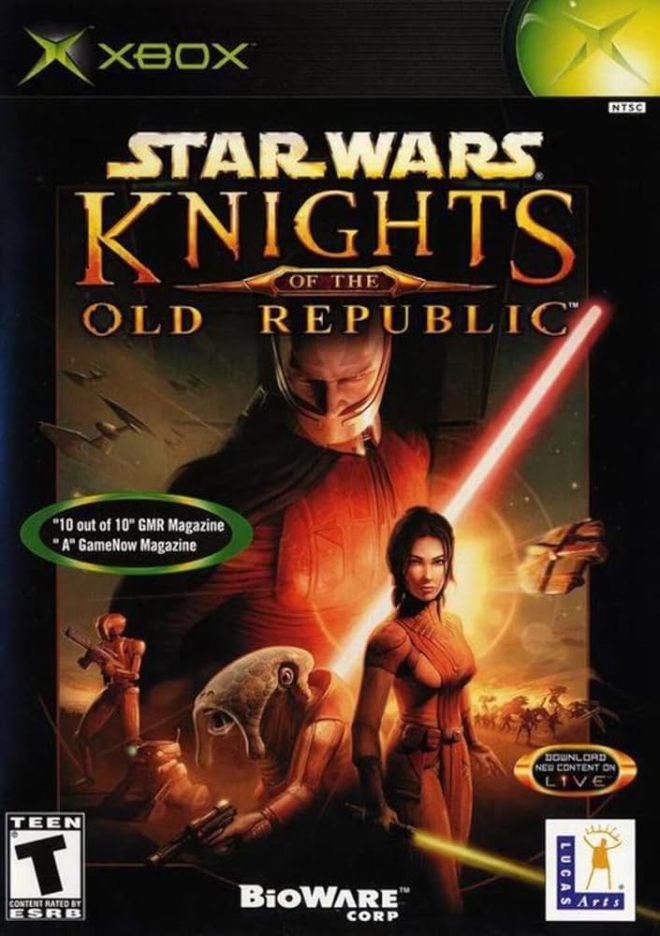
Returning to the distant past, Canderous Odo is a notable Mandalorian from the Star Wars: Knights of the Old Republic video game series, set thousands of years Star Wars: Episode IV — A New Hope. A warrior fighting in the Mandalorian Wars against Jedi Knight Revan, Odo eventually fell into the life of a mercenary before joining the Republic as a soldier. There, he befriended an amnesiac Revan, an alliance which ultimately led to Odo’s elevation to Mandalore when Revan helped him reclaim the mask of Mandalore. As leader of the united Mandalorian clans, Odo played a key role in the defeat of Darth Nihilus.
Satine and Bo-Katan Kryze
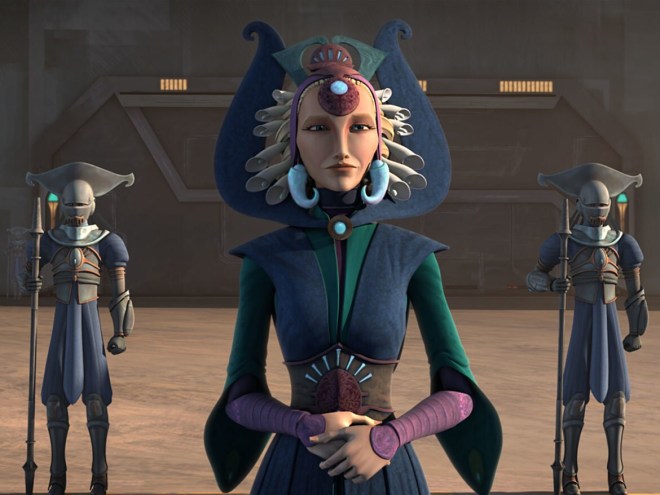
With the Mandalorians once more in the spotlight following the Prequel Trilogy, they became regular players within the animated Star Wars: The Clone Wars series. Introduced in the second season, Duchess Satine Kryze (Anna Graves) presided over a surprisingly-peaceful Mandalore. With a group of zealots — including her sister, Bo-Katan (Katie Sackhoff) — eager to return Mandalore to its more war-like past, the world is drawn into the broader Clone Wars conflict as both the Republic and the Separatists try to bring the former warriors to their side. The Jedi get involved thanks to a past romantic relationship between Obi-Wan (James Arnold Taylor) and Satine. See, because in the Prequels, Obi-Wan was played by Ewan MacGregor, who romanced Nicole Kidman, playing a character named Satine, in the film Moulin Rouge. While Satine would meet a tragic end before the end of the Clone Wars, her sister would prove a lasting addition to the Star Wars universe, even making the jump from animated to live action, with Sackhoff reprising the role.
Tarre Vizsla

A key element of Mandalorian tradition introduced in Clone Wars (which, like Bo-Katan, would later make the leap to live action) is the Darksaber — a specially-made Mandalorian lightsaber which is considered to belong to the true ruler of Mandalore. It was created by Tarre Vizsla, a Mandalorian who, despite the historic animosity between the two groups, also trained as a Jedi. Tarre’s clan, Clan Vizla, would produce several notable members in later years, including Pre Vizsla (Jon Favreau), the leader of the rebel group who usurped Duchess Satine; and Paz Vizsla (Favreau, Tait Fletcher), the Mandalorian who hassled the Din Djarin (Pedro Pascal, Lateef Crowder, Brendan Wayne) in early seasons of The Mandalorian.
Sabine Wren

One of the members of the Ghost crew who serve as the protagonists of the animated Star Wars Rebels, Sabine of Clan Wren (Tiya Sircar) is introduced as an atypical Mandalorian. She eschews both the typical utilitarianism and her family’s alliance with the Imperial-collaborationist government. Her love of art is channeled into vividly-colored graffiti, fighting the Empire with both visual propaganda and martial prowess. Yet, in the course of the series, she also becomes a window in the Empire-era status of Mandalore, wielding the Darksaber for a time and helping trigger a Mando civil war that paves the way for a reformed Bo-Katan to assume leadership of the Mandalorian clans.
Death Watch
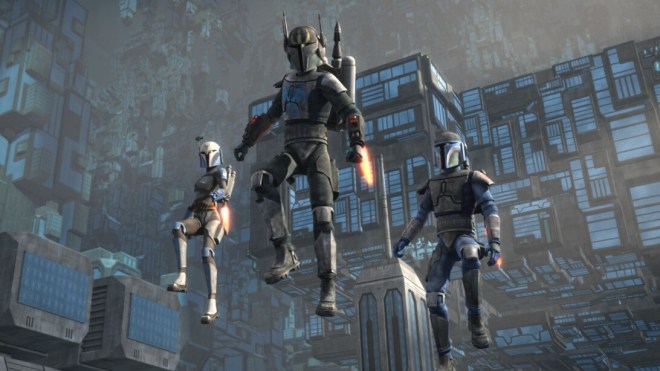
The name for the splinter group determined to restore the Clone Wars-era Mandalore to its more martial past, Death Watch is led by the aforementioned Pre Vizsla — wielding the Darksaber crafted by his ancestor — in its war against Duchess Satine. Vizsla would eventually strike an alliance with the former Sith Lord Maul (Sam Witwer), and, in seeking a proper army to both capture and hold Mandalore, followed Maul’s suggestion of uniting various criminal factions into the Shadow Collective. The plan: use them to become the ruler of Mandalore. But after Maul killed Vizsla and claimed leadership of Death Watch — and Mandalore — for himself, Bo-Katan rebelled with her followers and left to form a resistance to Maul’s leadership. The rest of Death Watch re-dedicated themselves to Maul, donning red and black armor as his loyal supercommandoes. Amongst their number was Rook Kast (Vanessa Marshall), who would become one of Maul’s most steadfast allies. Eventually, an alliance of Bo-Katan’s rebel group, the Republic, and former Jedi Ahsoka Tano (Ashley Eckstein) overthrew Maul, leaving Bo-Katan in charge. But when she refused to formally ally with the newly-formed Empire, a Maul loyalist named Gar Saxxon (Ray Stevenson) betrayed her, leading to decades of Mandalore being ruled nominally by Death Watch but functionally by the Empire.
The Mandalorian Din Djarin

When it came time to launch live-action Star Wars TV on the then-fledging Disney+ service, rather than anoint any of the many Mandalorian characters in its stable, Lucasfilm opted to create a new character to serve as the star of the show of the same name. Enter Din Djarin, a Mandalorian foundling operating as a bounty hunter from the world of Nevarro. Rescued from a Separatist attack as a boy by members of the Children of the Watch — an even-more extreme offshoot of Death Watch — Djarin was raised to follow the Watch’s strong adherence to the old Mandalorian ways, including a refusal to remove their helmets in the presence of others. Despite living a life akin to Jango Fett’s “just a simple man trying to make my way in the universe,” the Mandalorian would eventually find himself playing a key role in the fates of both Mandalore and the New Republic after finding the Force-sensitive child Grogu and adopting him into his clan. Together, the two-person Clan Mudhorn would help oust the Imperial remnant, led by Moff Gideon (Giancarlo Esposito) from Mandalore and restore Bo-Katan’s rule, before pledging their skills as independent contractors (of course) to the fight against Imperial forces both old and new.

