
Pride Month 2026 Retro-Review: ‘Saving Face’ Celebrates Asian And Lesbian Culture
by Benjamin Hall
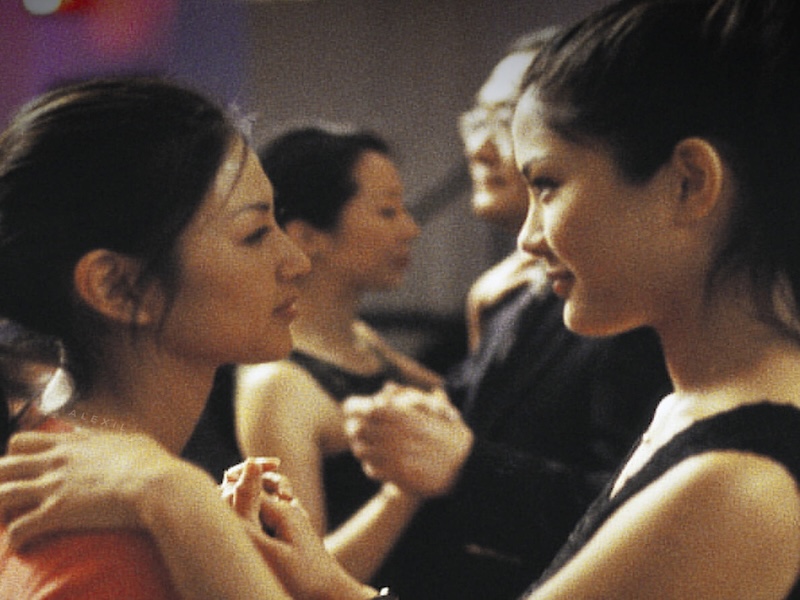
A widowed mother and her adult daughter navigate cultural expectations and the wants of their respective hearts. The former is newly pregnant and unwilling to name the father. While her daughter is deciding between staying in the figurative closet or keeping the affections of her girlfriend. Can they gain the courage to understand each other and themselves?
Saving Face (2004) is a movie that should have universal appeal — it is both entertaining and realistic. Although, that level of realism is debatable as it centers on a romance that is not resolved in a fairy tale way. Various other relationships depicted in the film also avoid a fanciful air. Additionally, bigotry is also depicted, but one could view those moments in a similar vein to Blazing Saddles (1974) since. to an extent, they are poking fun at the wrongness. Which leads to a certain amount of the population — bigots — who will not find it appealing as the majority non-white cast and lesbian characters.
The lighting is a key aspect and helps enhance the atmosphere of each scene. Also, the darkest interior scenes are lit in a manner which gives the idea that the characters are mostly in a room with the lights out.
There is a tiny amount of shaky camera effect during a scene involving a train window that seems intentional. This effect adds a little more believability to the moment since it is mirroring Wilhelmenia Pang’s (Michelle Krusiec) emotional state.

The sound mixing could be better during certain moments. Although it is fine for the most part, there are times when it is hard to hear the characters. An early scene with diegetic music is one such example. As for the score, there is good range to it, and each scene is better for the song selections. Speaking of sounds, one will have to read subtitles that translate one language from another for a much of the movie. Therefore, turning on the captions throughout will alleviate the sound issue and prep a non-native speaker for the eventual subtitles. Additionally, turning on subtitles ensures the full translation of a very minor character’s dialogue, an otherwise missed element of the film without the full caption track.
Despite the problems with the mixing and translation of subtitles, the editing is great overall. Note how the final scene and its audio is interspersed with the beginning of the credits. Scene transitions, meanwhile, do occur in a way that makes them rather obvious. Yet, they are nowhere near to the extreme one gets with anything from the Star Wars franchise. In any event, they will most likely not jar viewers out of whatever level of immersion they are experiencing.

In this reviewer’s own opinion, Saving Face is worth watching multiple times because of its love stories and the corresponding social commentary. The societal examination focuses mostly on Chinese American culture and how similar-yet-different it is from others. Essential aspects of the critique regard women’s rights and accepting homosexuality. Additionally, moments of foreshadowing are more noticeable upon repeat viewings. While the acting cannot improve with additional screenings, it does not need to as all of the actors give their all. Director Alice Wu, along with the various actors, should be sought out to make other amazing movies.
Saving Face is available on DVD and Blu-ray, plus various digital methods such as Fubo and The Roku Channel.


