
It’s Just Another Brick In The Wall — Reviewing ‘Dead Teenagers’ #4
by Scott Redmond
Overview
Drip by drip, it’s all coming together, as the teenagers turned adults deal with a variety of issues with death still on their trail with ‘Dead Teenagers’ #4. Another perfect encapsulation of what makes this series tick, full of dense characterization and moody immersive style.
Overall
10/10Sometimes something that you’re looking for happens to be right in plain sight, waiting for the moment of clicking recognition. Even if that thing you’re looking for happens to be the who or what that has been behind the graphic time loop deaths of you and your friends.
Everything comes to a turning point with Dead Teenagers #4, the penultimate chapter of Jude Ellison Doyle, Caitlyn Yarsky, and Becca Carey’s teen-horror drama miniseries.
-SPOILERS FOLLOW-

All the time loop developments and the reveal of the killer, are all well and good. It’s very well crafted and brimming with excitement and intrigue. What still sells this book though is the immaculate character development being carefully packed into these 32 pages.
Seen as the joke of the series to start, Brandy was a character who was partying hard through her days — seemingly not a care in the world, always being the first to die during the loops. Then comes this adulthood where she not only doesn’t die first but lives long enough to see all the death the others have become accustomed to seeing. We feel for Brandy as she finds the stark reality of these seemingly infinite bloody scenarios to be overwhelming.
More pieces are trickled out as Doyle lays out how hard things have been for these characters in life. From the issues of Alicia not wanting her relationship with J.T. outed, to Ryder’s attempts to keep Alicia’s attention, to how J.T. has memories of living out a hard lonely life to adulthood.

Only five issues for this series and each of the four released has hit so damn hard. He weaves together very hard, real, and painful topics with the fun, wacky, and bloody tropes of horror as if they are old friends. Doyle is such a precise writer. Just pure insight and depth that feels natural in every single facet that appears on the page.
The “far too friendly that it’s actually creepy and inappropriate” teacher being behind it all tracks. It’s one of those “Oh I’ve seen it before” type moments that is part of the package of this miniseries. Yet, like the other elements, it has enough of a twist and its own powerful punch to stand apart. Upon further reflection there were mentions of this teacher and moments outside of the main focus in previous issues. It shows that the seeds were indeed planted, and it all makes sense now as the end looms.
I mean, the first page basically throws the reveal in your face in a very cheeky way, and I love it.

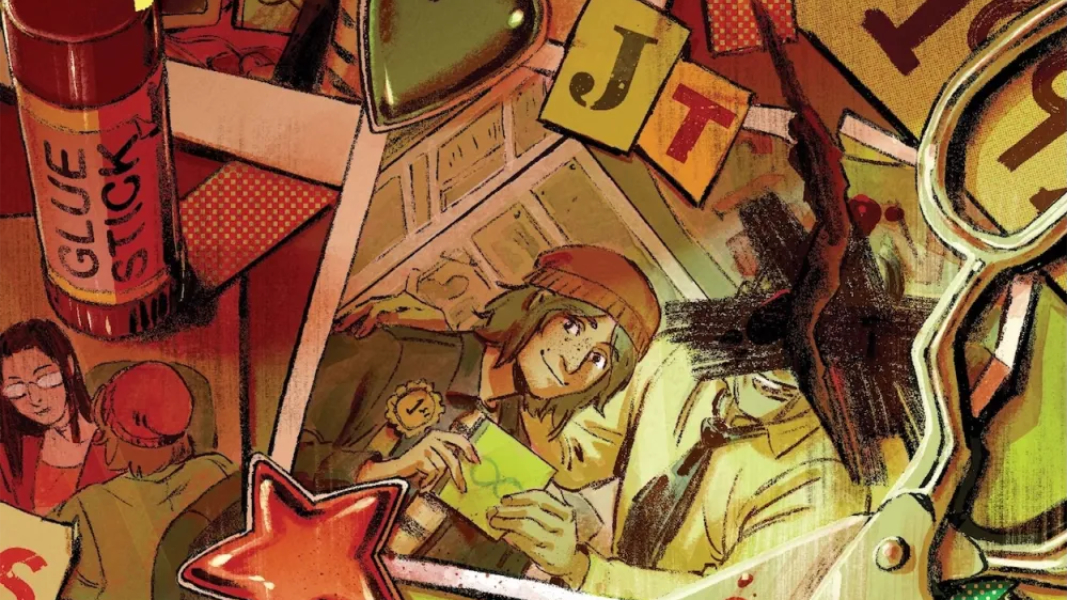
Helping keep the dynamic balance is the bold work that Yarsky completes month after month. Her style finds that sweet spot where the colorful and whimsical meets the heavy and dense. Look at that first page above, where there are 16 panels, eight of them just repeating two moments, and another six of them just being pure black rectangles. It’s simple on paper but funny and bold in execution, fully delivering all the elements of character and social aspects the series was built on in just sixteen stacked panels.
That shifting into a gory tableau of death is the kind of transition that I’m here for.
Speaking of which, I love how Yarsky handles all of the blood and death through this series. It’s just graphic enough that we feel the horror and disgust but not reaching the level of gore that we get in a lot of things. I would say that its brutal death given a softer edge, but bodies that are dismembered and torn apart are not really things you would call soft in any capacity.

Choices for colors help with this respect and the overall mood of the book. They are kept very baseline neutral in many respects, nothing over the top vibrant or too heavily dark. There’s enough shifts to the lighting to give darker horror feelings, but the overall beat keeps it very similar to a standard reality setting for our recognition.
Another note on the paneling choices. They are all so dynamic, beyond the opening sixteen panel page, and allow the spaces and moments their full breathing room. We’re right there in the thick of things with the characters and not a fly on the wall type of situation. I love when books have that visual aspect that eschews the standard setup to do different things with each page, letting the moment or the tone dictate how they are depicting everything, even panels over panels or panels of varying sizes.
A visual treat so to speak that is part of the beauty that comics hold as a medium over others.
We see and feel the emotions in how the characters move through the world. It’s written in their body language and on their expressive faces. We also get to hear all of that through the lettering that Carey brings to the table — letting it flow in ways that undeniably show the character’s tone and volume and overall emotional appeal and utilizing any modifiers, from bolds to ellipses to other elements, to heighten or highlight these varying vocal moments.

In the years of being a reviewer, I’ve come to love the usage of SFX even more in comics. When well done, and most utilize them well, they not only give us a sense of the sounds of the world but can add deeply to a moment. Sure, we see Brandy vomit in one of the first panels, but the usage of HURRRKK in that moment, letters alternating horizontally following the vomit, makes it land so much more viscerally.
Almost felt my own stomach heave in that moment and that’s the stuff that I’m looking for.
There’s only one issue left of this series, and I’m really excited to see how it all comes together. It’ll be a shame to not have this tremendous book to open up each month, but a fully wrapped up story that is this good is always preferable to one that drags on forever.
Dead Teenagers #4 is now available from Oni Press.


