
Tribeca 2026: An Interview With ‘Hollywood Does Abortion’ Co-Director Janet Goldwater
by Rachel Bellwoar
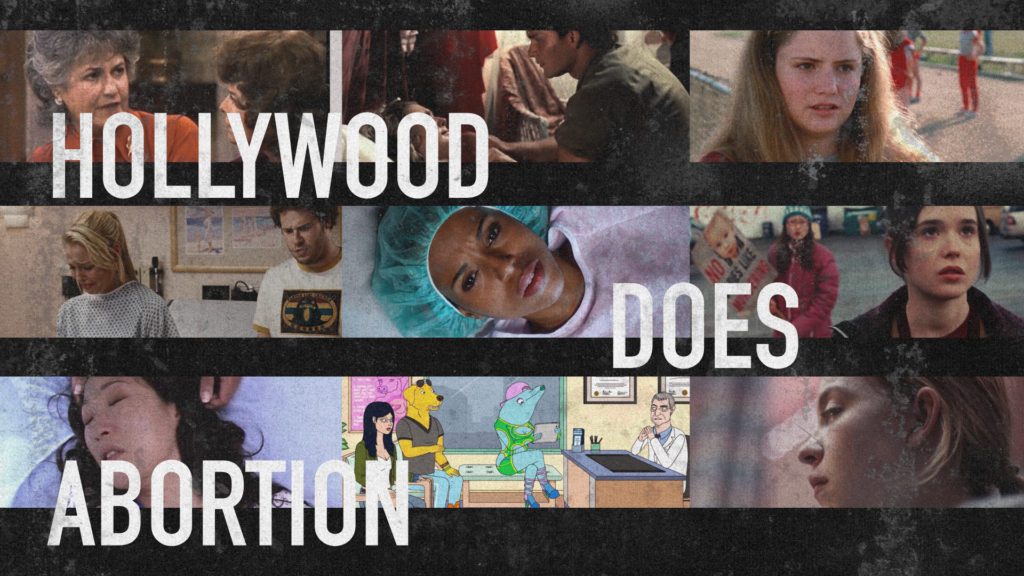
Hollywood might not make the laws but it can influence how people perceive certain issues. Such is very much the case with abortion, a subject that’s been portrayed many times on TV and in movies, but not always with the greatest accuracy or care. Starting with Maude (the Norman Lear comedy that broke ground by having its title character choose to have the operation), Barbara Attie, Janet Goldwater and Mike Attie‘s new documentary looks at how Hollywood Does Abortion and here’s what Goldwater had to say about the film which recently debuted at Tribeca:

Rachel Bellwoar: Hollywood Does Abortion begins with a discussion of the two-part very special Maude episode, “Maude’s Dilemma.” That episode was significant not just for how it approached the topic of abortion but for how many people saw it. Do you feel that could ever be achieved again in the age of streaming?
Janet Goldwater: It’s hard to get a national discussion going these days, based on “everyone” watching the same three channels the way they did in the ’70s. In Hollywood Does Abortion, we say that 65 million viewers saw “Maude’s Dilemma” the night it first aired. But there is a different opportunity with streaming — if a movie or show is popular on, say Netlix, it can get well over those numbers during its lifetime. So yes, I think a show of movie could have the same impact as Maude. The unique thing about “Maude’s Dilemma” was how brave — and surprising — it was at the time.
Bellwoar: One of the things this documentary shows is how media doesn’t happen in a vacuum. A film or TV show that, on its own, might not have intended to contribute to a certain impression can have a very different impact when watched collectively with other movies and TV shows airing at the time. Was there anything that surprised you or that you didn’t realise until you started watching these movies and TV episodes altogether?
Goldwater: You are really getting at the heart of our story in Hollywood Does Abortion with this question. When you look at any given episode or movie by itself, of course it makes sense that a character may change their mind and decide to have a child, or may miscarry at the last minute, or may have serious regrets after an abortion. All of these things happen in real life, and they are all legitimate plot points. In Hollywood Does Abortion we are really trying to look at the meta-data — what happens in the aggregate when you see these stories over and over and over again without the proportionate number of stories to counter them that would reflect “real life.”
Bellwoar: This documentary also shows the dangers in looking to TV and movies for the news, as many “based on a true story” accounts aren’t as faithful to the facts as they purport to be. Is there one example that sticks in your mind as being particularly egregious or unforgivable?
Goldwater: We know people want to trust their favorite shows and characters. If people aren’t getting their information from accurate news or medical sources, the information they can get from a show like Law & Order can take the form of fact in their minds. In Hollywood Does Abortion, we single out one episode of Law & Order that we think is a good example of this, in which important medical details about medication abortion are pivotal to the plot. This is especially disturbing today, when we know that the majority of abortions in US are through medication, and we also know that the writers of Law & Order have full access to accurate information but needed to create a scary, dramatic moment.
Bellwoar: The statistics shown in this movie are eye-opening as to how misleading films and TV shows can be, like the discrepancy between how often characters are shown having medical complications from an abortion versus how often that actually happens in real life. Once these misconceptions are formed, is it possible to fully debunk them?
Goldwater: It is hard [to debunk these myths]. People who work in abortion clinics see patients arriving scared all the time, for a procedure that is far safer than childbirth. But it’s never too late to counter misinformation by sharing our lived experiences, in person, in music, in poetry, and onscreen!
Bellwoar: Since Roe vs. Wade was overturned in 2022, it’s become significantly harder, if not impossible in some states for people to access abortion care. Is there any advice you have for viewers who want to help but aren’t sure where to direct their energies?
Goldwater: I (Janet) personally am part of a PSN (Patient Support Network) that provides transportation, housing and sometimes financial support to people traveling within or to my city that still provides reasonable access to abortion. Some people we help have to fly over five or six states to reach us, some have to travel hours by car. These networks are crucial. Most areas also have abortion funds that defray the cost of abortions and help with related costs—you can find your local fund at nnaf.org and help raise money for it!
Bellwoar: Hollywood Does Abortion specifically focuses on how abortion has been portrayed on American films and TV shows. Are there any countries that you feel have done a better job getting across what abortion looks like in 2026?
Goldwater: I’m afraid I’m not an expert on what other countries are doing in TV. But we’ve seen amazing independent films coming out of Western and Eastern Europe.
Bellwoar: Thanks for agreeing to this interview, Janet!
Hollywood Does Abortion made its world premiere at Tribeca Festival on 7th June.

