
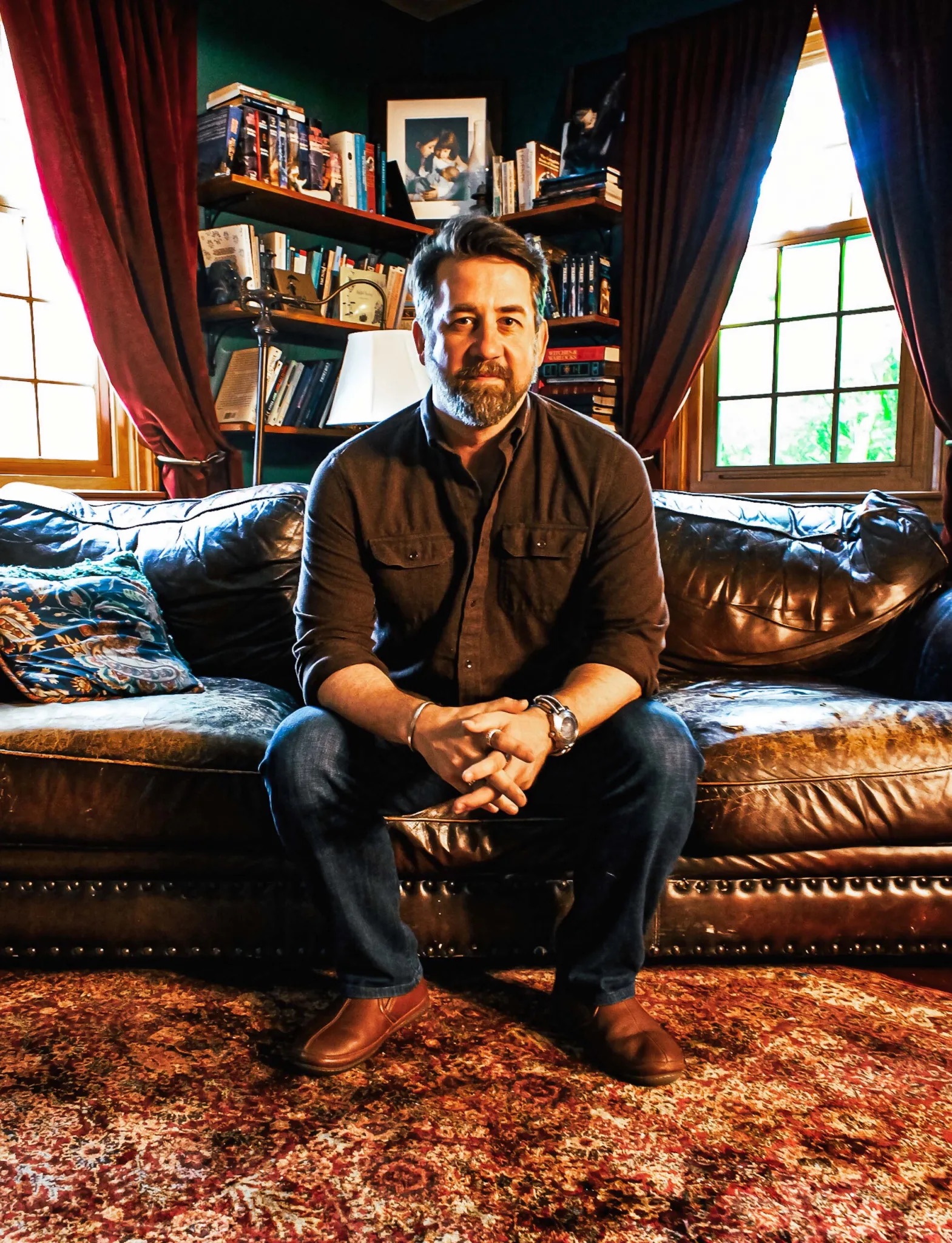
We’re Pretty Terrified As A Species — Discussing ‘Don’t Go There’ With Author J.W. Ocker
by Tom Smithyman
The summer travel season is upon us. And as you’re thinking about whether to head to a beach, an urban setting, or an amusement park, travel writer J.W. Ocker has a list of places that you may want to avoid at all costs. His new book, Don’t Go There, chronicles 30 dangerous and mysterious places around the world, including the Valley of Headless Men and the home of the Jersey devil. Comicon.com caught up with Ocker and asked his advice on where not to spend our summer holiday.

Tom Smithyman: You kind of written the anti-travel guide. Why did you want to write about bad places to visit?
J.W. Ocker: Because the reasons to visit a place (good restaurants, nice hotels, fun activities) are way less interesting to read about than the reasons to not visit a place (deaths, disappearances, monsters, reality-shaking phenomena). And that’s especially true if you have no plan to visit the good places. Travel guides are for the minority of people who are traveling to a particular place. Anti-travel guides are for the majority of people that aren’t travelling. That’s the business case, at least. Could be flawed.
Smithyman: In the book, you talk about “vile vortices.” Can you explain what they are and what makes an area cursed?
Ocker: This was a fantastic idea developed in the late 1950s and early 1960s by biologist and paranormal researcher Ivan T. Sanderson. He believed that there are 12 equidistant spots on the planet that are ravaged by time anomalies and freak phenomena. Basically weak spots in the fabric of normal reality. This grid of horror includes the Bermuda Triangle, both poles, the Devil’s Sea in Japan, some sites with megalithic ruins, etc.
The idea garnered enough interest that he was invited onto The Dick Cavett Show on ABC to discuss it (other guests included Lucille Ball and Carol Burnett). So the idea reached some level of mainstream interest (even if it was comedic) before spiraling out to the fringe.
Smithyman: Is there a particular place to avoid that scared you more than the others?
Ocker: The Bermuda Triangle. Even if you’re boring enough to not believe in aliens or sea monsters or time vortexes or Atlantis remnants or fail to understand that it’s a very popular travel corridor where bad things just statistically happen, drowning in the deep, cold dark amidst the wreckage of your ship or plane is nightmarish just as an idea. Admittedly, I haven’t drowned in the Triangle yet, so maybe it’s more pleasant in actuality.

Smithyman: Probably not, but I’m not going to test it. In your research, did you find that every culture has a concept of unlucky places to visit?
Ocker: Oh yeah, it’s universal. We’re pretty terrified as a species. It starts at a local level where we want to keep kids away from dangerous areas such as forests and bad neighborhoods via urban legends and fairy tales. Then we get all xenophobic and tell each other to beware of other cities or countries due to crimes and perverse customs and civil unrest. It’s just inevitable that we delineate unfamiliar spaces away from us that are unlucky or forbidden, while delineating the known space around us as safe.
Smithyman: You cite a large number of unfortunate places in the US in the book. Is that because your audience is largely American or are we just particularly unlucky?
Ocker: It is my main audience, for sure (and, selfishly, allows me to get to places easier since that’s where I live), but there’s also something to be said for it being both the fourth-largest country on the planet by area and the third largest by population. It’s just math, man. More places times more people that can die/disappear/have strange experiences there equals a lot more bad spots on the map.
Smithyman: It just so happens that I’m reading your book while on the Eurostar from London to Paris. Any places I should avoid on the way?
Ocker: Oh, the Paris Catacombs. But not because of the crowds and the strange moral vertigo of going from dead people to a gift shop. The visitor-accessible parts of the catacombs are only the tip of the skullberg. The 150 miles of catacombs hollowing out Paris are dangerous places where you can die or disappear or have strange experiences. Good place to leave your skeleton, though.
[Reporter’s note: I totally went to the catacombs!]
Smithyman: What is the worst place you’ve ever visited and why?
Ocker: In the context of the book? The Salton Sea. Drab and smelly and deadly and forsaken, with a depressing history and a depressing future. Lost my favorite pair of Timberlands there, sucked into the noxious muck. In my personal life, maybe Walmart? Or Birmingham, Alabama? Or the Walmart in Birmingham, Alabama?
Smithyman: Yeah, that sounds terrible all around. And imagine a Walmart in the Salton Sea. Best of luck with Don’t Go There, which will be available July 14th from Quirk Books.

