
The Grass Isn’t Always Greener — Reviewing ‘Neighborhood Watch’ #3
by Scott Redmond
Overview
A tale of two different worlds gets even more complicated and complex with the third issue of ‘Neighborhood Watch.’ A solidly paced middle issue of the series, adding a bit of depth and spice to the mix ahead of the big reveals to come.
Overall
9/10Neighborhoods are built all over the world. The reasons for each one are specific to the region or the builders. More often than not, most of us move into a space and don’t wonder or ask questions about the hows or whys of that neighborhood’s history.
In Neighborhood Watch #3 those questions become very pertinent as the mystery of the Jill-Cassie situation becomes wrapped up in two communities shared past. More pieces of the puzzle begin to take shape as Sarah Gailey, Haining, Rebecca Nalty, and Jodie Troutman continue their dual-sided saga.
-Spoilers Follow-

Suburban-style intrigue is such a tantalizing state of affairs.
Gailey is a master at maximizing space and plotting to create characters and worlds that are fleshed out very quickly. We’re only three issues into knowing this space and these people and already I can tell so much about them. Not just the main focus characters, but also those on the side that are the ‘extras.’
I like how she very much paints a picture that both neighborhoods have their warts and their issues, but also have their good spots. They come from very different worlds, and their experiences have really colored how they view the world and others. We see the ugly side of things, though. The residents of Willow Haven give into their worst impulses when it comes to judging the Open Arms Collective; wanting to embrace the cops, and tell them everything, even stuff that isn’t a crime or an issue because it scares them or feels too different for them.
Haining’s work does such a good job or really fleshing these spaces and people out. They give everything such a personal feeling as we’re right in the middle of most events, like a member of the group rather than a distant spectator. Panels shifting to keep us right in the setting and giving space to the figures to feel alive and in motion. They come at it all with a very light whimsical style that has just enough of the right rougher textures baked into the whole affair.

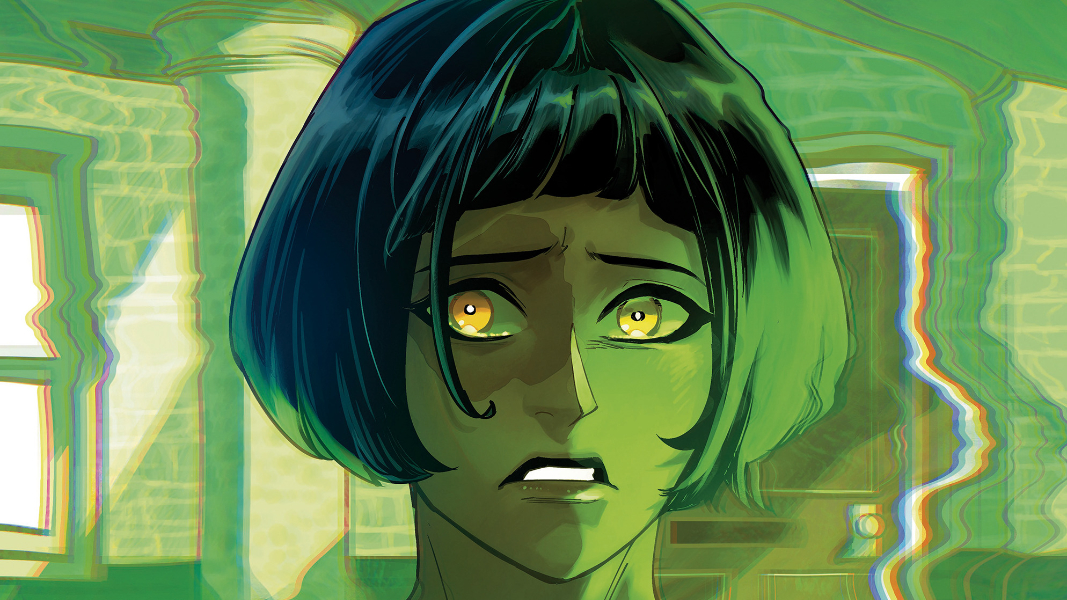
Visual cues help us discern the differences in the worlds too. From the style of clothing that they wear to how the spaces appear, even how the panels move to address each group. The borders around the panels and the shape that they take on differs to match the different moods of these groups. Key to that is the color choices that Nalty is making with the palette.
There are cooler or colder styles of colors for the Willow Haven portions, while the Open Arms side has warmer tones to play with. All of it is kept very natural-toned like the world around us, with flashes of of vibrancy peppered in at the right moment. Various backgrounds turn into colorful filters, helping denote the emotional spirals or beats that are on display in the artwork.
As characters begin to become more emotionally charged, we feel it and see it as well as hear it plainly. Troutman makes sure that the words on display evoke the right emotional beats as we’re reading through them, utilizing modifications and placements to get the most out of each and every letter that hits the page. A little shift here or there takes things from easily reading as angry or haunting or scared or sad.
One of the pages has a Willow Haven member dropping the “bombshell” that Open Arms kids don’t have nannies with “No. Nanny.” separated bubbles. It’s delivered like an announcement that another person committed a horrifying murder or actual crime. Perfection in how it’s laid out.

I’m loving how this series is coming together. We learn about the connection of the two neighborhoods, how one was the company town for the other, and about the artificial hill that exists between them. Both a statement of corporate style ridiculousness, it also speaks to the artificial means we put up to separate ourselves from others in society, especially when class or money are involved.
Jill-Cassie’s daughter Aurora plays a key role as we learn that not only was she part of the Willow Haven world previously, she is transgender. No doubt this information will play into why Jill-Cassie was coming to Collective Arms, why she lied about where her child had gone to Willow Haven, and why Aurora fears her father (a cop) so much.
Jill-Cassie was collecting information on Collective Arms for some reason, and it could be that the transition of her child caused her to realize the error of her ways and try to live in two different worlds. Next issue seems primed to finally give us more answers, especially since Aurora now knows that Bianca and Val know something about her mother.
Neighborhood Watch #3 is now available from BOOM! Studios.

