
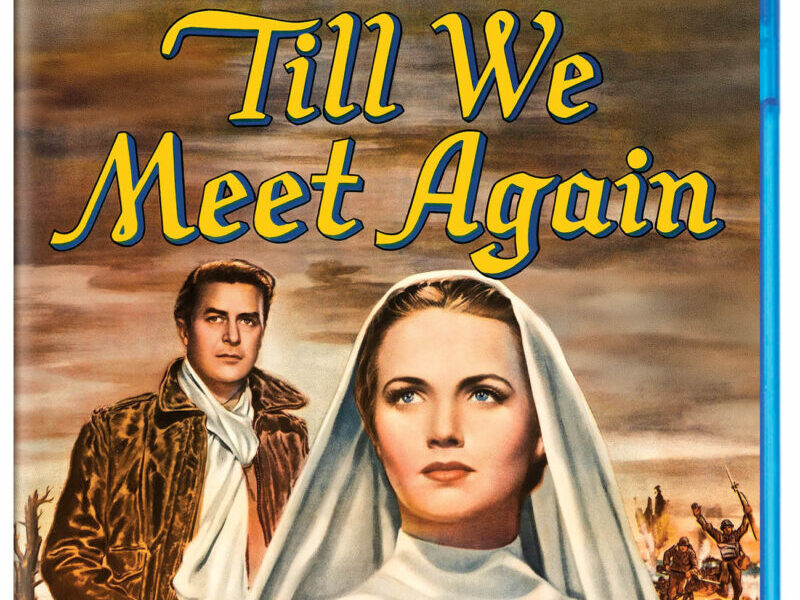
Nuns Against Nazis: Frank Borzage’s ‘Till We Meet Again’ Reviewed
by Rachel Bellwoar
A nun, surrounded by children and doves, recites a litany that’s interrupted by gunshots. This is WWII France and the setting of Frank Borzage‘s film Till We Meet Again.
Barbara Britton is Sister Clothilde, the nun trying to ignore what’s going on outside the convent’s walls. If she represents the isolationist who will need to be convinced of the importance of getting involved, her mother superior (Lucile Watson) is already an active member of the resistance. Knowingly harboring men from the Nazis, her latest mission is to help an American pilot (Ray Milland) with important information make his way safely to England. A huge part of that is keeping Major Krupp (Konstantin Shayne), the film’s Nazi representative, at bay but when a hypothetical “if” puts the whole operation at risk, Sister Clothilde must face her fears as penance.

There’s something wholly unique about WWII films that were made and released while the war was still going on. For those interested in the subject, Hollywood Victory is a great resource but Till We Meet Again is every bit a propaganda movie targeted at American audiences who might need a reminder of what they’re fighting for or a push to do their part for the war effort. At one point Milland’s John gives a whole speech about how amazing his wife is for being both a mother and getting a job at a factory while he’s away, with the not so subtle subtext being that any woman watching should consider doing the same.
This isn’t the first film of its ilk that Borzage was asked to direct. The Mortal Storm, starring James Stewart and Margaret Sullavan, was actually released before America entered the war and was one of the first to argue the moral imperative of the United States getting involved in the fight against fascism. Like Till We Meet Again (and many Borzage films, including Strange Cargo), The Mortal Storm uses romance as a vehicle to tell its story (both films use their female leads in similar ways as well).
What elevates Borzage’s film from being straight propaganda is the emotional truth behind the relationships between the characters and the visual beauty of his compositions. In her commentary film historian Imogen Sara Smith talks about the sets he created and the merits of artificiality over what today would’ve likely been done with CGI (or worse). Striving for so-called realism seems to be a modern movie missive but I’ll always side with the movie magic and suspension of disbelief encouraged by older movies.
Smith also provides some background on screenwriter Lenore J. Coffee, who provides Watson with some of the best lines in the film. Her description of the little “comedy” that she and Major Krupps go through, which Borzage then shows play out exactly as described, with neither of them meaning the “regrets” they say, almost feels out of a Lubitsch film (Borzage’s fellow director at Paramount). At one point Watson’s talking with gardener and resistance fighter Cabeau (Vladimir Sokoloff) about how both their jobs involve kneeling, which results in this biting little zinger from him: “Well, which of us has the most to show for it?”
The third act is probably the weakest and involves some scenes that start to feel overwrought. According to Smith, one of the ways the production code interfered was by pushing the fact that John is married and Sister Clothilde is a novice, so if their relationship starts to blur the lines there are excuses already in place. Whether the ending meets the promise of its start, Till We Meet Again is another film that has been relatively unavailable, making this Blu-ray a welcome treat.
Till We Meet Again is available on Blu-ray starting August 25th from Kino Lorber.


