
Snap Into Marvel: Riffing On Existing Characters Will Continue Until Morale Improves
by Austin Gorton
Following on the heels of the Fractured Frontier season, which was built around new (not-inspired by a comic book story), cowboy-themed versions of characters who were already in the game, Axis: Inversion is yet another season whose new cards are built around recasting existing game characters in new ways.
Here, at least, the source of inspiration is 2014’s Avengers/X-Men crossover event, Axis, but two seasons in a row with zero wholly new characters being added to the game is unfortunate (and, spoiler alert, next season will continue this trend, with a vampire-themed season for October).

Spinning out of Rick Remender‘s Uncanny Avengers, Axis is a story built on one of those classic comic book “what ifs”; what if the heroes were villains, and the villains heroes? After a clone of the the villainous Red Skull harnesses the telepathic powers of the deceased Professor X (by stealing his brain from his corpse, because comics!), a coalition of X-Men and Avengers (as well as Doctor Doom) come together to stop him. Ultimately, Scarlet Witch and Doom cast a spell to “invert” the axis of Red Skull’s morality, allowing a remnant of Xavier’s consciousness to take control.
The spell worked, but had the unintended consequence of also inverting all the heroes and villains nearby, such that the heroes began to give in to their darker sides, while the villains did their best to stop them. In the end, the spell was reversed, though three characters — Iron Man, Havok, and Sabretooth — retained their inverted alignment, in some cases for a surprisingly-long time.

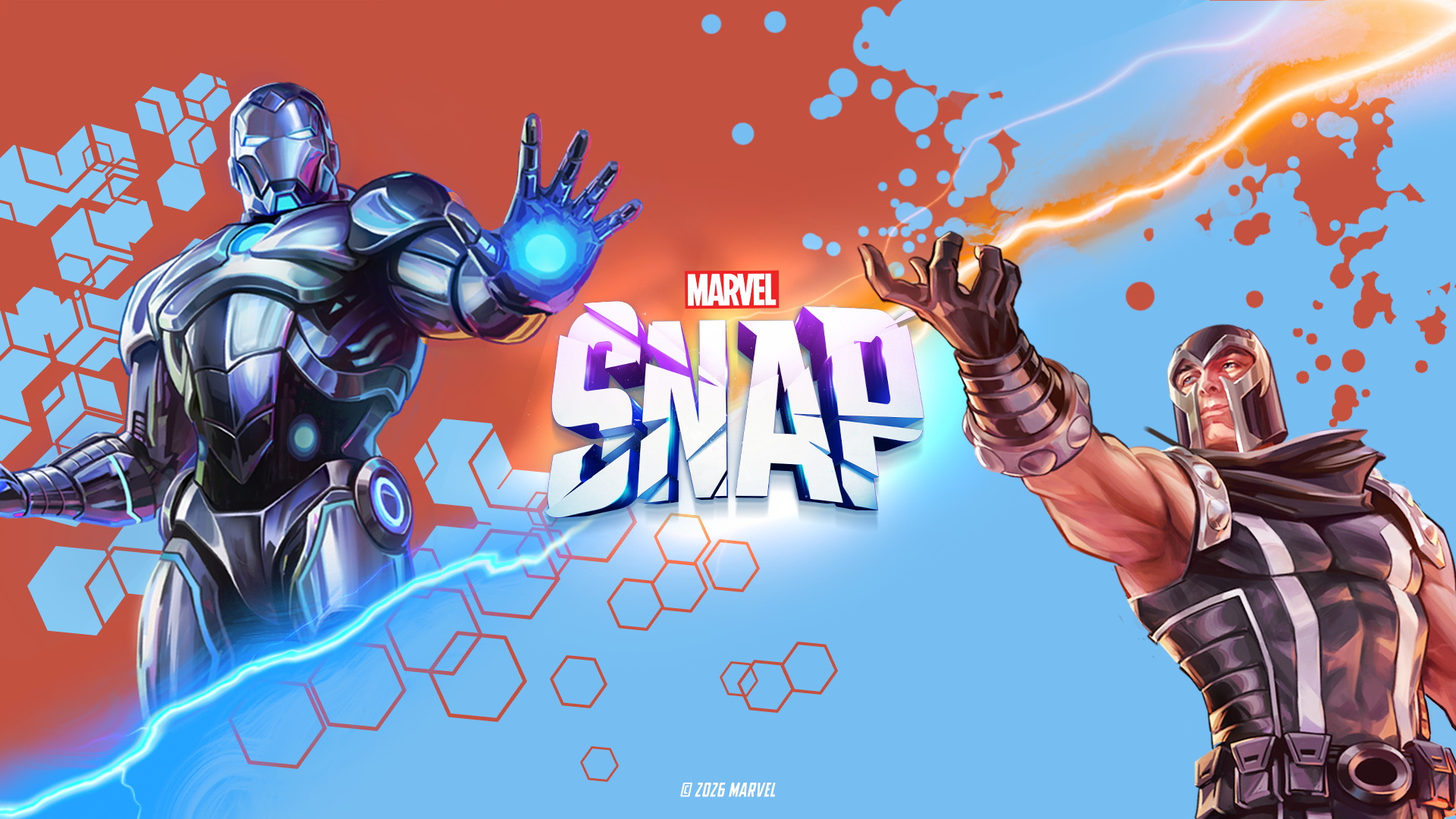
- Superior Iron Man: As one of the characters to retain his inverted, more villainous, personality after the end of Axis, Marvel even went so far as to relaunch Iron Man’s series as the Superior Iron Man for a time, with Iron Man existing in his inverted form until after the events of 2016’s Secret Wars event. As such, it almost makes him a new character in the game, similar to Superior Spider-Man (who is Doctor Octopus in Spider-Man’s body, and also received his own self-titled series). In terms of gameplay, Superior Iron Man is essentially taking inspiration from “regular” Iron Man being an ongoing card that doubles something.
- Anti-Polar Magneto: Several of the inverted characters this season have had adjectives added to their name to help differentiate them from their original cards; Anti-Polar Magneto is one such example (he’s never called “Anti-Polar Magneto” in the story). Axis is, in large part, a stealth Magneto story, with the character playing a key role in the early beats of the story, fighting against the anti-mutant Red Skull, and later bringing the villains into the fight against Red Skull’s super Sentinels (on the logic that the Sentinels are programmed to counter the hero’s powers, but the not the villains), which is the in-story reason for dropping a bunch of otherwise random villains into the vicinity of the inversion spell. Continuing the original card’s manipulation of 3 and 4-cost cards, this version pulls them from your hand as opposed to pulling your opponents cards into its lane.
- Red Onslaught: Just as Onslaught represents an evolved form of Professor X, Red Onslaught is the evolved form of the possesses-Xavier’s-brain Red Skull, who manifests after Magneto seemingly kills Red Skull and his “S-Men” after they transform Genosha into a mutant concentration camp. It is the threat posed by Red Onslaught that leads to the inversion spell being cast in the first place. Following on from Onslaught’s role as an Ongoing card, Red Onslaught channels the “stolen power” aspect of the character by manifesting three existing Ongoing abilities (which also makes it spiritually of a piece with the random abilities of Kang and Rama-Tut, though that is purely coincidental, as neither Red Skull nor Onslaught have much to do with Kang/Rama-Tut).
- Kluh: The inverted Hulk (“Kluh” is “Hulk” backwards), Kluh is another one of the season’s cards that almost counts as a new character, in that Kluh is considered an additional manifestation of Hulk (like Joe Fixit or Professor Hulk) that is distinct in personality from both Bruce Banner and the “main” Hulk. The self-described “Hulk’s Hulk,” Kluh is more brutal and savage, reveling in destruction for the sake of it, while possessing normal intelligence. Marvel Snap has a bunch of different cards of Hulk characters, so while the “main” Hulk card is one of the game’s first and most powerful “vanilla” cards with no ability, this card is tapping into She-Hulk’s “reduce the cost under certain circumstances” motif.
- Rogue Scion of Division: Another made-up title relative to the comics, as a member of the Avengers Unity Squad, Rogue was one of the first heroes to learn about Red Skull’s transformation of Genosha and plans to exterminate mutants. She is also the person who came up with the “inversion spell” plan in the first place. Rogue SOD’s ability is, like Anti-Polar Magneto’s, a fun inversion of the existing Rogue card, stealing an ability from a card in your opponent’s hand vs. one on the board (with the added twist that it takes the highest cost card’s text speaking to this version of the character’s villainy).
- Entropic Havok: While the inverted Havok is just called “Havok” in the comics, Evil Havok is another one of the characters who survives the story-ending reversion of the Inversion spell, and sticks around for a surprisingly long time, lasting until the end of the “Mothervine” story in 2018. After Axis, the inverted Havok would join Cyclops’ revolutionary X-Men in Uncanny X-Men, participate in the battle against the Inhumans in IvX, and become something of a recurring villain in the pages of X-Men Blue. Entropic Havok’s ability is perhaps the purest expression of the idea of moral inversion of all the cards this season; whereas Havok gains additional power from the game (a representation of Havok’s cosmic energy-absorption), Entropic Havok gains power by stealing it from your opponent.
- Friendly Neighborhood Carnage: Serving as the “Spider-Man” of the inverted heroic villains, FN Carnage is one of the main POV characters from the inverted villains’ side of Axis, ultimately sacrificing himself to disrupt the detonation of the Evil X-Men’s gene bomb. In the game, “good” Carnage is, like Spider-Man, a Move card, and because he’s heroic, the card also gives the ones it moves some extra power, which is a nice touch.
- The Inversion: It’s kinda fun that the Inversion spell which lies at the heart of Axis‘ premise itself gets a spell card in the game. There’s a lot of ways the designers could have captured the inversion effect, and while I’m not sure this is the best representation of it, I do like the way this expresses the idea of inversion — for example, the villainous Hood, at -3 power, becomes a “good” card at 3 power (plus a Demon) for 1 cost, whereas the heroic Hulk, at 14 power, would became a “bad” card at -14 power (and at 6 cost, likely the only card you played on turn 6, possibly swinging an entire lane, and the match, singlehandedly). Thus, if you equate “lots of power” with “good card”, the better the card, the more “villainous” it becomes.
- Scarlet Witch Queen of Chaos: While “Queen of Chaos” isn’t a title Scarlet Witch adopted during the Axis story, it is a title that character used in later stories, specifically the first solo volume of Steve Orlando’s Scarlet Witch series (the first trade collection of which is titled “Queen of Chaos”). Ironically, this new version of Scarlet Witch has an ability more in line with the original depiction of Scarlet Witch’s powers. Back when the character first debuted, in 1964’s X-Men #4, before she studied sorcery and got connected to chaos magic and started altering realities, her hex power (or “hex bolts”) simply made small, unlikely-to-happen-things, happen. So if someone was, say, pointing a gun at her, she could hit it with a hex bolt to make the less likely outcome of the gun jamming and not firing the most likely outcome, thereby causing the gun to jam. In terms of converting a comic book ability into a gameplay ability, it’s probably my favorite card of the season.


