
Thinking Like A Director And Cinematographer: Discussing ‘Armored’ With Writer Michael Schwartz
by Tom Smithyman
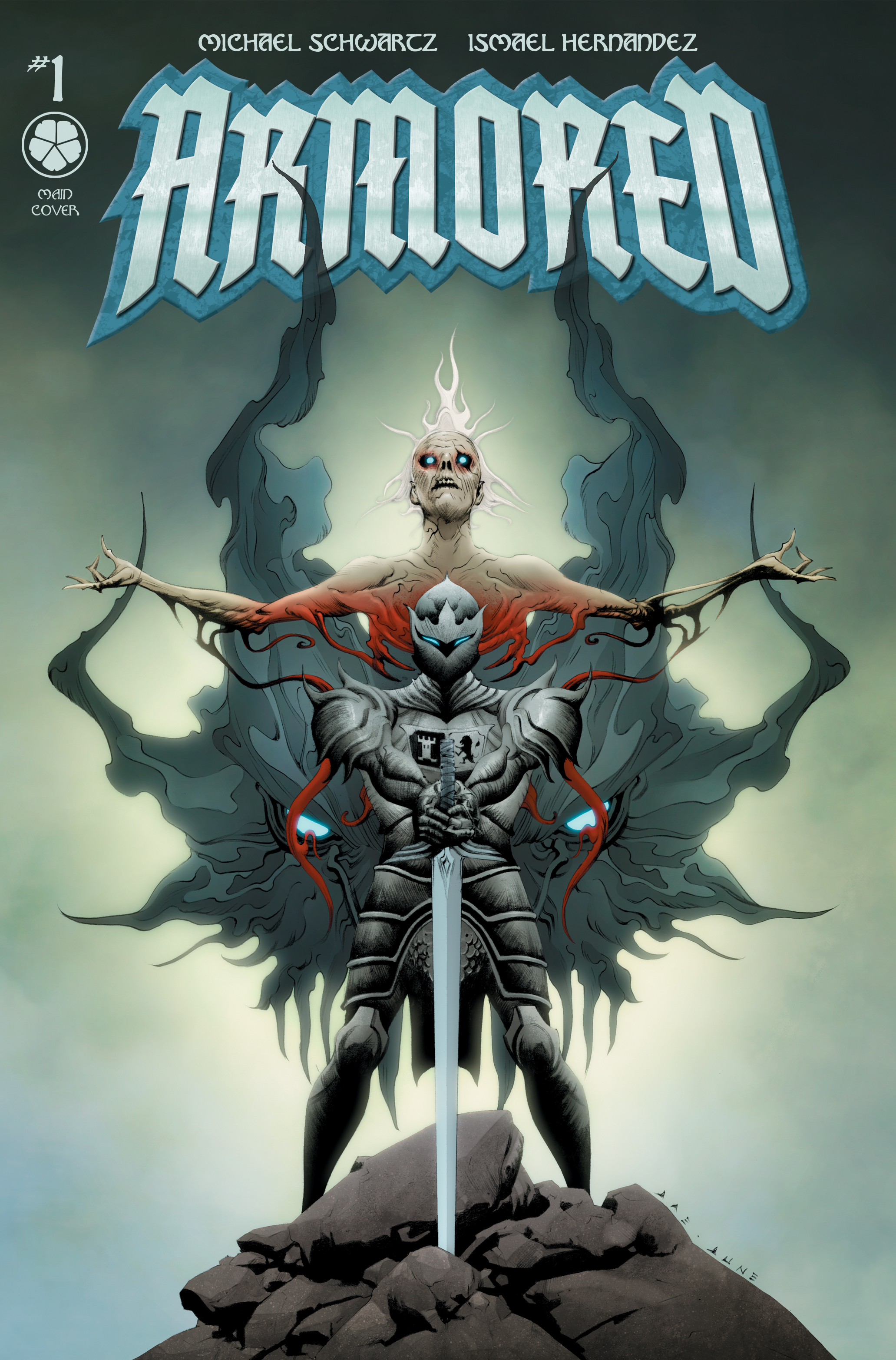
Michael Schwartz has written feature films including Zombie Town, Gnome Alone and a segment of ABCs of Death 2½. Now he is using his pen to tell the story of Armored, a supernatural comic book series about an orphan who stumbles across a mystical suit of armor. Schwartz launched a crowdfunding campaign for the series earlier this week on Kickstarter. In a Comicon.com exclusive, Schwartz discusses why he turned from the silver screen to the printed page and the enormous amount of detail that goes into a comic book script.

Tom Smithyman: You have already conquered the world of screenwriting. Why transition to writing comic books?
Michael Schwartz: When I came up with the idea of an orphaned boy discovering a suit of haunted armor, it felt like the story could best be told in the comic book medium. I grew up with comic books. My dad used to bring me to comic shops since I was a toddler. It was a way to bond with my dad, even to this day, and I love the art form.
I’ve always wanted to tell stories in this medium, I just didn’t know how. Once I had the idea for Armored, I set out to learn to write a comic script. I spent months analyzing comic scripts for some of my favorite books that were available in the back of absolute editions. Once I kind of got a handle on the pacing and structure, I jumped into the script and the story just flowed.
Smithyman: What was it about the story of Andy and the magical armor that made you want to tell this particular story?
Schwartz: I first started with the idea of a boy finding haunted armor, and I just thought there’s so much wish fulfillment with that. Having spent a lot of time in Germany when I was younger, I used to dream about what it was like to wear that medieval armor you see in the museums. And then I thought, how cool would it be if you could talk to the knights who wore it, and what if they could train you. From there, many of the pieces of the story started to fall into place.
I conceived the majority of the story during the pandemic, and because of that I think the theme of loss and death permeates throughout the story. I think in writing, it helped me process everything that was going on with the world at the time, and even now.
Smithyman: Does your background as a screenwriter as well as a visual effects manager make it easier or more difficult to work in a medium like comics where you rely on other artists to bring your words to life? Is it much different from writing a screenplay?
Schwartz: I would most definitely say it has made it easier. I’ve worked with some incredible artists in animation and visual FX; artists who have worked on famous Disney movies such as Aladdin and Toy Story to popular TV shows such as Moon Knight and The Walking Dead. I’ve been able to witness directors and visual FX supervisors communicate their vision to incredible artists, who bring it to life. It’s given me the tools to understand how to work together to get the desired results. It also helps to have an Eisner Award-winning editor, Chris Stevens, to help navigate you through it all.
The biggest difference with screenwriting is that once I’m done with the screenplay, in film, it is up to the director to see the vision through. Luckily I’ve written movies with the incredibly talented director Peter Lepeniotis, who has included me in the film or animation process.
Smithyman: Were you at all surprised that so many great artists like Jae Lee, Chrissie Zullo and Nick Pitarra wanted to draw variant covers for the first issue?
Schwartz: It’s honestly a dream come true having this immense talent join the Armored team and draw covers for us. Nick Pitarra was the first one to sign on to do a cover for us. His reaction to the material was so positive, and I respected him so much, that it just gave me the confidence to know we were creating something special with Armored.
And then when Jae Lee, Scott Kolins and Chrissie Zullo wanted to do covers I was just so overwhelmed by joy. These are all artists I admire. I’m a comic collector, and I literally have their work sitting in my comic boxes. And now they’re working on something I wrote?! It’s wild! I sometimes need to pinch myself to make sure this is real.
Smithyman: Have you learned any lessons or tips that make writing for comics much different from writing for movies?
Schwartz: The biggest difference between writing comics and movies is the amount of detail you need to put into a comic script. When writing a comic, you have to think like a director and cinematographer, writing in angles and details about the set and location. In film, a lot of that will be determined by the director, designers, and cinematographers. As I write further issues of Armored and create new series, I continue to learn more about writing comics and hope to just get better and better.
Smithyman: Thanks for taking the time to talk about Armored.
