
Adult Animation Revolution: Anya Butler Gives Her Perspective On The Indie Animation Revolution
by Tito W. James
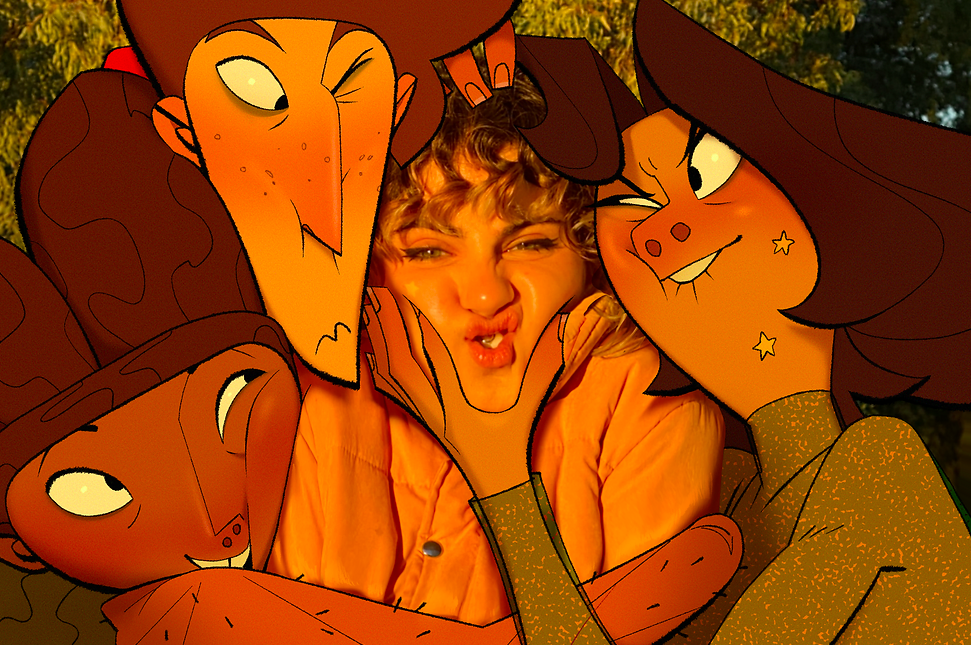
Anya Butler (@meppity) is a CalArt Student and YouTuber with an interest in indie animation. She’s known for her video essay called The Indie Animation Revolution. I recently reached out to Anya to get her perspective on the current animation landscape.

Tito W. James: When I’ve attended The World Animation Summit in California and the Annecy International Animation Festival there seemed to be a generational gap between those that grew up with anime and those that didn’t. When I talked to students they all wanted make story-focused shows, with world-building, and a diverse set of characters.
Do you think the growing mainstream popularity of anime could help indie animation?
Anya Butler: Hm! Great question! Funnily enough, I’ve never really watched anime. It wasn’t something I was particularly interested in, nor had access to (growing up in rural England meant the internet was spotty at best, non-existent at worst). I was banned from watching most TV. My tastes originated from Soviet animations my mama had on VHS and British TV from Channel 5’s Milkshake and the BBC’s CBBC.
That being said, I’m a HUGE fan of serialized stories with intricate plots, character development and world-building. Part of why I was so drawn to a career in animation was I felt these types of narratives were sorely lacking in western media. Anime absolutely is a window into not only deeper stories but also content oriented towards older and more mature audiences. Anime isn’t afraid to tackle complex themes, taboo topics and get down and dirty. This has clearly been an inspiration to newer generations of artists as the western mainstream world is finally starting to catch up.
As for helping Indie animation specifically? Sure! I firmly believe the broader a creator’s horizons are, the more able they are to create something unique and refreshing. Looking into content from across the globe can make our own work more worldly. In addition, anime becoming more mainstream may help audiences warm up to more unconventional animated stories. No longer are shows like Family Guy and Big Mouth the norm.
James: A lot can change in four to five years. Can you tell me how your perception of the animation industry has changed since you were a student at CalArts and how it is now?
Butler: I’m actually still a student at CalArts!! (yes, yes, I know, I’m taking a whopping SIX years to get this darn degree but I stand by this decision).
Anyway, goodness me… I think I have entered the animation industry at one of the most unique, strange times. Since starting at CalArts, I have witnessed a pandemic, a boom in animation as a result, then a subsequent crash, layoffs and studio shutdowns galore, a rise in anti-risk sequels and spinoffs, strikes and the looming threat of AI. Eighteen-year-old me would never have predicted the utter chaos the animation industry was about to be thrown into. Neither, it seems, was the animation industry itself!!
Every Friday at CalArts, the school invites a guest speaker or speakers. My first ever speaker event was with Netflix (my dream studio at the time!) The guests included James Baxter, Megan Dong, Alex Hirsch, Sanjay Patel and then director of creative leadership and development for original animation, Phil Rynda). They were all so optimistic!! It seemed like Netflix was tossing money at anything and everything, giving creators free rein of their creations. In fact, one former Disney showrunner said something to the effect of, “I’m used to working with too much censorship, now it feels almost like there isn’t enough!” This was so exciting to hear. The students were buzzing with excitement, ready to head into an industry that is ready to say “yes”.
And then it all changed.
After being overzealous with spending and relying too heavily on pandemic streaming numbers, a litany of studios had to pull back. Canceling shows, refusing to take more risks, hiking up subscription prices. The post-pandemic industry felt bloated with streaming services yet very little groundbreaking work that was properly marketed. People finally started going outside again and didn’t watch… What was that Buzz Lightyear film? Or um… That film about dragons and wishes or something? Studios went from putting too many eggs in too many baskets to scrambling most of them and shoving the rest into one mediocre basket. No wonder so many of us became disillusioned. Especially seeing how few of us have jobs.
All this to say, it’s easy to feel glum about the state of animation. But I’m actually incredibly hopeful! Shocker, right? Art thrives in the wake of adversity and low points always lead to change. Last time animation was at an all time low was 2008. That happens to be right around the time Alex Hirsch, Pen Ward, JG Quintel and Rebecca Sugar graduated from college though, and whaddya know? Their shows went on to shape a whole new era on animated TV. It’s about time for that to happen again.
Not even touching on the indie side of things, I think mainstream animation is on the up!! With so many viewers exhausted by incessant remakes and sequels and superhero bs, studios have been forced to take risks. Arcane, Blue Eyes Samurai, Scavengers Reign and the upcoming Carol and the End of the World all feel like a fresh of breath air. I’ve been doing freelance work for several projects that I’m also excited about!!
Long story short, I went from starry-eyed and bushy-tailed to cautiously optimistic. The last three years have been a rollercoaster but is has helped animation drift from recklessly enthusiastic to more calculated and considerate.

James: What would you like to see from the indie animation world in the next five years?
Anya Butler: I want to see higher quality stories.
Perhaps this is the hot take of the century but I think much of what becomes extremely popular is deeply mediocre. A lot of it relies on the algorithm, tropes and… Ugh. Sex appeal. I’m sick and tired of indie shows creating “tumblr sexymen’ for the sake of clicks and nothing more. Since indie animators discovered the gap in the market that is adult animation, sex and swear words have become a crutch. It feels like indie animation is eating its own tail. It used to laugh in the face of corporate animation and its bid for marketability but now it’s become the thing it swore to destroy, embracing a different kind of marketability: appealing to horny tweenagers.
Let me be clear, there’s absolutely nothing wrong with a dose of self indulgence, naughtiness etc., but when it is at the expense of cohesive and nuanced storytelling, I want it gone.
Speaking of nuanced storytelling, it feels as if many indie projects don’t trust their audience’s intelligence, instead spoon feeding them surface-level concepts. A lot of decision-making, both on the visual and narrative end, seems to be informed by trends. I find that rather disingenuous. And hey, I’m well aware that sometimes we need to “play the game” to get our works seen but it should be in harmony with an authentic story that runs deeper.
Indie animation is beautiful in its independence from large corporations, but with that comes budget and time constraints. Resources wear thin and as a result, I cannot expect all indie animation to look flawless. What I can hope for is a good narrative with compelling characters. I can watch PNGs of stickmen being dragged across a screen for all I care, as long as I connect to the story, the visuals shouldn’t matter so much. If you can make things look good though, AWESOME!!
James: Creating animation for teens and young adults is strongly desired by viewers but largely ignored by traditional networks. Why is it so important to create for this target demographic?
Butler: I actually don’t think animation for teens and young adults is being ignored by traditional networks – I do, however, believe networks think half of us are stupid and many existing shows are an insult to our intelligence.
Traditionally, adult animation is seen as low-brow, crass humor that leaves little room for discussion. I view it like fast food: nothing groundbreaking. Reliable, easy to digest but ultimately the easy way out. Kids’ animation tends to be dumbed-down easy concepts being over-explained: sugary sweet parables with hamfisted morals. What’s still missing from the mainstream world are shows that bridge this gap. Teens and young adults crave stories that make them feel seen without being condescending or patronizing. Puberty and early adulthood is a tough time for anyone, especially if you have no one to talk to regarding fears, hopes, dreams and taboo topics. We need more shows for the queer kid stuck in a conservative household, teens hiding a drug problem from their family and friends, individuals stuck in their first committed relationship that turned abusive, kids with narcissistic parents, the only black girl in her neighborhood, the boy who migrated from a war-torn country, the teen with a chronic illness, a kid who just lost a friend to suicide etc. There are so many nuanced and important stories that need to be told for people to feel seen and understood. It’s nice to feel less alone. I’d like to think animation can help with that.
Actually, you know what? I think networks are getting better! They are giving young adults more shows… Would be nice if they stopped CANCELING THEM after 1-2 seasons though!!

James: Success within indie animation could change the landscape for animation as a whole. What are some elements you see in indie animation that you wish you’d see in big studio mainstream animation?
Butler: I really wish there was more transparency within mainstream animation – for the viewers’, creators’ and studios’ sake!! I adore how much behind-the-scenes and educational content is provided by indie creators. Not only does it keep viewers occupied between episodes, it brings in more viewers and helps fan bases become stronger – something needed in order for shows to thrive. If larger studios were more internet savvy and willing to loosen up, they could massively expand their fanbases. More dedicated fanbases = more merch sales, haha.
Something else I wish to see mainstream animation adopt from indie animation is more visual experimentation. I’d love to see the works of Worthikids, PES, DHMIS and countless experimental 2D artists make their way into the mainstream world. I was actually supposed to be a prop designer for a mixed media show at Netflix a few years back that sadly got shelved. I looked utterly fantastic but ever since, there seems to be lees of a push for something new. The Spiderverse trend isn’t fooling me: whilst a lot of films in particular are straying away from the classic CG look, they’re just moving to what Spiderverse already did in 2018. The stuff I see coming out of CalArts and other student work, now THAT is unique. More of that please!
James: What advice would you give to a creative team who’s creating their own independent animated short?
Butler: LISTEN TO EACH OTHER. Teamwork can be HARD!! Especially if there’s several strong personalities with big ideas involved. But this shouldn’t discourage you. It’s important to have established roles within a group project and to not cross each others’ boundaries. For example, a director, though they’re the one who calls the shots, is the one who must listen to everyone. It is up to them to ensure everyone feels heard but it is also up to them to explain their decisions and why certain ideas would/wouldn’t work. At the same time, it is their job to NOT micromanage: they should trust each member to do the job they’ve been assigned without having an overbearing director interrupt their flow.
In summary, be prepared to explain the reasoning behind your ideas and opinions, both as a leader and as a follower. Communication is key!
James: The column I write is called “Adult Animation Revolution” — we believe that “animation is a medium not a genre.” If you had to advocate for animation’s potential as an artistic medium what would you say?
Butler: Animation is an expression of humanity’s wildest dreams and ideas. It can be anything you want it to be!! If you don’t believe that, you clearly haven’t watched enough animation 😉
I’d like to thank Anya Butler for this in depth interview. You can follow her work on the official YouTube channel.

