
CES 2024: Interviewing Stern Pinball President Seth Davis On The Future Features Of ‘Jaws’ And More
by Gary Catig
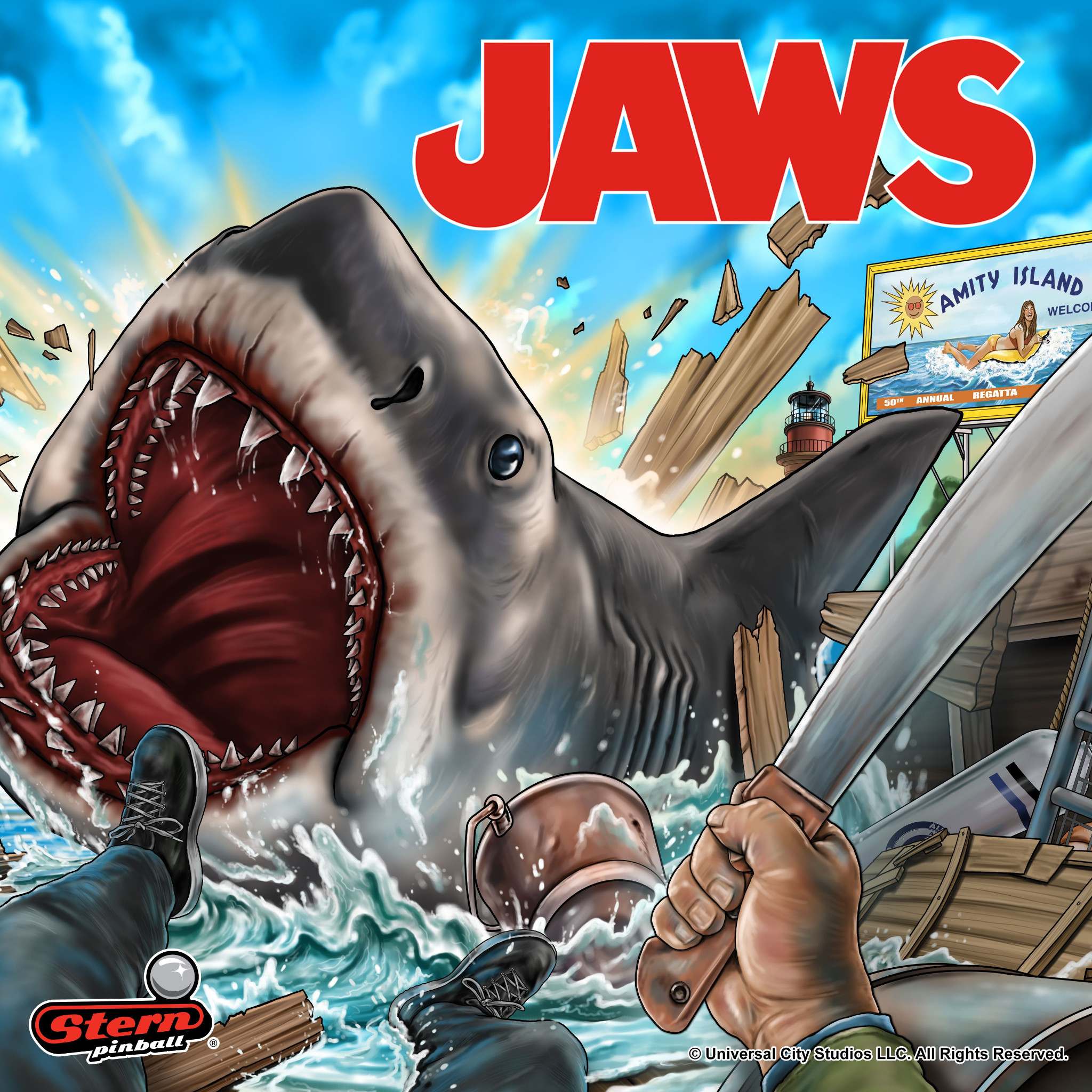
Ahead of this year’s Consumer Electronics Show (CES), Stern Pinball announced their latest game based off of the film series Jaws. While attending the event, we were able to demo the pinball machine firsthand. It was very nostalgic letting those flippers go knocking the shiny ball in all sorts of themed obstacles and racking up the points. In addition, the eye-catching artwork accompanied with lights and sounds could attract you from across the exhibit hall.
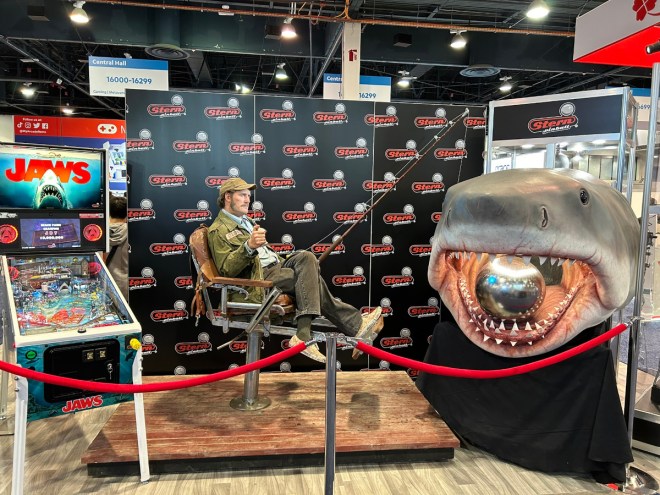
However, Jaws isn’t the pinball machines of our youth. It was pretty interactive finding the skill to activate several mechanical animatics. The biggest update was in the display screen that constantly showed sharp and HD scenes from the classic films. You get so distracted watching the clips, that you forget your playing pinball. The price point could be a bit high for most enthusiasts, but the Insider Connected app allows you to bring your progress to any machine you play with and compare your scores within a larger community, which is a nice touch.
After playing a few games, we sat down with Stern Pinball’s president, Seth Davis. He discussed what new gameplay options are coming to Jaws in future updates, and brought insight on how the company keeps pinball fresh and entertaining in our current modern world.
Gary Catig: How did you get into the pinball business?
Seth Davis: I joined Stern a little over two years ago. I had previous experience at Disney and at GE. So, manufacturing stuff. Making games. Things like that. I was looking for a great opportunity that made the best products in the world of their type. Stern was looking for somebody to help take them to the digital future and add that to what we have to pinball. I’d always been a big gamer. I worked in video games for a long time. There was just a unique opportunity to come join Stern. That was sort of how I made my way here. They were looking for new leadership and they found me.
Catig: It seems like a very retro gaming experience. How do you go about bringing these pinball machines into a newer digital age?
Davis: When you first look at a pinball machine, it looks like the pinball machine of old and what you’d expect. But when you look closer, you see modern technologies. We got digital printing, RGB lights, modern material science. All that. We have updated electronic systems and we’ve got a laptop screen in the back of our games that is really playing a video game while you’re playing the pinball machine.
Then on top of that, we have Insider Connected, our online platform that allows you to play against the community, compete with the world, track your scores, and do all that. Each one of those things is just layers on traditional pinball. We’re always going to stick to our core of pinball and what’s there. But there’s all this new technology that you can infuse and layer on that allows you to play games differently and have a more immersive experience with that. That’s how we think of the technology that we can add to this and just advance the art form.

Catig: I guess one of the big buzz words here at CES is AI. Would you ever see being able to implement that technology, an adaptive technology into your pinball machines that increase the difficulty level as you go on because people have different skill levels?
Davis: I absolutely think we could. Some of the things you start to think about, okay, I have a lot of data about what people are doing. How do I adapt and adjust? One of the things we can do with our Venom game, which is the one before our current Jaws release, is we have a changing playfield depending on choices you make in the game. The playfield moves and changes.
Things like that, you can imagine doing more dynamically and using AI to understand how the player is playing and patterning to do that. I think there is a lot of opportunity in the future in that. We’re not doing anything right now with it, but there’s a lot of opportunity for that. There’s also a lot of opportunity when you think about people playing online and the online information and data, and thinking about how you can adjust that information giving better ways to play.
Catig: How do you go about the process with the IP that you partner with. You mentioned Venom. You have Jaws now. Godzilla is your best-selling machine. Does that come from fan input or based off of these companies reaching out to you, or is it a combination of everything?
Davis: Yeah, it’s the last one. It can kind of come from anywhere. I think that’s true with the game business at large. Where does a good idea come from? It can come from the team who is making the game. It can come from customer interest. It can come from a licensor who comes in and says I really want a game from this IP.
Ultimately, in order to decide we’re going to make it, we got to have a team that is excited to work on the property. We got to have great ideas. We got to think it’s a sellable proposition to our customers. We put a lot of different opportunities and titles into that crucible and figure out what makes the most sense and the right time frame.
We try to put together a balanced slate of different types of things that can all work together. We release three games a year so we kind of have those three golden shots. We try to use them on the best things that are available. Give a little bit of diversity in what we’re offering and appeal to a broad audience, but also give people what they’re really looking for and want in those games.
We have relationships with all the biggest licensors in the world. We got to licensing shows. We show up. We have a licensing director who has a lot of experience doing that. I have a lot of experience from my previous time doing that. We pretty much get to anybody we need to get to or want to get to. We have good contacts in the space. That really helps.
We also have a track record of success with IP and working with IP holders. That’s really what their looking for when they talk to you. They want someone who demonstrated that they can do it and they treat the IP well. It’s going to be a product that everyone is going to be proud of.

Catig: I’ll leave on this. 2024 just started. You mentioned that you do three products a year. We have Jaws out now. Can you preview a little bet of what Stern has for the rest of 2024.
Davis: In our business, everyone likes to speculate on what’s coming next. We like to focus on what we have now. I’m really focused on Jaws and what we have with Jaws. Somewhere we’re going to be doing with Jaws with the new technology, is we have a cadence of updates that we’re going to do to the game because we now have digital technology where we can do updates and new things.
One of the things we’re talking about is we’ll have a mode where you get to play as the shark. What does that mean? What can be there? We want people to think about that, and then we’ll drop it a little bit later and let people play. In the modern world, People expect updates to their products.
They expect new news. They expect new things like that. I think there is more of an opportunity in this space. Like with the video game space, where there is more opportunity to update top titles and keep them living for longer and giving them new things to do. So in a way, our Jaws title is going to live longer with those updates and changes. We have a career system that we’re going to offer. Each of these products that you get into is going to have a long life. We sell them for quite a while, the best titles that we do.
Catig: It’s also about increasing the longevity of your products.
Davis: Longevity of the products, and part of the reason why we’re at CES is for reach. We still have people coming by, and its real frustrating for our folks, that say “Do they still make pinball?” We want the whole world to know that we still make pinball and it’s awesome. It’s better than it’s ever been. It’s got the best part of digital gaming with physical gaming that you can’t get anywhere else.
