
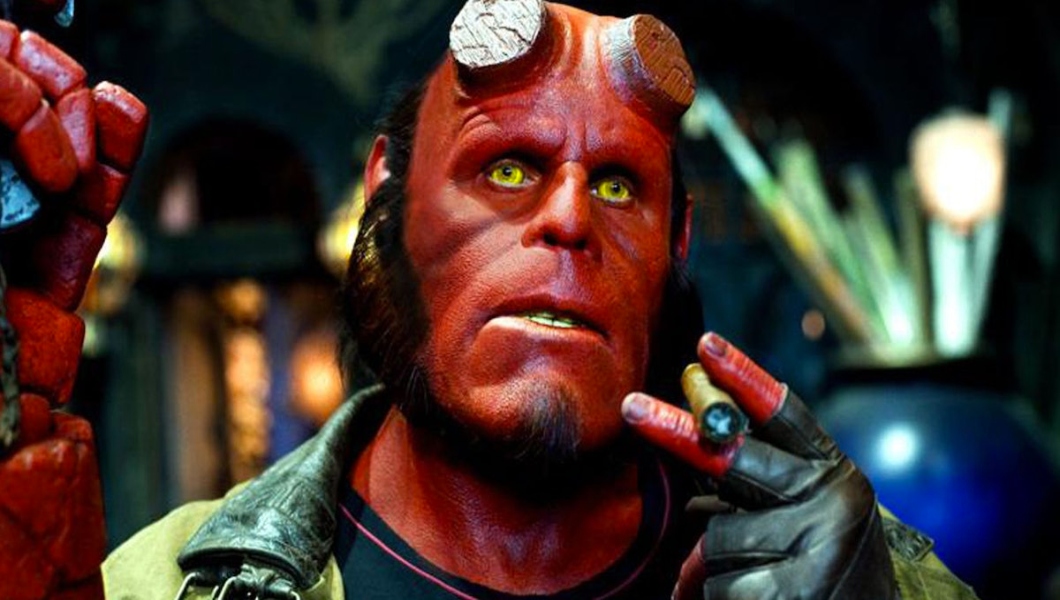
Commentary: ‘Hellboy II: The Golden Army’ Shifts From Character To Plot
by Frank Martin
Stories can focus on any one of the foundational building blocks of storytelling. Some use setting as the main component. Others can have a very profound theme. This can also be true for separate installments in the same series. A lot of times, audiences begin to think that one kind of story in a series is how all of the subsequent tales must be portrayed. But Guillermo del Toro‘s Hellboy duology is a great example of how a shift in focus can provide a different kind of experience that is just as worthwhile.
Starring Ron Perlman, the first Hellboy film focuses on the character’s origin. He came through a portal to from Hell that was opened up during Nazis in World War II. He grew up to become an agent of a secret defense force in the United States government that fights against the paranormal. In terms of plot, Hellboy has to stop the man who originally summoned him and wants to use him to destroy the world. The second film, Hellboy II: The Golden Army, shifts its focus to a dark elf who wants to use an unstoppable army to invade the human world. It is up to Hellboy and his team to stop them.
It’s clearly obvious to anyone who has seen these movies that the first Hellboy had strong characterization while the second film focused more on plot. While viewers can certainly have a preference for one over the other, the films take two different approaches to these concepts that are both valid. That’s not to say that the first Hellboy didn’t have an engaging plot or that the second one didn’t have characterization. They both certainly did. It’s just interesting when comparing the two to see which one leans in one direction over the other.
Hellboy is now streaming on Netflix.

