An Interview With ‘The Girl From The Grand Hotel’ Author Camille Aubray
by Rachel Bellwoar
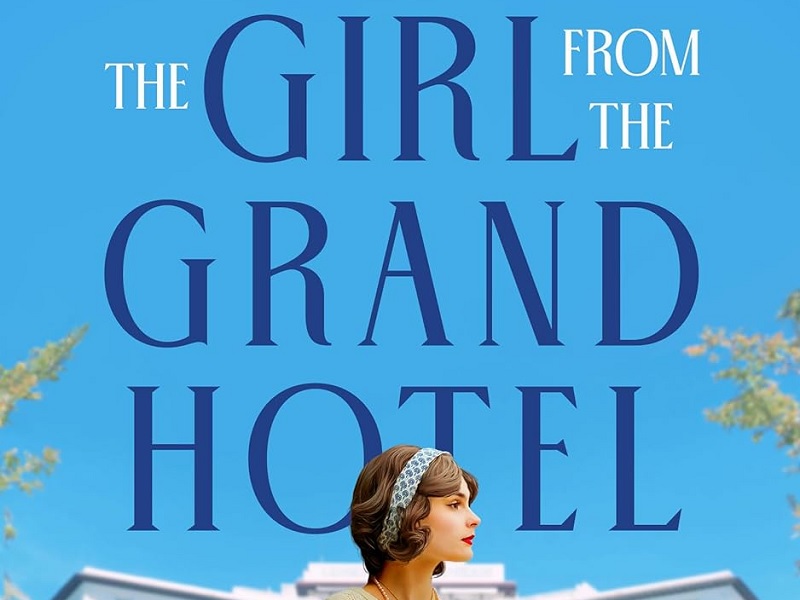
Working at a hotel and staying at a hotel are two very different things. In Camille Aubray‘s The Girl from the Grand Hotel, it’s the summer of 1939 and not only is Annabel about to learn the ropes of working at a hotel but she’s about to learn them during the first Cannes Film Festival, where running into Mae West at the pool is a real possibility and the threat of WWII looms over the whole event. For more on why Aubray chose that setting for her latest novel, check out this interview with her below:

Rachel Bellwoar: The Girl from the Grand Hotel follows Annabel as she adjusts to living in France and working for her uncle at the hotel he manages. Was she always written to be American, or did that help with the story, to have her be able to speak English?
Camille Aubray: Right from the get-go I liked the idea of seeing the glamour and glitz of the Cannes Film Festival through the eyes of a young American woman who’s trying to find her footing in the world. There’s a literary tradition of the American girl abroad that perhaps influenced me, such as the novels of Henry James and Edith Wharton. This is my more “modern” take on it, set in that tumultuous summer of 1939.
Bellwoar: What was it like, getting to pull a curtain back on the hospitality business, and were you able to draw from any personal experience as a guest or employee?
Aubray: Although the hotel in my novel is fictional, it’s a kind of love letter to my favorite Grand Hotel where I’ve stayed many times, and the wonderful people who work there. They are like family to me now. When I told them I was writing a novel they very generously shared marvelous vintage photos of their hotel from this time period. The famous, elderly swimming instructor, who has, sadly, recently passed away, had showed me his “guest book” with letters from illustrious people he’d taught to swim! I also researched other famed hotels of the French Riviera and discovered more incredible history.
Bellwoar: In your bio it’s mentioned that you did a residency in the South of France. Did that help, with getting the geography right for the French Riviera, or has that area changed a lot since 1939?
Aubray: The residency was a chance to really immerse myself in the culture, cuisine and history of the Côte d’Azur. And while some things have surely changed a great deal since the 1930s, others remain remarkably the same. In researching The Girl from the Grand Hotel, I went high up into the mountains to view a stunning military fort that was part of the Maginot Line. And I discovered a mysterious little village perched up there in the clouds that seemed impervious to time. Both locations figure significantly in the novel. So, as the French say, “Plus ça change, plus c’est la même chose!”
Bellwoar: What made you first start researching or become aware of what happened at the first Cannes Film Festival (or didn’t happen, as it were, since WWII started)?
Aubray: I returned to the French Riviera again and again while I was a scriptwriter attending various film festivals and television conferences in France. I got curious about the origin of the Cannes Film Festival, and I discovered this fascinating historical nugget just hiding in plain sight, inspiring the underlying story of The Girl from the Grand Hotel.
Bellwoar: Thanks to the festival, Annabel winds up serving a lot of celebrities at the hotel. For Annabel they’re contemporary artists but were you a classic movie fan going into this book?
Aubray: I’ve always been a fan of classic movies! I have a special love of the 1930s. It was a time when women were on the brink of liberation, and the movies reflect that with heroines who wisecracked and stood up to men. I think of Jean Harlow sticking her chin out at Wallace Beery and James Cagney. Then along came the second World War and its aftermath, and by the 1950s women were told to give up their careers again. The governments wanted the returning soldiers to get the jobs, and the women to produce babies to make up for the appalling carnage of war and the decimation of populations.
Bellwoar: While a lot of the actors and actresses are real, the studio Annabel’s assigned to assist (Olympia Studios) wasn’t. Olympia was, however, the name, of the documentary Hitler and Mussolini forced to win best foreign film prize at the Venice Film Festival in 1938. Coincidence?
Aubray: Initially I thought I was just coming up with a name that sounded as if it could be a real studio, like Columbia, but perhaps subconsciously I was making the point that fascism has many forms and it can, as they say, happen anywhere.
Bellwoar: It would be easy to assume that F. Scott Fitzgerald was like one of the characters in his book, The Great Gatsby, yet The Girl in the Grand Hotel argues that his reputation as a drunk has been greatly exaggerated. Is that true?
Aubray: In both my novel and Scott’s writings, he doesn’t deny that he’s had a problem with alcohol. But in doing the research, it’s pretty clear that he was a hard worker and literally wrote his heart out. Especially in those last two years of his life. You can’t be perpetually sloshed and do the level of exhausting work that he did to keep himself and his family alive. It was a little too easy for the press, the publishing world and the film industry of his time to blame Scott for the way he was treated, as if he was just out of fashion. But I’d say he’s gotten the last laugh over his contemporaries.
Bellwoar: Some of my favorite moments in the book are when Annabel doesn’t realize she’s talking to someone famous. Were they fun to orchestrate?
Aubray: Oh, it was great fun for me—and Annabel—to unmask each movie star. My editor and agent said it was like finding “Easter eggs” that you discover along the way and wonder who will pop up next! But in writing about 1930s celebrities there was nothing casual in my approach—I did a deep dive into their biographical material and films, so, when they make an appearance it’s always for a special reason in the story.
Bellwoar: I also loved when Annabel was able to call on her knowledge of film lighting from watching her parents work at their photography studio. What made you want to utilize that aspect of Annabel’s past?
Aubray: My publicist told me that she loves The Girl from the Grand Hotel because it captures exactly how you feel when you’ve just gotten out of college and are trying to figure out what to do with your life. My theory is that a person like Annabel may not realize her own hidden talents until she’s exposed to circumstances that bring them out. I also wanted to show the connection between her past and her future, and how this one summer was the unexpected link between the two, launching her into the career she was destined for.
Bellwoar: You’ve written books about Hollywood, painters (Cooking for Picasso) and gangsters (The Godmothers). What’s next?
Aubray: No matter the subject, setting and story, I think that I’m usually writing about people who try to make something uniquely significant out of whatever life throws at them. I’m also interested in showing the ups and downs of the artistic process and fame. Behind all the glamour, a truly creative person is actually rather modest, and dedicated, and works very hard—all in, with heart and soul.
Bellwoar: Thanks for agreeing to this interview, Camille!
To learn more about Camille and what she’s working on, check out her website here. The Girl from the Grand Hotel goes on sale April 30th from Blackstone Publishing.