
Talking ‘Heroes, Villains, And Healing’ With Author Kenneth Rogers Jr
by Benjamin Hall
— Trigger warning for mentions of sexual abuse —
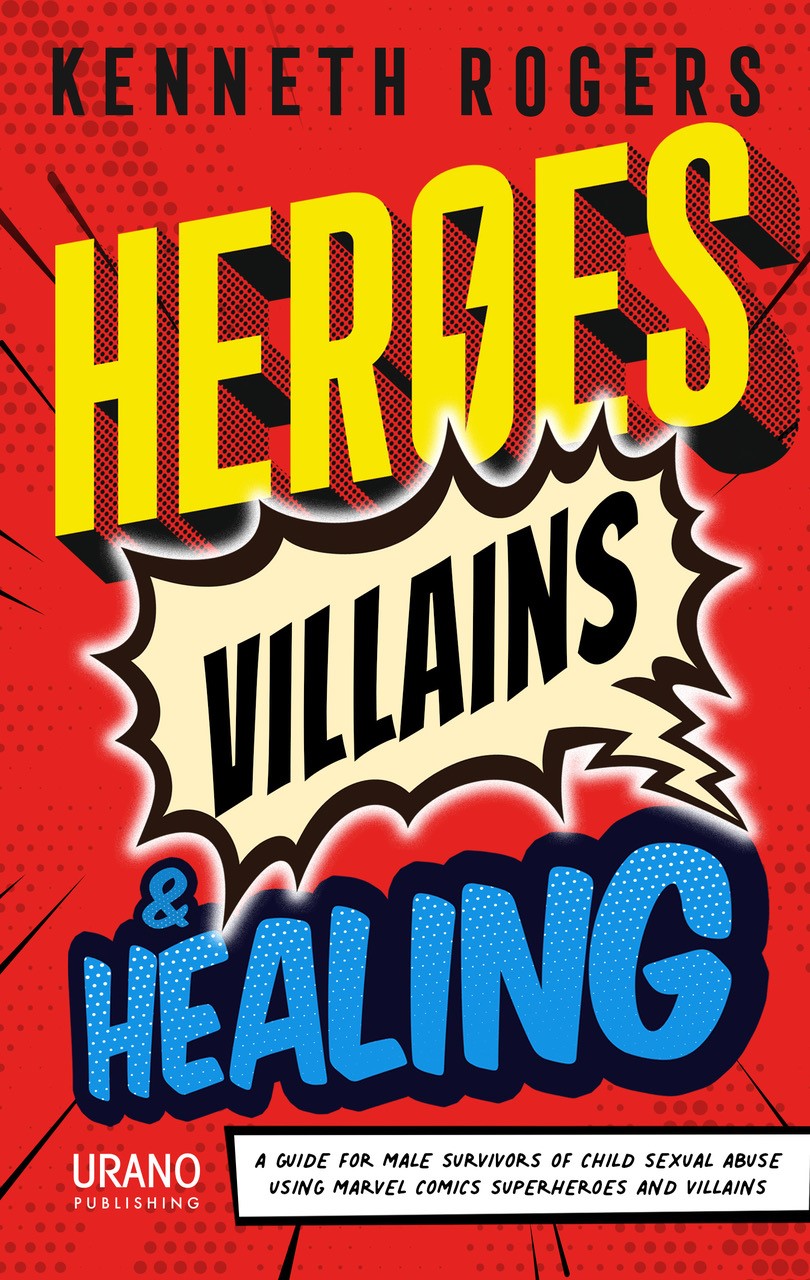
Author Kenneth Rogers Jr. is the writer of the How To Heal Your Inner Superhero series of books. One title in the series, Heroes, Villains and Healing, comes in two editions. One references DC characters and the new one references Marvel characters. Both editions deal with assisting males with healing from childhood sexual abuse trauma. This interview concerns the newer edition of the book.

Benjamin Hall: For those who have not read this new edition, why create it with a Marvel focus after publishing one with DC references?
Kenneth Rogers Jr.: A key factor in healing is feeling safe, whether that be physically, emotionally, or spiritually. This means some survivors find it easier to begin their journey of healing from their childhood trauma with characters they know and love whether the characters belong to the Marvel or DC universe. Writing a guide that features Marvel characters provides an opportunity for more survivors to feel comfortable coming to terms with the impact of their trauma, identifying their coping mechanisms, and beginning the challenging task of healing with characters they know and love rather than those they believe they have to use due to the lack of options. It’s about providing more options and availability for more survivors.
Hall: Most authors do not provide trigger warnings about their work. Do you feel that they should when it comes to certain subject matter?
Rogers Jr.: It seems the discussion and inclusion of trigger warnings has become somewhat of a divisive issue. While some individuals believe trigger warnings should be included prior to any and all topics that have the possibility of causing the reader, listener, or viewer discomfort, and other individuals believe trigger warnings have become a crutch, preventing society from engaging in difficult discussions, I believe it is a matter of perspective and privilege about what is and is not considered triggering throughout society.
While yes, the discussion of childhood sexual assault and abuse can be triggering for some survivors who have experienced these traumatic events, what may be triggering for one demographic may not be considered to be important enough to be labeled triggering by others. For example, much of society still does not consider male sexual assault and abuse to be an issue worthy of being qualified as traumatic because of the perceived belief that it rarely occurs.
Instead, it is often considered to be more of a joke rather than a matter that should be taken seriously. This is due to the misconception that men and boys cannot be sexually abused or assaulted. As a black male survivor with an ACE score of 7, there are more situations that fall under the category of potentially qualifying as triggering, but few (if any) receive the attention needed of being given a trigger warning. However, if all the media and material I consumed contained a trigger warning it would mean living in a constant state of fear. While it is vital to keep readers aware of the potentially distressing material they will consume, there is a way to present difficult subject matter in a way that is creative and fosters a sense of nurturing growth and knowledge rather than fear and isolation.
Choosing to heal shifts the focus from the traumatic incident to the steps needed to heal. This is what I try to do with Heroes, Villains, and Healing and the other guides in my How to Heal Your Inner Superhero series; shift the focus from the problem to potential solutions.
Hall: You admit in this new edition to knowing more about DC than Marvel. Is this edition more research intensive than the last one?
Rogers Jr.: Both the DC and Marvel editions are grounded in both psychology and comic book research. However, the difference between the DC and Marvel guides is the amount of knowledge I have accumulated since the publication of the DC edition in 2017, making it easier to discuss the complexity of psychology and the healing journey of a survivor in a comprehensive manner that is fun, enjoyable, and insightful in its use of superheroes.
First, researching comics comes with its own set of challenges. One of the pleasures and problems with referencing and writing about comics is the sheer volume of material to read and research that only grows in size with each passing month.
In 2015 and 2016, when researching and writing the DC edition of Heroes, Villains, and Healing, it was difficult to know where to begin. I was limited in the number of comics I could purchase and the Marvel Unlimited and DC Infinite apps were not yet available. So, instead of blindly purchasing comics that may or may not have been of help in writing the guide, I purchased DC’s A Celebration of 75 Years series of graphic novels for Batman, Superman, Wonder Woman, and a number of other heroes and villains. These novels provided an excellent overview of the evolution of the characters from their conception to the present day. These books were an invaluable resource in knowing where to begin in understanding these characters, how they are applicable to different coping mechanisms, and providing a point of reference to research and read other comics that could be useful. Unfortunately, Marvel did not have the same volumes available as DC, making it more difficult to include the characters in a comprehensive manner that could help other survivors. Now, with a little more money (as a public-school teacher it’s not a lot of money), I can purchase the occasional comic and graphic novel to write quality material in conjunction with the different comic book apps.
When researching psychology, I have been fortunate enough to establish and foster relationships with therapists, counselors, and psychologists across the country that provide support and guidance about different material to read and research that would help my writing and my ability to help other survivors and myself on my journey of healing.

Hall: Which is the harder part to find references for you personally: the comic book side or the real world side?
Rogers Jr.: Both come with their own set of challenges because both the comics and the psychological principles must work in tandem with one another. If the comic book stories and characters do not fit with the psychological principles the analogies made throughout the text do not work, the message is not properly conveyed, and the opportunity to help survivors understand and heal from their trauma is lost. While reading and finding psychological authors that fit with the focus of a particular chapter, section, or idea the author and their material can be referenced in different manners throughout my work when applying to particular therapies and coping mechanisms. However, finding a comic that matches the psychological beliefs is difficult, time consuming, and can usually only be used once. Finding these comics is like discovering a diamond in the rough after reading 10, 20, 30, or more comics at a time. However, it’s also fun to learn more about these characters that I love, or did not know much about, and the way in which different authors and artists provide their own interpretation and insight. It can be frustrating finding a way that allows all the puzzle pieces to fit together in a manner that provides a useful guide, but it’s always fun.
Hall: Does working on a project like this help any with healing from your own trauma?
Rogers Jr.: In the beginning, these guides were how I continued along my journey of healing from my childhood. While in therapy, I wrote and focused on superheroes and villains I knew and loved because they were the heroes I identify with the most. Superman, Batman, Flash, and Wonder Woman were my role models. While the previous guides in the How to Heal Your Inner Superhero series helped survivors, they were a major factor in helping me along my journey as well. Now, these guides aren’t as important in helping me to navigate the world I live in. Instead, they help ensure I support other survivors while working to end the cycle of abuse. Nightcrawler, Spider-Man, Mister Fantastic, and Wolverine may not be on my list of top ten list of favorite characters (even though they are), but they may be on another survivor’s list and writing about these characters may help them get through a difficult time in their life.
Exploring different characters that I may have overlooked in the Marvel and DC universe and how they apply to a survivor’s journey of healing helps me grow and explore different parts of myself that may have gone unnoticed. It’s a process of growth I love and will never get tired of exploring.
Hall: Do you think this work can help those of any gender with any trauma other than the demographic of men with sexual trauma that you are aiming to help?
Rogers Jr.: Absolutely! Many individuals who have read my other guides have said to me and written reviews stating my writing can help understand and overcome any kind of trauma regardless if it is or is not childhood sexual abuse. I write about childhood sexual abuse because I am a survivor of childhood sexual abuse. While I am glad my work can help other people understand their trauma, I write and reference childhood sexual abuse because I never want to be insensitive to another individual’s traumatic experience.
Thanks to Kenneth Rogers Jr. for his time!
The Marvel Edition of Heroes, Villains, and Healing releases on June 4th.


