
Tribeca 2024: An Interview With ‘Following Harry’ Director Susanne Rostock
by Rachel Bellwoar
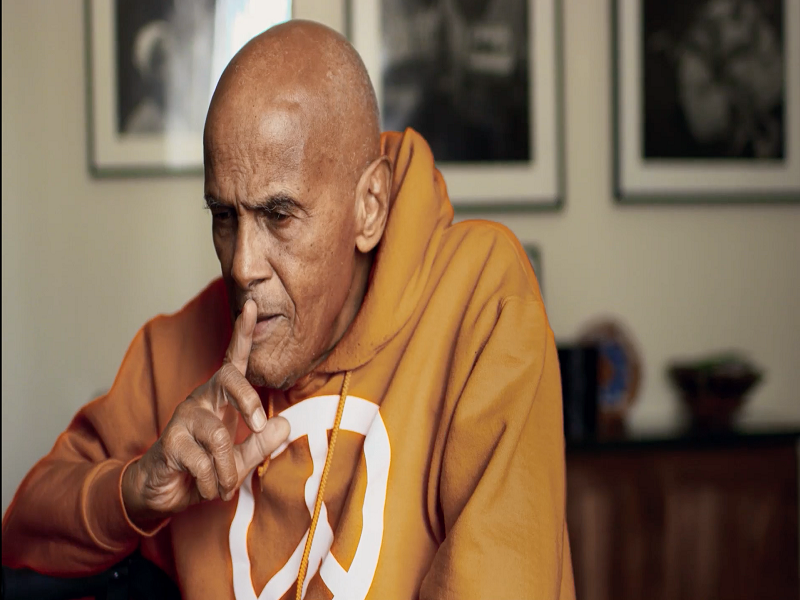
Whether you’ve watched one of his movies, heard one of his songs, or seen photos of him at the March on Washington, there’s a good chance you’ve heard of Harry Belafonte. Director Susanne Rostock‘s second documentary on the actor-singer-activist is debuting at Tribeca this week and you can learn more about it in the following interview:
https://m.youtube.com/watch?v=1-v15WjbGes
Rachel Bellwoar: How did you first meet Harry Belafonte?
Susanne Rostock: I first met Harry in the mid 2000s when he approached me about working on a documentary about his life.
Bellwoar: I believe I first saw a press release for this documentary in March 2023, a month before Mr. Belafonte passed away. Had you already completed post-production and was there a different ending originally?
Rostock: I was still filming and continued into 2024. Since 2022 I knew how the film would end. I decided not to address Harry’s death directly, but after Harry passed something happened that inspired a unique and unexpected epilogue. I would prefer not to give the ending away at this point…
Bellwoar: In that press release the film already had the title, Following Harry. Has that title changed in meaning since Mr. Belafonte’s death?
Rostock: The title always had a double meaning for me: the obvious meaning – I was following Harry around for years; the deeper concern of the film was/is what follows after Harry is gone, how to keep his wisdom, his radical understanding of life filtered through his profound love for humanity.
Bellwoar: How quickly after making Sing Your Song did you know you wanted to make a second documentary about Mr. Belafonte?
Rostock: Sing Your Song ends with Harry saying, “I try to envision playing out the rest of my life almost exclusively devoted to reflection but there is too much of the work to be done. Somewhere in this moment my soul, all that I have felt, all that I have experienced demanded me to ask, ‘What do you do now’.” I really wanted to find the answer to that question.
Bellwoar: If ever there was any doubt of the impact Mr. Belafonte had on ordinary citizens and activists alike, this documentary is proof of his incredible reach. Did you have certain interview subjects in mind going into this documentary or was the process more organic than that?
Rostock: The process was more organic. Because I shared an office with Harry and lived 4 blocks away from his apartment, I was always close to the center of what was going on in his life, in his head. So many incredible people came in and out of our office and I was privy to all those conversations. Carmen Perez, director of The Gathering For Justice, founded by Harry, also shared our office and she was one of the leaders of The Women’s March which was created in our office.
Bellwoar: Following Harry begins with the killing of Trayvon Martin, while one of the last dates given is for a birthday celebration that was held for Mr. Belafonte right before the pandemic was declared. Was filming always intended to last that long?
Rostock: My mentor was Michael Apted, the director of the Up series among many other documentaries and features – he and I worked together for over 20 years. He was the great master of longitudinal filmmaking. I envisioned the film going for as many years as it was feasible. I wanted a lengthy arc of history. With the death of Trayvon, the landscape started shifting rapidly. I wanted to capture how young people were responding, how Harry was guiding and where it was all going.
Bellwoar: While it’s far from a new conversation, there’s been a lot of discourse lately around the mixing of arts and politics. Mr. Belafonte is a prime example of an artist who used his talents and visibility to bring attention to important issues of the day. Removing the question of whether it should be, do you think it’s even possible for art not to be political?
Rostock: It is impossible for art to not be political. All artists exist in and interact with the world in a way that is inherently political. All humans are, by nature, political animals, part of nature, members of a community constantly making choices, forming beliefs, and interacting with each other in pursuit of an environment appropriate for human existence.
Bellwoar: Given the importance of voting to Mr. Belafonte, does it feel only apt that this documentary should be coming out in an election year?
Rostock: To tell the truth, I thought the film would be an effective tool to get out the vote starting with the re-election of Obama in 2012. That thought has returned with each presidential election since. Here we are, just in time for 2024! My hope is that Harry’s wisdom, his very clear and compassionate perspective will continue to resonate and inspire people to use the most powerful weapon we have to combat the evil forces at play.
Bellwoar: Thanks for agreeing to this interview, Susanne!
Following Harry will be making its world premiere at the Tribeca Festival on June 14th.

