Troping Its Way To Success — Reviewing ‘Space Ghost’ #10 And #11
by Austin Gorton
Overview
The basic frameworks of Space Ghost #10 and Space Ghost #11 are familiar, but used to great effect to push both the plot and character arcs of the series forward.
Overall
8/10One of the defining elements of Space Ghost has been the way it riffs on different tropes, both character-specific ones and more broad sci-fi and comic book ones. Issues #10 and #11 are good examples of this. Both are written and drawn by the usual creative team of David Pepose and Jonathan Lau. They also both use the respective tropes they engage in to push the characters in interesting new directions.

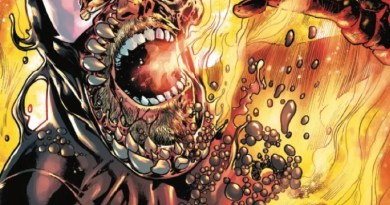
Space Ghost #10 is a knock-down, drag-out fight with the Space Spectre, an evil alternate Space Ghost from the future. On the surface, this is Pepose and Lau riffing on the “dark mirror” trope, in which the hero is confronted by a villain who is a darker version of themself. It’s a useful device for casting the protagonist in a new light by showing the darkest they’re capable of.
But Pepose puts a fun twist on it, revealing that Space Spectre is not Space Ghost from an alternate future, but rather an adult Jace. In doing so, the simmering tension between “Team Space Ghost” — specifically, the question of how much Jace & Jan are Space Ghost’s wards, and how much they’re simply soldiers in his crusade — is highlighted and amplified.

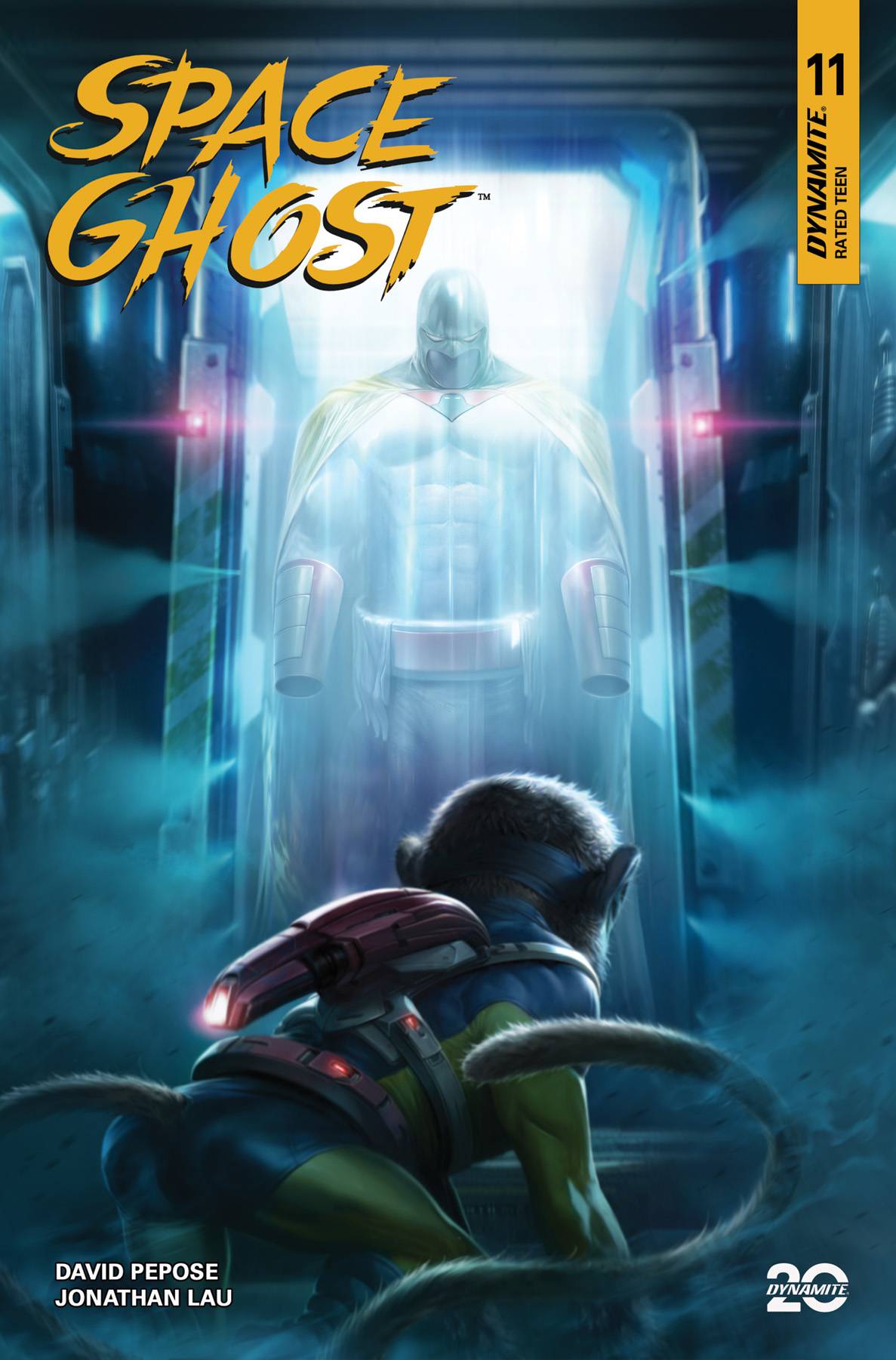
That tension then comes to a head in Space Ghost #11. This issue deploys the “super-villain pile-on” trope, in which all the hero’s villains come together at once to try and overwhelm. Like the Legion of Doom or Sinister Six, Space Ghost has his Council of Doom, comprised of the villains deployed across the series’ first nine issues (brought together by Doctor Ibal, the series’ Ur-villain).
Their arrival comes after the tension between Space Ghost, Jace and Jan leads to the latter leaving the former, meaning Space Ghost is entirely alone when the Council attacks. This heightens the “oh, how is he going to get out of THIS one” sensibility (one already increased by the fact that Metallus — who triggered the last such feeling just two issues ago — is part of the Council). Their brutal attack resolves the immediate tension by bringing Jace & Jan running back to their mentor, but all they really manage to do is disrupt the beatdown enough to run off and hide with Space Ghost.

More importantly, the villains manage to capture Blip, the overall goal of Ibal (if not the more vengeful members of the Council). In doing so, Space Ghost #11 is also bringing the book’s overarching subplot — the pursuit of Jace, Jan and Blip by Robocorp that makes Space Ghost so protective of them — into the foreground as the first year of the series draws to a close.
Lau’s storytelling gets a little shaky in issue #10 (there are times when the action becomes hard to follow, and its placement in relation to the setting confusing), but he leans into the chaotic energy of the six-on-one fight in Space Ghost #11, eschewing complex fight choreography in favor of raw kineticism.
Taken together, Space Ghost #10 and #11 make for compelling examples of using familiar types of stories to push character and plot forward. Neither the “dark mirror” or “super-villain pile-on” tropes are original; they’re tropes for a reason. But Pepose uses the familiar beats to bring things to a head, the end result being a pair of entertaining issue setting up a promising year-one finale.