
Previously On X-Men: ‘Uncanny X-Men’ #13 Successfully Explores The Dark Past of Mutants And More
by Austin Gorton
A trio of X-Titles this week, as the Dark Artery emerges in Uncanny X-Men #13, Phoenix #10 wraps up the series main arc to date, and the Wolverine/Revolution team-up concludes in Laura Kinney: Wolverine #5!
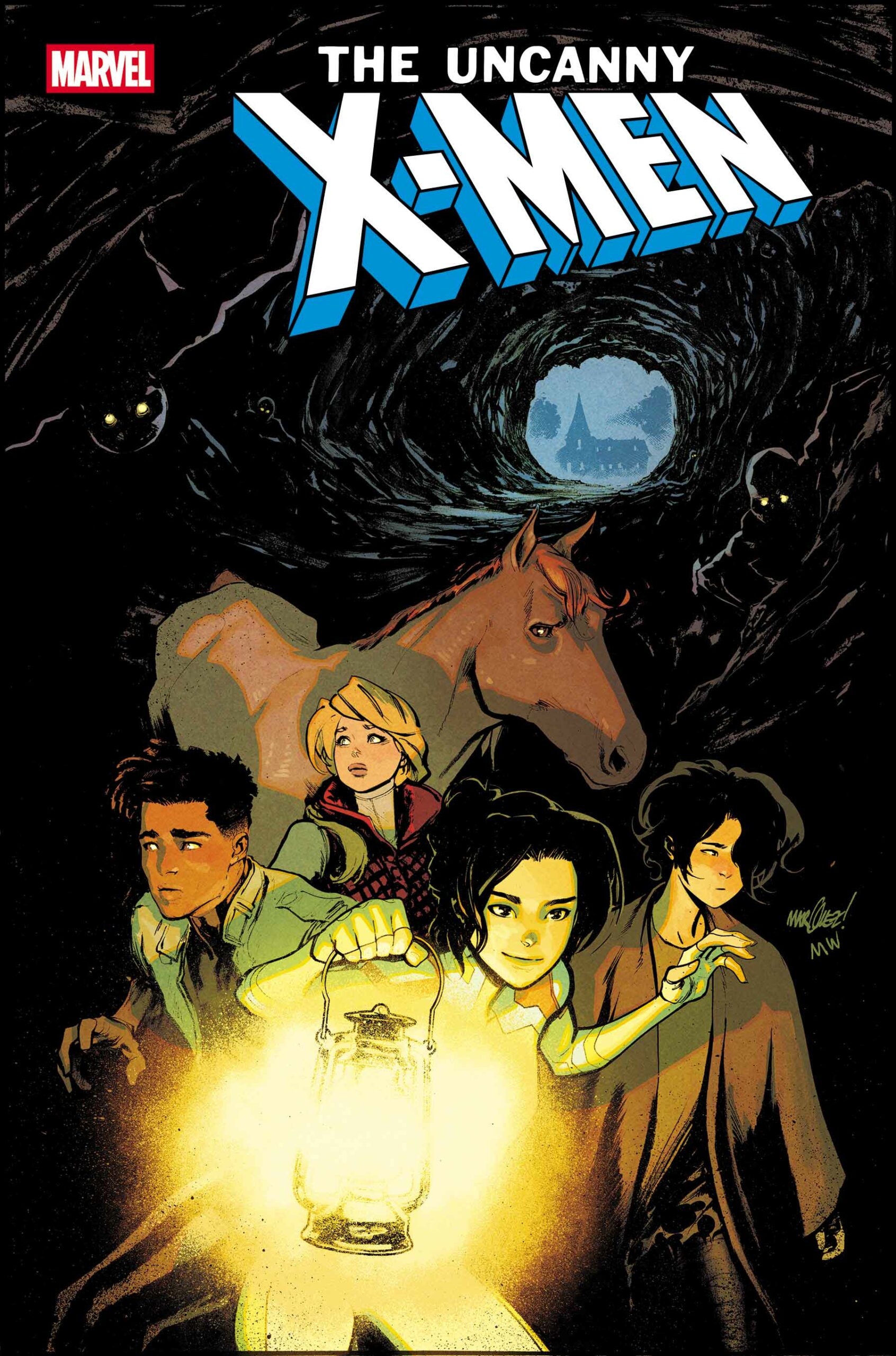
Uncanny X-Men #13 by Gail Simone and David Marquez

As Deathdreams lead the Outliers on an exploration of the mysterious Dark Artery, Gambit rides a dragon and the past of Henrietta Benjamin begins to unfold.
- Henrietta “Henry” Benjamin is a new character, introduced this issue after being teased in the X-books promo page. Her story unfolds in an undefined past, vaguely around the turn of the 20th Century (she references “Mr. Yerkes’ iron marvel,” which is Chicago’s elevated railway system that opened in 1892), as she journeys from her home in Chicago to Haven House (the current headquarters/residence of Rogue’s X-Men) in New Orleans, to honor her mother’s last wishes.
- The unfolding story introduces a whole new idea of a Victorian/Edwardian Era mutant subculture into the X-Men mythos. Mister Sinister’s background (laid out mostly in The Further Adventures of Cyclops and Phoenix miniseries, but also some Immortal X-Men flashbacks) places mutants in the (firmly) Victoria Era, but the years between that and the traditional Atomic Age/1960s emergence of mutants is largely unexplored.
- It comes with some new, era-specific terms for mutants (“Abhorrents”, “Moonflyers”, “Johnny Devils”), with Henry referring to herself as a “mutate” (a distinction of varying degrees of significance at various points in X-history — Magneto’s Savage Land creations in the 1960s were mutates, as were the Genoshan slave mutants of the 1980s and 1990s— but which seems a synonym for mutant here), along with the reveal that the “Midnight M” hand signal” dates back at least to this time as well. (Ed. Note: In most modern Marvel usage mutate is used for someone whose ‘mutation’ is a result of genetic manipulation of some sort, not the X-gene. IE: Spider-Man is a mutate, Wolverine is not.)

- Henry is briefly accosted by a member of “the Service”, which seems likely to be some sort of official or semi-official anti-mutant group of the era based on their interest in mutants.
- All of this backstory (which connects up in the present with the “Dark Artery”) is an effort to further the mutant metaphor by connecting it to the Jim Crow-era Black experience in addition to the 1960s Civil Rights era it already taps into.
- In the present, Gambit is visited by Sadurang, the dragon from whom he stole Left Eye of Agamotto in the first issue of that series. Sadurang said he was going to Antarctica to become an ice drake; accordingly, he is white and icy in this issue.
- Meanwhile, Deathdream leads the Outliers to the Dark Artery, mysterious obsidian vaguely X-shaped crypt on Haven House property that, as Calico points out, defies logic on several levels.
- A romance does indeed appear to be blosoming between Calico and Jitter.
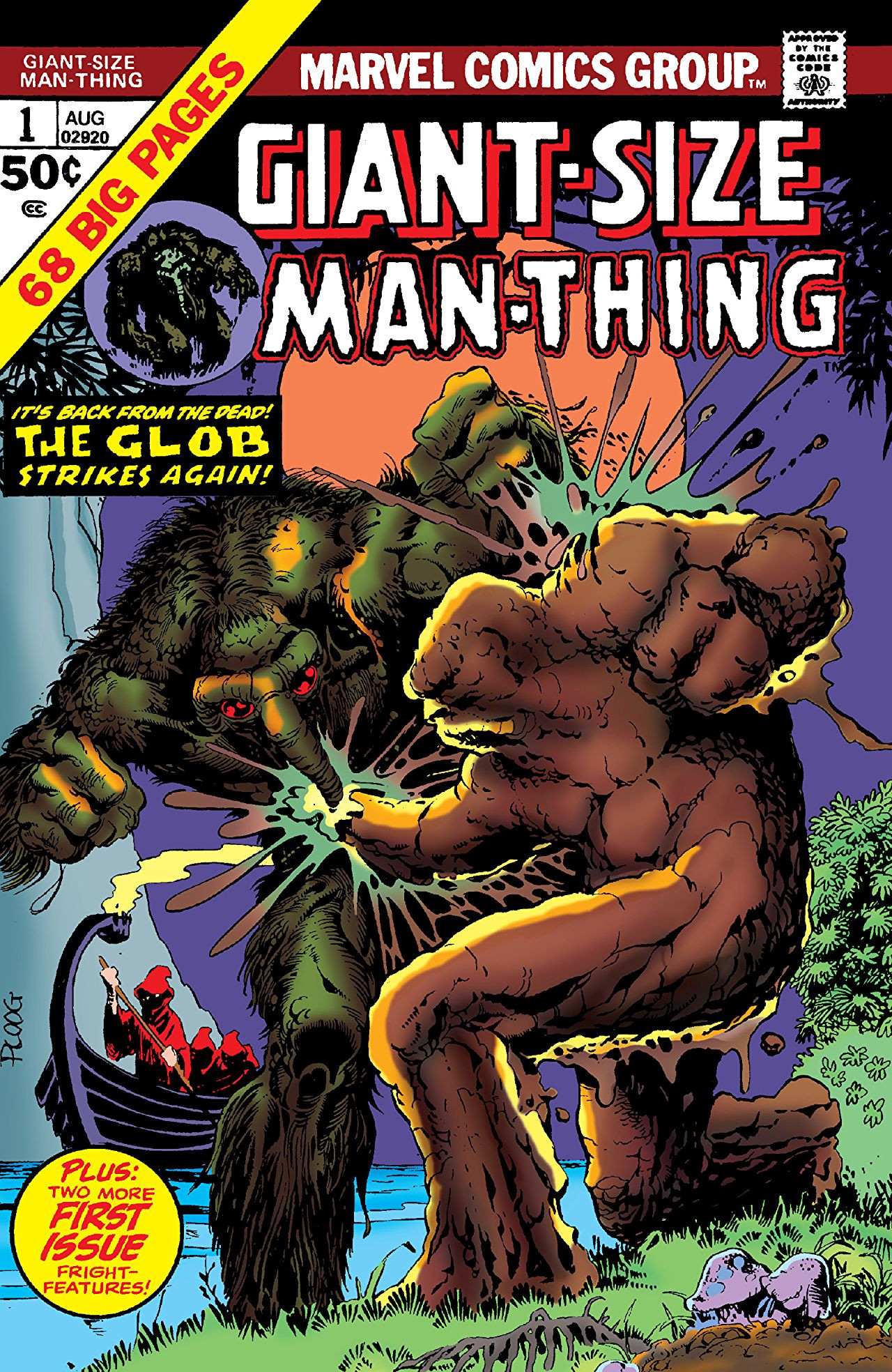
- The issue closes with an appearance by Man-Thing (whom Deathdream recognizes/knows), one of Marvel’s go-to characters for weird swamp-based interdimensional shenanigans/unintentionally-bawdy comic titles.
Two strong issues in a row for the book; Henry’s tale, its connection to the mutant metaphor and expansion of X-Men history, has a lot of potential, so long as the creators can walk deftly when it comes to the racial elements involved.
Phoenix #10 by Stephanie Phillips and Alessandro Miracolo

Phoenix’ battle with Adani and the Dark Gods conclude as she reassess her role in the cosmos.
- Much of Phoenix #10 draws a parallel between Adani’s experience and the traumatic childhood incident in which Jean telepathically experienced the death of her best friend Annie Richardson when they were kids, a piece of her backstory which was first established by Chris Claremont in the less read Bizarre Adventures #27 and then later referenced heavily in “Inferno”.
- Following Adani’s Jean-urged rejection of the Dark Gods’ power and their subsequent defeat, Jean turns a moon into a sanctuary for “anyone who has been harmed or displaced by the higher powers of the universe” and declares her focus to be on cosmic balance, with the universe a garden for her to tend.
- The latter is vaguely consistent with her remit in this book thus far; the former is, presumably, setup for a new focus/base of operations/storytelling engine for the book, something possibly prompted by the upcoming Imperial event and its impact on the direction of this series.
- At the end of the issue, Jean’s sister Sara turns up, looking for Jean. Sara’s largest appearance to date was actually in the aforementioned Bizarre Adventures #27 (in which she and Jean are captured by Attuma and taken to Atlantis); she remained mostly off panel after that, disappearing in X-Factor #12 after briefly speaking out in support of mutants, then turned up having been absorbed by the Phalanx in X-Men (vol. 2) #36; she’s been considered dead ever since.
- One of the flashbacks in this issue shows Sara being absorbed into the Phalanx by Stephen Lang (their nominal Earth-bound head at the time), something never actually shown before (she just appeared as part of the hive). Her return here is, at the moment, unexplained.


- In one of the other flashbacks, a young Jean is being tutored by Professor X, though he’s drawn using his 90s era high tech Shi’ar hover chair.
A solid enough conclusion for a very uneven story, albeit one which ignores some of the larger themes explored by earlier issues and risks turning the first ten issues of the series into, effectively, a prologue for whatever is coming next. Whether or not that’s intentional or the result of Imperial meddling, remains to be seen.
Laura Kinney: Wolverine #5 by Erica Schultz and Giada Belviso

Wolverine & the Revolution’s battle with Henrik Schneider concludes.
- Henrik Schneider turns out to be, basically, a Hydra Mister Sinister, poisoning a town’s water supply in an effort to create mutants as subjects for his experiments in creating some kind of mutant/robot super-being.
- As a villain, Henrik is a bit of a pushover; most of the issue involving Wolverine and the Revolution fighting robots and/or disarming mines, pretty standard fare for them.

- Laura and Bucky perform a “fastball special”, the move originated by Logan and Colossus, in which someone strong (in this case, Bucky) throws someone with claws (Laura) at their opponent.
- The issue concludes with Laura returning home and getting zapped by a hooded figure, which seems to open some kind of portal behind her. No idea who that is (we’re clearly not meant to know) nor where she’s going, but based on the next issue blurb, it’s supposedly some kind of time travel or alt reality adventure.
I remain mixed on the art (which is at times energetic and engaging and others stiff and distorted), but the general premise of “help mutants in need” continues to serve as a loose enough storytelling engine to allow this book to operate almost like a Marvel Team-Up series. It’s certainly the X-book doing the most with the wider Marvel Universe at the moment, and Laura Kinney: Wolverine #5 is a good example of its low stakes, retro charm.