Advance Review: ‘Pause’ #3 Poses Some Intriguing Questions
by Tom Smithyman
Overview
What would you do if you could do bad things, but you knew you’d never be caught? That’s the question at the heart of this issue. It’s a welcome reflection for this limited series centered on a group of New Yorkers who encounter a world where everyone else is frozen in place.
Overall
8.5/10Imagine being able to tour New York City all by yourself. You can have breakfast in any restaurant you choose with no waiting. See any of the sites the city has to offer with no lines. Sleep anywhere you want. Take anything you want. All with no people to bother you and seemingly no consequences.

Would you take advantage of that luxury? Would you eat that high-end brunch without paying for it? Maybe grab a selfie on the street with a frozen tourist?
As the limited series John Carpenter’s Tales of Science Fiction: Pause reaches its midpoint, the characters have gotten over their shock that the world around them is frozen. They still don’t know why the pause has happened or how Henry is able to un-freeze people by touching them. But they move past that so they can explore. And they have a pretty good time at it.
Writer Matthew K. Manning asks some interesting questions in this issue. At its core, he is questioning whether we would steal or even worse if we knew we wouldn’t get caught. Each of the unfrozen characters makes their own choices, from deciding whether to have sex in the middle of the street to choosing to pay for a meal that wasn’t theirs.
While seemingly little of consequence seems to happen during this issue, it is perhaps the most meaningful and probing chapter that Manning has delivered. He practically forces reader to consider what choices they would make under similar circumstances. And those answers may surprise or even upset us.
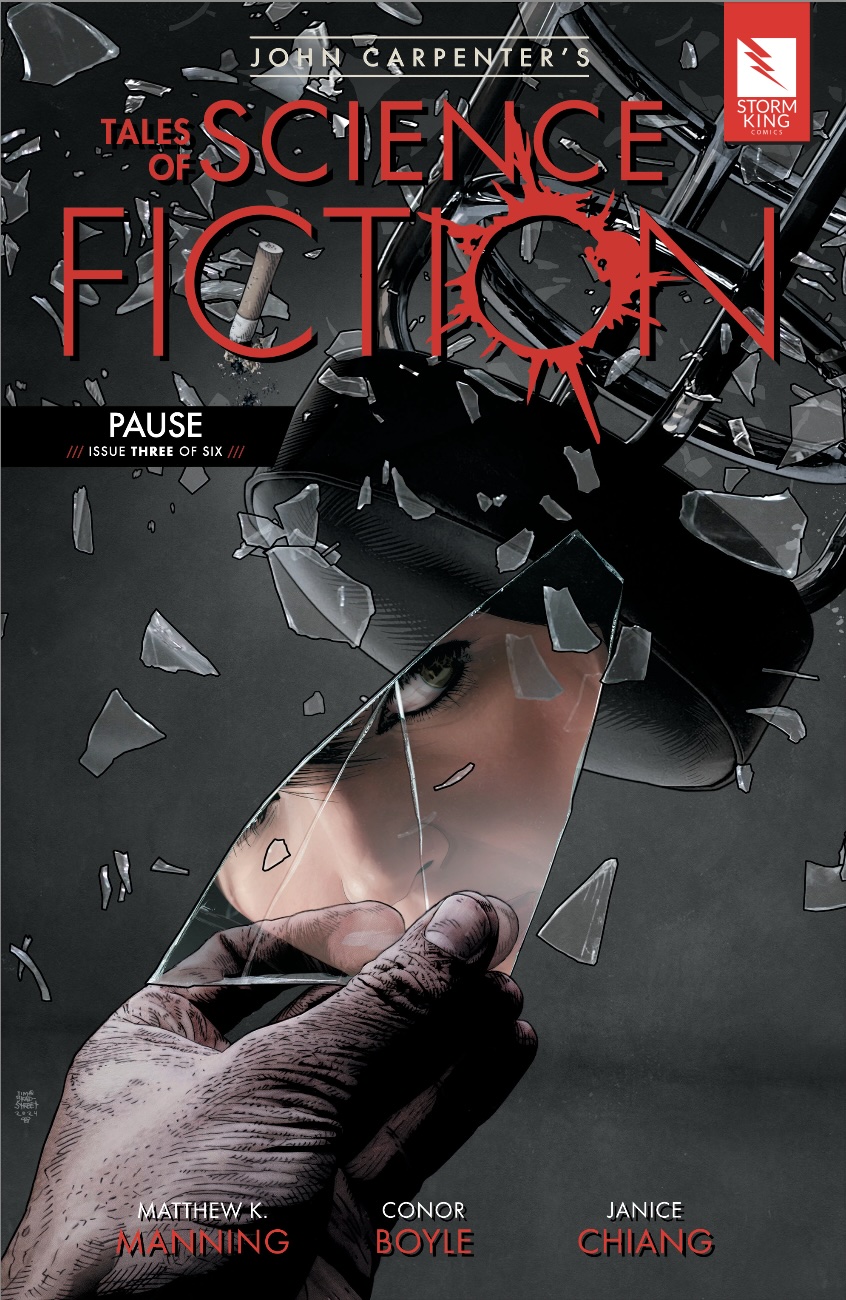
Conor Boyle’s colors continue to be a highlight. Only the moving characters are given pigments on the page, while the frozen remain black and white. It’s an innovative way to give a sense of movement to a static page. His actual illustrations are often rough, which makes the colors pop even more.
The fun for these characters will undoubtedly end soon. But this brief “pause” to reflect on our behaviors was worth the time.