
Interview: ‘Jaws@50’ Producer Wendy Benchley On The Impact Of ‘Jaws’ And Ocean Conservation
by Erik Amaya

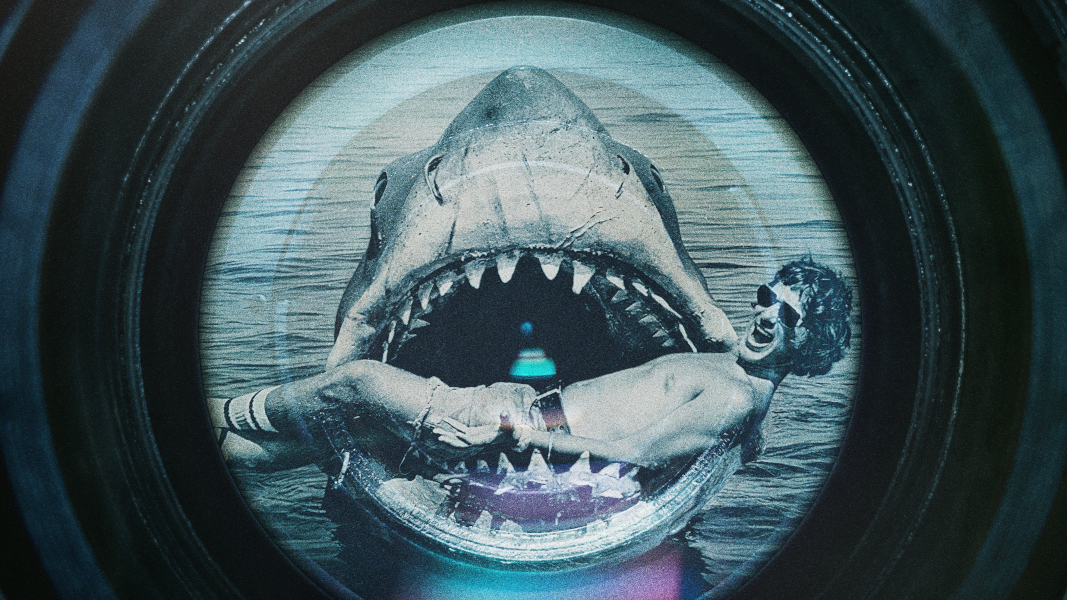
Jaws@50 is a new documentary celebrating the 50 year history of Steven Spielberg‘s film and some of the lesser known stories in its making. But for producer Wendy Benchley, it was also important to highlight the educational dimension as the Jaws also inspired a lot of its viewership to learn more about sharks and marine science. Of course, as her late husband, Jaws novelist Peter Benchley noted in a forward to subsequent printing of the book, the film also inspired a certain amount of fear around sharks in general and great whites in particular. Indeed, both Benchleys became deeply involved in conservation of the animals and the ocean in general following the release of the film. Comicon.com caught with Wendy Benchley to discuss more about the film impacts advocacy and what fans of the film can do to get involved.
Erik Amaya: When you were approached to be part of this documentary, how important was it to emphasize the plight of sharks in the days following the initial release of Jaws?
Wendy Benchley: That was absolutely essential. And Laurent [Bouzereau], the director, understood. That’s why he wanted to do the movie. He had followed Peter’s career and my career in ocean conservation work, and he said, ‘I want to do a documentary that includes that so that people understand the positive effect of Jaws.’ And that positive effect happened right away; it didn’t take 50 years!
One statistic I always tell people is that right in the years after Jaws, the applications in marine science at the Rosenstiel School [of Marine and Atmospheric Science] at the University in Miami increased by 30%. So yes, Jaws was created by fear, but boy did Jaws jumpstart research and interest in the ocean and sharks. That’s a very proud heritage to have, and I think Laurent captures that very much in this terrific Nat Geo documentary.
Does it feel like the public has a better sense for what shark behavior actually is all this time later versus 50 years ago, when it was still an emerging discipline of study?
WB: Oh, yeah. I mean, Peter and I didn’t know a lot about sharks either in sixties and seventies. So, we learned along with everybody else, and although Peter had done research on sharks for the book, and he did write very realistically about the shark in the book. But yes, I think we got the science going, and once the science got going and people began to understand the real facts about sharks and how important they are to the ocean, that all of that snowballed.
What I hear from people is, ‘Oh, we understand! We love sharks! We need to keep ’em in the ocean.’ And I love that little video — the people on Nantucket beach last year, rolling the great white back into the waves. I mean, they didn’t scream in horror and try to kill it or get the police to shoot it. No, no, no. They pushed it back into the waves. So that’s just one little example. But certainly, every time I give a speech, people are just intrigued with sharks and parents, children, grandparents all come up to me and say, ‘We’re so thrilled to hear you and so excited to know about sharks.’ And they like to watch the movie again, because then they go back and they do more research about sharks. It’s sort of a continuing circle.
Across my own life, it is interesting to see how we went from images of sharks being almost entirely vicious and angry to the point where we have very cuddly shark merchandise now like shark plushies.
WB: Certainly after Jaws, a lot of the documentaries that were made were to keep the excitement going. And Peter was part of some of those documentaries and had some really pretty dangerous situations that he was put in for them. But quite very quickly, Michelle and Howard Hall and other videographers realized we really need to show what’s happening in the ocean. And what’s really happening is we’re using the ocean as a garbage dump,

I hadn’t thought about that in a while. The other documentaries sort of emphasized the terror of sharks or the fear. And then the whole ocean community realized, ‘Okay, we have to get serious and show the damage we’re doing to the ocean.’ And so the world has been coming together for the last 20, 30 years really doing, I think, important, aggressive work. And I think for the young people who watch this documentary, they should know that this is a good time — a really good time — to be working on these issues because we have new technology that helps us protect the ocean. We understand what we’re doing. We have governments and NGOs all over the world helping us to do the work. So, I have great hope that we are going to be able to have a healthy ocean.
Oh, that’s wonderful! What’s the best way for fans of Jaws to help spread those messages about ocean conservation and the reality of shark behavior?
WB: I’m not the generation of social media, but I think that certainly helps. And I think people, they’re always asking me about, ‘So what can I really do? I want to do something practical.’ And I say to them that they can join any local environmental group. I mean, even if it’s not connected directly to the ocean, anything you do with a local group environmentally is good duty and really important. And please, everybody, if you have a dollar or $20 or a hundred dollars, please support the groups that work — the professionals that are out there in the field taking actions that are making a difference for sharks. That’s very important. Money pays for the labor and pays for the people who are out there really promoting marine protected areas and anti-shark-thinning campaign. So, everything anybody can do, it all adds up.
Jaws@50: The Definitive Inside Story airs July 10th on National Geographic and streams on Hulu and Disney+ the next day.