
An Undeniable Universality To Myth: Talking ‘Outer Lands’ With Writer Matthew Arnold
by Tom Smithyman
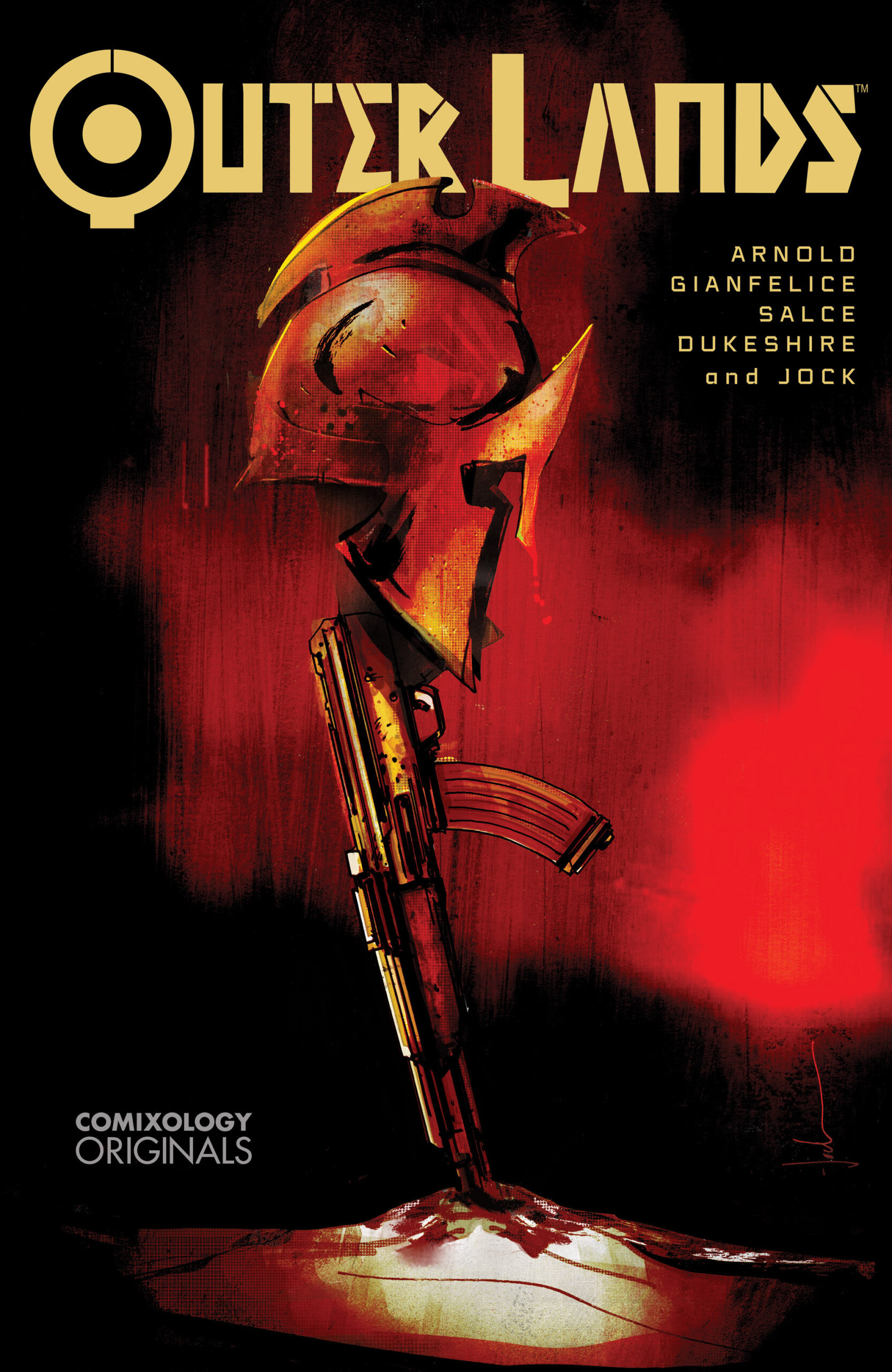
Matthew Arnold has written for television’s Siberia and Emerald City as well as the graphic novel Eden. His new graphic novel, Outer Lands, debuts on August 26th from Comixology Originals, with interiors by Davide Gianfelice and a cover by Jock. The story is seemingly a historical epic but quickly evolves into a post-apocalyptic adventure. In an exclusive interview with Comicon.com, Arnold discusses the combination of those distinct genres and the role of technology.

Tom Smithyman: Outer Lands starts off as a historical epic but then takes a hard science fiction and post-apocalyptic turn. How did you come up with the idea to combine the genres?
Matthew Arnold: Well, first of all, I’m a big fan of stories that take a hard turn. But I wouldn’t say I came up with an idea to combine the genres, it just sort of happened that way because of where I chose to tell the story. If I started at the beginning, there wouldn’t be a twist. It’s only in the fact that we are starting in a place where we and the characters have to discover what’s really going on that we seem to smash these genres together.
Oops, I hope I haven’t said too much…
Smithyman: At the risk of revealing even more, there’s an almost literal Planet of the Apes moment at the end of the second chapter and shades of 300 throughout the story. Were you inspired by those movies in telling Outer Lands?

Arnold: Not really. Of course, there’s a wellspring of movies and fragments of scenes in my head from pop culture, but really the inspiration came from real life, from my experiences of working with the Amish when I was a boy in Kentucky, and how they lived in a world without technology.
Smithyman: The residents of the island Titania turned their back on technology. Should readers take an anti-technology message from the story or are you trying to make a different point?
Arnold: I never try to dictate a message in my work. In Outer Lands, I’m simply presenting a group of people who made an enormous decision, and I’m following the consequences of that decision with you. I think the consequences of modernity is an especially interesting topic to discuss in the wake of new and world-changing technologies like AI. Should we fear these technologies or embrace them? If we fear them, can we really get away from them, or is the lure of technology too entrancing to avoid?

Smithyman: Storytelling and the power of myth play a key role in Outer Lands. Why are these such powerful methods of communication?
Arnold: There’s an undeniable universality to myth. Humans connect with each other through shared experiences and their recognition of struggle or triumph in another. It’s the reason I think myths and storytelling have existed and continue to exist from our early beginnings to modern day. And I’m thankful for it because I have a mortgage to pay.
Smithyman: Democracy is another unlikely concept you introduce early in the story. Why did you feel that was an important point to make – especially in these times?
Arnold: The first reason for this is because of the upheaval that such a system had in the ancient world and how our story in many ways is about the cycles of history. But in terms of typicality, I think we often forget what a wonderfully unique ideal this is in the modern world and what a change it is from bloodline rule.
I wanted to put a spotlight on what that must have been like for the United States in those early days to see such a marked transformation, without making any kind of political statement. Human beings have the ability to conceive ideas that affect enormous world change.

Smithyman: How did you and artist Davide Gianfelice collaborate during the creation process?
Arnold: It’s an amazing collaboration. I’m so fortunate for the incredible mind’s eye of DG. Despite a language barrier, he’s incredibly adept at taking my scene descriptions and building these stunning worlds and characters. Occasionally, I make a suggestion of something I’d want to highlight or clarify from his pencils before he inks. But most of my notes are “This is awesome.”
Smithyman: How cool was it that you got Jock to do the cover for the graphic novel?
Arnold: Dude. Amazing right? I met him years ago when he gave me a nice blurb for my debut graphic novel, Eden. When my editor told him about this book and he said he’d do our cover I was honored. That image of his really sets the tone for the book, don’t you think?

Smithyman: Absolutely. It hints at the story without giving too much away. OK, last question: If you were able to recreate and live in any period of human history, which would you choose and why?
Arnold: I’m not sure, but I would like to ride a dinosaur. Then again, it would probably be hard to get chocolate cake back then. Hmm. Get back to me.
Smithyman: Dinos and chocolate cake sound like a winning combination to me. Best of luck with Outer Lands.
