
An Interview With ‘Angelica And The Bear Prince’ Author Trung Le Nguyen
by Rachel Bellwoar
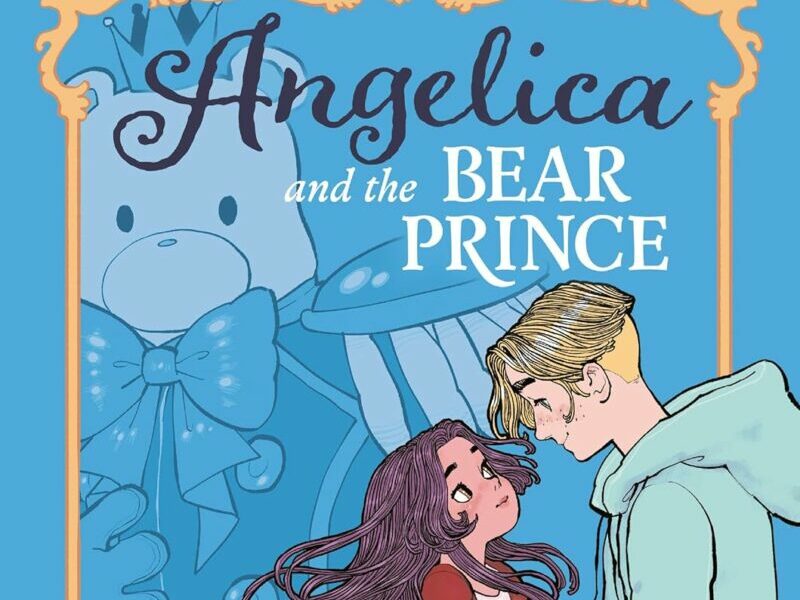
Angelica isn’t used to cutting down on extracurriculars. Having found herself burning out lately, though, Angelica has decided to restrict herself to one summer internship at the The Log House Theater. Will working for the crew gives her a chance to meet the person who’s been passing themselves off as Per the Bear on the theater’s social media? It’s all in Trung Le Nguyen‘s new graphic novel, Angelica and the Bear Prince. Here’s what Nguyen had to share about their incredible follow-up to The Magic Fish:

Rachel Bellwoar: One of the characters brings up Cyrano, while there are elements of Angelica and the Bear Prince that feel reminiscent of Beauty and the Beast or The Shop Around The Corner, mixing romcom with fairy tale. Specifically, though, Angelica is helping to stage a production of East of the Sun and West of the Moon. When did you first become familiar with that story and what interested you in adapting it?
Trung Le Nguyen: I can’t remember when I first read East of the Sun and West of the Moon, but I recall really liking that the protagonist was a girl who got to make choices even while she found herself in a situation where she had very little agency in the beginning. She gets to be willful, she makes mistakes, and then she goes on a grand adventure to make things right. It feels less like a morality tale about disobedience and more like a story about owning and resolving your mistakes. I think, especially for a young adult story, I wanted to let my protagonists be a little fussy, take some missteps, and then grab the opportunity to assert a sense of responsibility.
Like any fairy tale nerd, I went hunting for all the story’s relatives, which got me into the Cupid and Psyche story from Apuleius’s Metamorphoses, so I think that’s where I developed an enthusiasm for stories-within-stories, too.
Bellwoar: Our introduction to Angelica is the visual of her being overwhelmed by emails. What made you want to start there and do you feel modern technology is a bain to storytelling, the way people sometimes talk about cellphones ruining horror movies?
Nguyen: I don’t know that the inclusion of technology made the storytelling harder for me. I think horror is sort of funny in that miscommunication and poor logistics can be extremely high stakes and always potentially fatal. For my romance book, those things happen but are a little less mortally dire. Even still, I think people can find ways to miscommunicate or let people down, even — and sometimes especially — with the assistance of technology. With that in mind, I felt comfortable exploring how people use new technology to do what people have always done. In this case, the characters are mostly engaging with it to talk to each other. They’re sending little missives and waiting for a notification to ping. They’re getting to know each other by expressing their interior thoughts. Sure, the speed of it is wildly accelerated, but the sentiment feels old-school, which I find romantic and sweet. In real life, our phones are frequently a source of both drama and dread, and the stories we make now will likely reflect that.
Bellwoar: How important was it to have Angelica’s burnout not be precipitated by one specific event or have an obvious catalyst?
Nguyen: That’s a great observation! I wanted to keep the impetus of the burnout vague because I never really know when burnout is about to hit really hard. It always kind of feels like a surprise until you look back over, say, an inbox full of untouched messages piling up, and then it dawns on you that you need to nap all the time. I also didn’t want to give the reader the sense that I knew more about burnout than they do, because I truly don’t. But I did want to connect over that feeling of throwing our whole selves into our work and forgetting to take care of ourselves in the process. I bet a lot of people can relate to that.
Bellwoar: Did it take a while to land on the final design for Per the Bear or did you know what you wanted them to look like pretty early?
Nguyen: It did! I totally didn’t know what I expected Per to look like at first. That’s partly why there are two different versions of the costume in the book, but I ended up really liking how the two designs reflect the different relationships certain characters had to specific eras of the costume. It gives the reader the sense that this bear suit has a history and has undergone changes.
Bellwoar: What was it like working with color artist, Angela Lu, on the sequences where Angelica is talking to a guidance counselor?
Nguyen: Angela Lu is incredible! I loved working with her, and her palettes make the pages glow in a way that I didn’t always see before she sent them back to me. Because I’m so used to doing everything myself, I was nervous about letting someone else’s vision seep into the process, but I knew I loved Angela’s portfolio and trusted her aesthetic choices.
Bellwoar: Is East of the Sun and West of the Moon usually set in the wintertime and what made you want to go with a winter aesthetic for this graphic novel?
Nguyen: I don’t think the old story is necessarily set in wintertime. The tale collected by Asbjørnsen and Moe starts in the fall, and by the time the heroine is left to begin her journey to save the bear prince, she’s sitting on green moss. I think the big white bear lends itself to images of wintry snowscapes, and a lot of folks just lean into it. And for my part, I love snowy winters! I grew up in Minnesota, and I enjoy a fresh, sparkling blanket of snow, which is a thing I get to enjoy because I don’t often have to drive in it or mind the ice. I set the story very near the Lunar New Year, which is typically winter where I live, and long enough after Christmas that the snow has really settled in.
Bellwoar: I love the choice to use borders to mark when the story is transitioning between Angelica’s memories of seeing East of the Sun and West of the Moon as a child and the present day. Are those borders as time consuming to draw as they look and what was your inspiration?
Nguyen: They don’t take as long as you’d think. None of them are really the same, so that meant I could just make up the patterns as I went along, and there was no preciousness in it. Plus, the radial symmetry tools in Clip Studio Paint really sped that process along. My dad’s a carpenter who used to do these incredibly intricate wood carvings that I loved to stare at for ages, so whenever I go to museums and galleries, I always pay attention to the sort of frames people choose for certain pieces. A lot of those are little delights in and of themselves.
Bellwoar: I also am constantly floored by the way you draw hair. Do you consider hair to be one of your signatures?
Nguyen: Yeah! I like the visual tension in spaces that are very visually busy, set up against spaces that are pretty visually spare. It helps direct the eye, especially for pages in a comic that don’t have a ton of words. I also use hair and fabric to convey gravity and movement since I use very few action lines. I think it’s pretty, but it’s also got a bit of visual and narrative utility to it that suits my way of working.
Bellwoar: Last (but not least), I love that the characters are allowed to speak the way they would really speak, which means occasionally using curse words, and that Angelica has a temper, like yelling “I hope they step on a million stray Legos” at someone. I feel like anger isn’t an emotion overachievers are always allowed to show or be depicted as having. Was that a deliberate choice on your part?
Nguyen: I loved writing and drawing a character who is fussy and easily annoyed. Jelly won’t stand to be disrespected! It took a bit of effort. I often catch myself getting more formal than I want to when I’m writing. And since I love fairy tales, I have to consciously break out of thinking of characters as archetypes. Angelica and the Bear Prince uses East of the Sun and West of the Moon as rebar, but the story structured around it is a young adult romance, where the characters have big feelings that start to break containment. Angelica may be kind of a perfectionist, but “perfect” isn’t her default state. When she’s around people that make her feel comfortable, she’s more expressive and outwardly fussy. Her little bursts of anger sort of become about who she’s with and what closeness the reader can glean from their relationship. It was so fun to play with that character’s feelings and expressions.
Bellwoar: Thanks for agreeing to this interview, Trung!
Angelica and the Bear Prince goes on sale October 7th from Random House Graphic.
